187 Tonnes of WWII Explosives Rot on Bergen Seabed, Norway Does Nothing for 30 Years
- 187 tonnes of WWII ordnance mapped on the seabed at Bergen's harbour entrance in the 1990s — no clearance attempted since
- The Norwegian Armed Forces describe the find as 'just the tip of the iceberg,' suggesting far larger quantities of live explosives in the area
- Bergen is one of Norway's busiest ports, serving commercial shipping, cruise traffic, and the offshore energy sector
- No single authority has taken ownership of the problem, with responsibility falling between the Armed Forces, the Coastal Administration, and municipal government
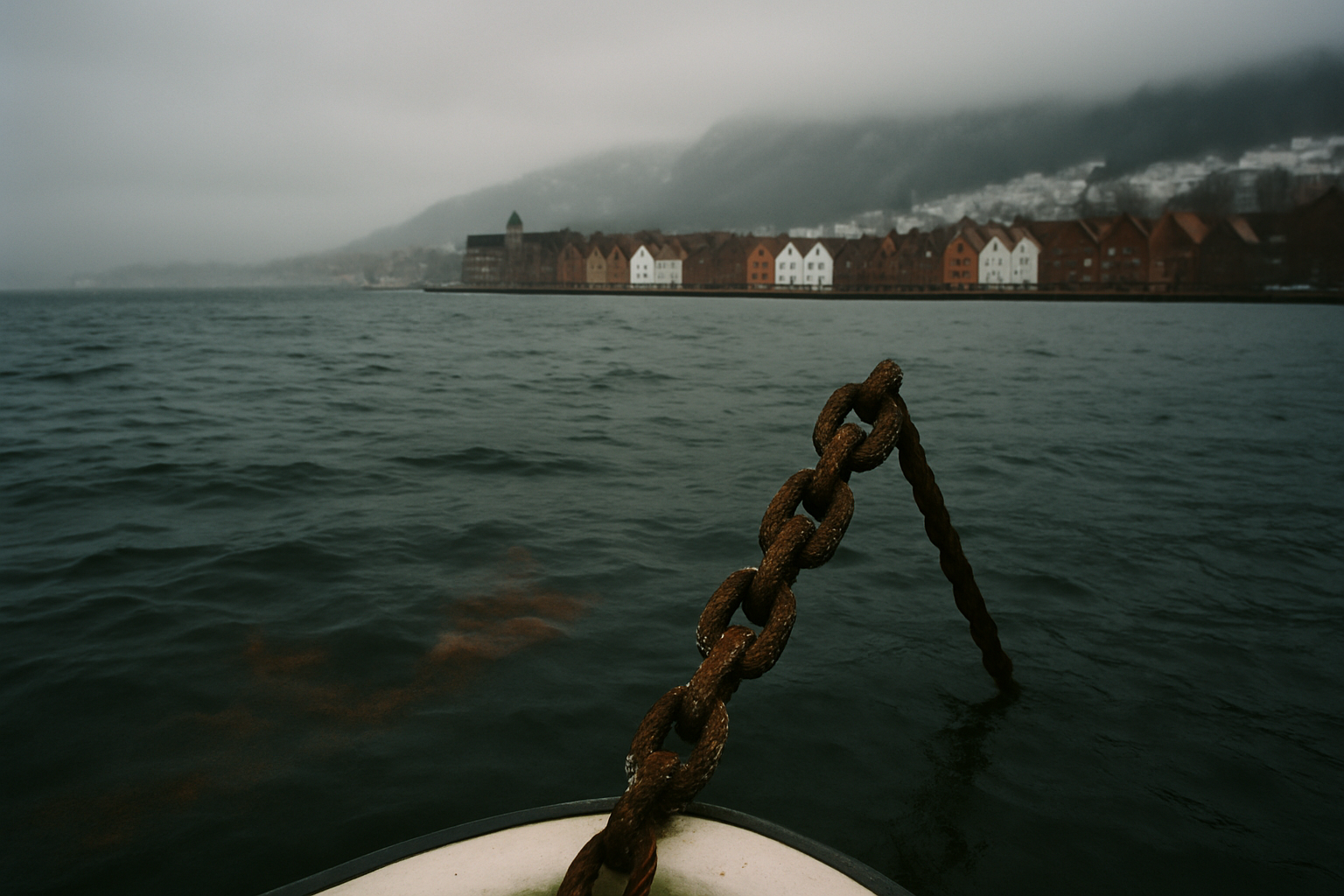
Several hundred aerial bombs from the Second World War, containing a combined 187 tonnes of explosives, sit rusting on the seabed at the entrance to Bergen harbour. Norwegian authorities mapped them in the mid-1990s. As NRK reports, not one bomb has been removed in the thirty years since — and the Norwegian Armed Forces say the known cache represents only a fraction of the total ordnance scattered across the approach.
Bergen is Norway's second-largest city and one of its most important maritime gateways. Commercial shipping, cruise liners, naval vessels, and offshore supply boats pass over or near the dump site routinely. The seabed in the area also hosts subsea cables and infrastructure tied to Norway's energy sector. Corroding ordnance does not become safer with time — salt water eats through casings, exposing primary explosives that grow more sensitive, not less, as chemical compounds degrade. A single detonation in a confined harbour approach could rupture nearby munitions in a sympathetic chain.
The three decades of inaction trace a familiar pattern in Norwegian governance: the Armed Forces identified the problem, the Coastal Administration acknowledged the shipping risk, and municipal authorities flagged it — but no single institution claimed responsibility for funding or executing clearance. Each pointed to the others. Defence budgets prioritised current operations. The Coastal Administration's mandate covers navigation, not bomb disposal. Bergen municipality lacks the technical capacity. The result was a perfect bureaucratic equilibrium in which everyone agreed something should be done and nobody did it.
Norway has spent the past two years dramatically increasing defence spending, citing Russian threats in the High North and the broader deterioration of European security. The government in Oslo announced a record defence budget for 2025, with particular emphasis on maritime surveillance and protection of subsea infrastructure — pipelines, cables, and offshore installations that are now treated as strategic assets. The Nordstream sabotage in 2022 made every North Sea nation acutely aware of what a single explosion on the seabed can do.
Yet the most concrete, most precisely located explosive threat to Norwegian maritime infrastructure — hundreds of bombs whose GPS coordinates have been on file since the Clinton administration — remains untouched. The Armed Forces have the expertise. The political will to spend on defence has never been greater. What is missing is someone to sign the work order.
Other countries have moved faster with less. Belgium and the United Kingdom run continuous programmes to clear wartime ordnance from the North Sea, treating it as routine maintenance of navigable waters. Germany clears several thousand tonnes per year from its territorial waters. Norway, which discovered its Bergen problem before most of these programmes began, has cleared zero tonnes.
The Norwegian Defence Ministry has not publicly explained what would need to change for clearance to begin. The Coastal Administration has not indicated whether the site's proximity to active shipping lanes has triggered any updated risk assessment. Bergen's harbour master continues to route traffic past the dump. The bombs continue to corrode. The only thing that has moved in thirty years is the timeline for when they become too unstable to move safely.
Sources: NRK