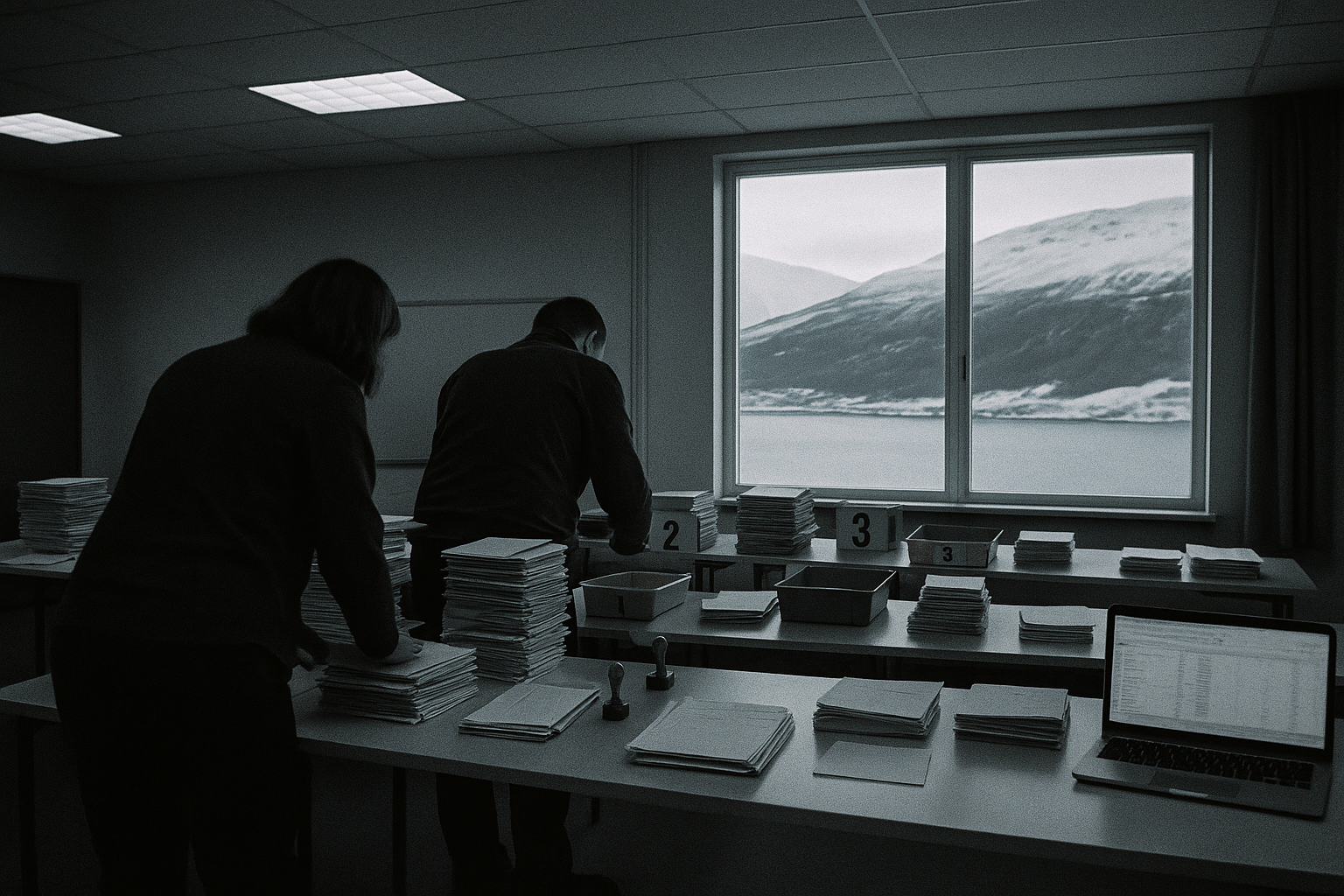
Akureyri majority falls, early count reshapes council, local blocs lose grip
- Vísir reports that with about a quarter of votes counted, Bæjarlistinn is slightly larger than Samfylkingin in Akureyri.
- Samfylkingin gains one council seat while Bæjarlistinn loses one, enough to bring down the sitting majority.
- The result opens coalition talks in one of North Iceland’s main urban centres.
- The early numbers point to a more fragmented municipal council and weaker control by established local blocs.
Akureyri’s governing majority has fallen on the first substantial election night count. With roughly a quarter of votes counted, Vísir reports that Bæjarlistinn is narrowly ahead of Samfylkingin, but the seat arithmetic has shifted against the incumbents: the Social Democrats gain one seat and Bæjarlistinn loses one.
That changes the question from who finished first to who can govern Iceland’s main town in the north. Akureyri is often treated as the regional counterweight to the capital area, and its municipal politics carry more weight than the population alone would suggest. A lost seat in a council of this size can turn a stable majority into a coalition market overnight. The parties now face the usual municipal arithmetic: policy differences that looked manageable in opposition become expensive once they must be written into budgets for housing, schools, care services and infrastructure.
The early result also puts pressure on the local-list model that has long shaped Icelandic municipal politics. Bæjarlistinn, a local electoral list rather than a national party branch, has been one of the better-known examples of that tradition. If it remains the largest force while still losing leverage, the message is less a clean transfer of power than a thinning margin for incumbency. Samfylkingin’s gain suggests that a national party label can still convert dissatisfaction into seats when local administrations have been in office long enough for spending, services and housing pressure to accumulate in the same election.
Akureyri has faced the same municipal strains seen across the Nordics’ smaller regional centres: rising housing costs, demands for better local services, and tighter scrutiny of what ratepayers get for higher spending. Elections in such towns are often decided less by ideology than by whether voters think the council has kept growth orderly and basic services reliable. A one-seat gain here and a one-seat loss there is usually where those judgments appear first.
If the numbers hold, the next council is likely to be harder to assemble and harder to run. More parties at the table mean thinner majorities, more transactional coalition agreements and less room for the kind of local dominance that once let municipal blocs govern for long stretches without much interruption. In Akureyri, that shift is now visible in the narrowest possible form: Bæjarlistinn still fractionally ahead on votes, but no longer carrying the majority with it.
Källor: Vísir