Akureyri pulls 50 tons from sewers, wet wipes drive cleanup burden, utility pays for household waste
- Norðurorka removes close to 50 tons of trash from Akureyri’s sewage flow.
- Wet wipes are identified as the biggest source of damage to equipment and pipes.
- Cotton buds, dental floss and other non-dissolving waste also reach the treatment plant.
- The costs fall on the municipal utility, not on the households sending the waste into the drains.
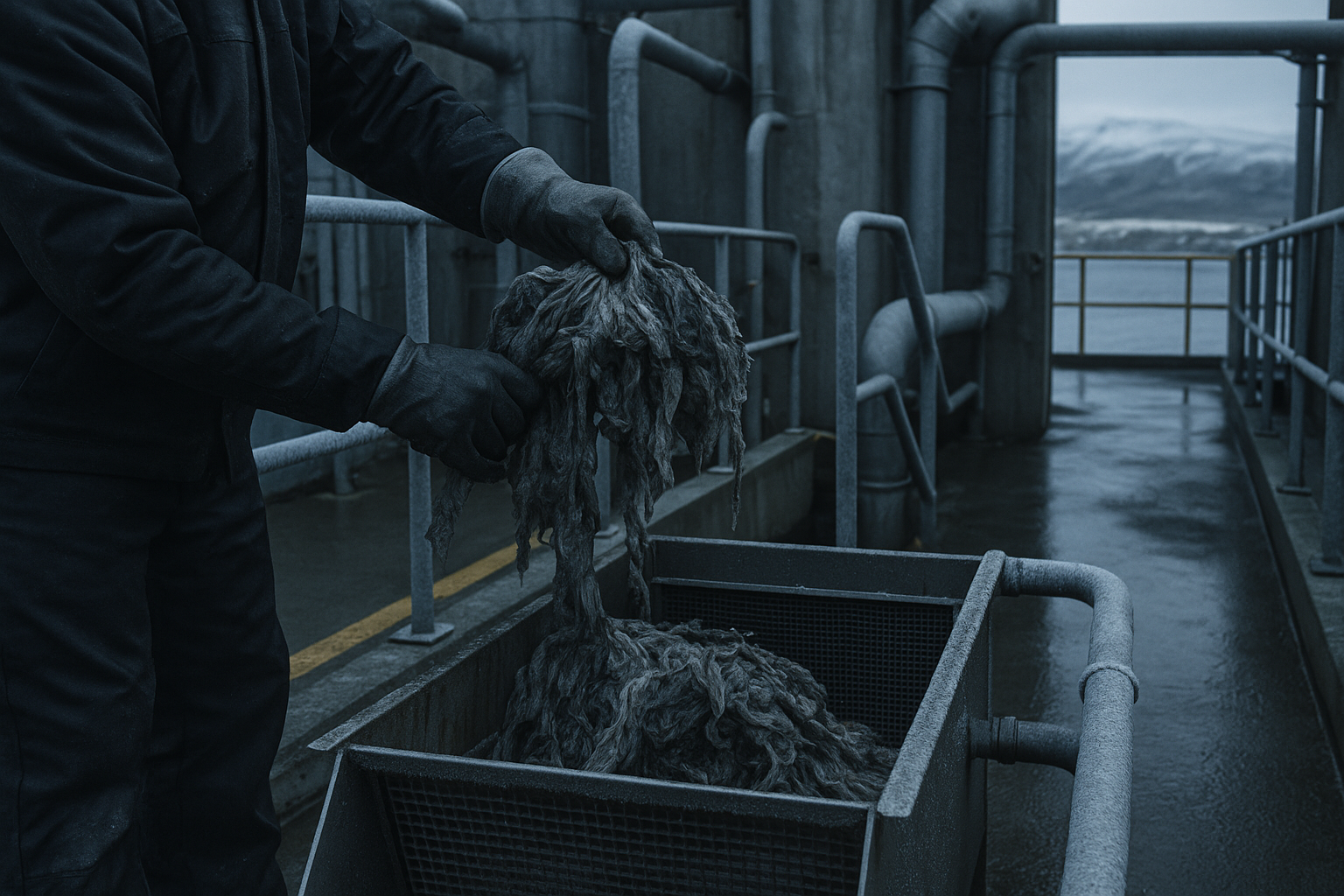
Akureyri’s wastewater plant is pulling nearly 50 tons of trash out of the sewer system each year, a figure that turns an invisible municipal service into a very physical waste problem. In a report by RÚV, the municipal utility Norðurorka says the largest culprit is wet wipes, which clog treatment equipment and can damage pipes before the waste even reaches the screening station in Sandgerðisbót.
Everything poured into a kitchen sink, washed down a shower drain or flushed down a toilet in Akureyri ends up at that facility if it does not dissolve on the way. Stella Árnadóttir, Norðurorka’s environment and safety manager, told RÚV that wet wipes are the biggest problem, followed by cotton buds and dental floss. The rule she gave was blunt enough for a public notice: only urine, faeces and toilet paper belong in the toilet.
The numbers are local, but the bill is familiar across the Nordic region. Disposable consumer products are sold one household at a time, then collected again by public utilities in bulk. The household that flushes a wipe sees a clean bathroom and an empty bin; the utility gets tangled screens, extra handling and worn equipment. That cost is spread across water and sewer charges, maintenance budgets and staff time rather than attached to the product that caused it.
Wet wipes are a particularly expensive form of rubbish because they are marketed for convenience but built to stay intact. In a sewer network, that durability becomes a liability. Unlike toilet paper, they do not break down quickly in water, which means they can snag in pumps, wrap around moving parts and gather other debris into larger blockages. Dental floss does something similar on a smaller scale: thin enough to disappear at home, strong enough to catch in machinery downstream.
RÚV’s report does not state what Norðurorka spends each year on this cleanup or whether Akureyri plans fines, warnings or a public information campaign. Those details matter. A municipal utility can screen out trash at the end of the pipe, but the cheaper intervention is usually before the flush: labels that mean what they say, bins in bathrooms, and repeated reminders that a sewer is not a second waste stream.
At Sandgerðisbót, the waste still arrives mixed into the city’s sewage and has to be separated by machine. Nearly 50 tons a year is what Akureyri residents manage to throw away after the rubbish has already been thrown away once.
Källor: RÚV