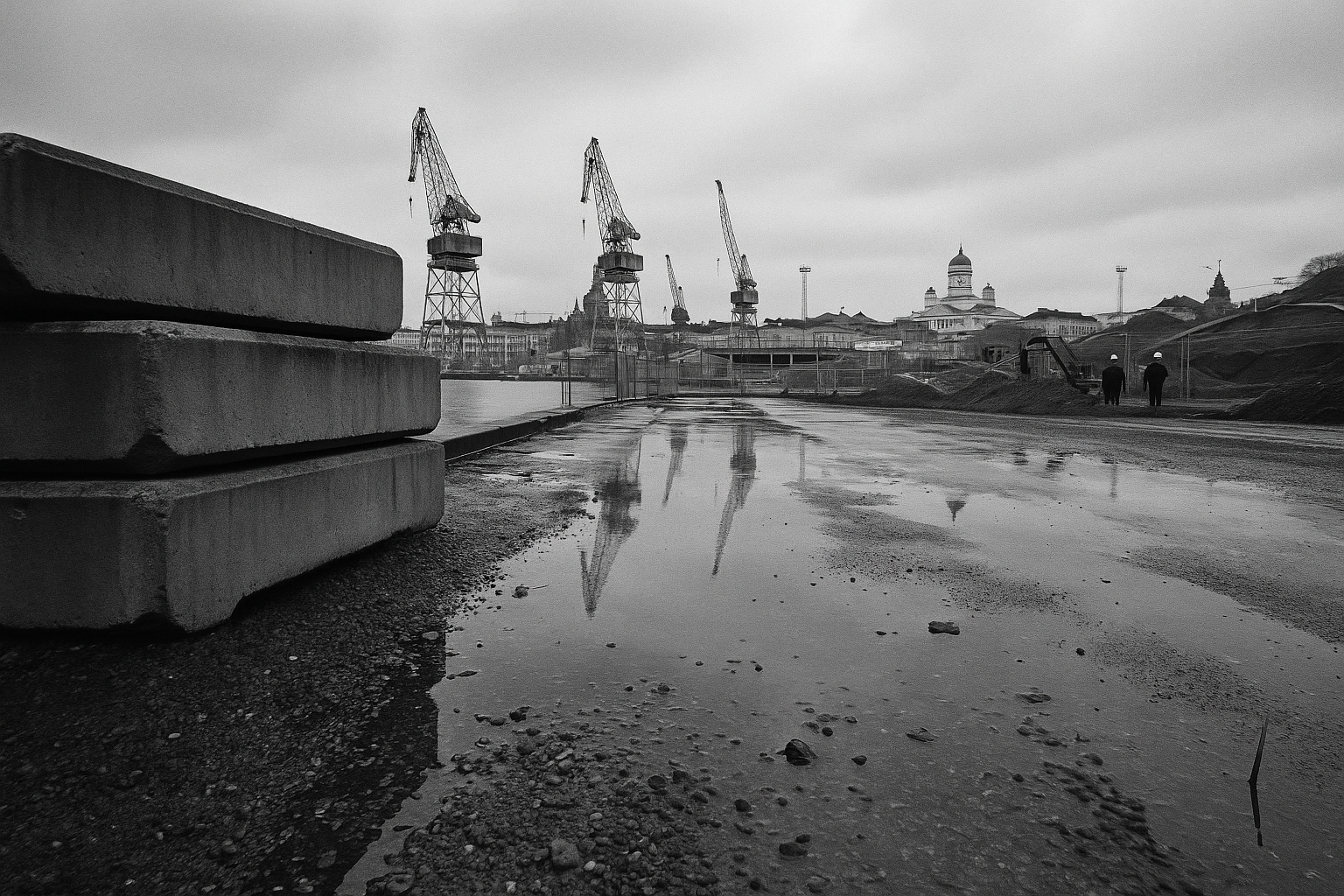
Allas Pool faces demolition, South Harbour rebuild stays open-ended, Helsinki raises shoreline for flood defence
- The existing Allas Pool building is being torn down to clear space for repairs to the South Harbour seawall.
- The project is part of Helsinki’s broader Eteläsatama redevelopment, which extends Katajanokka’s urban structure toward the waterfront.
- Ground levels along the shore will be raised as the city upgrades flood protection against higher water and rougher weather.
- Iltalehti reports that the completion schedule for the works is still unknown.
Helsinki will demolish the current Allas Pool building in South Harbour so the city can repair the seawall beneath it, a first visible step in a larger remaking of the waterfront. Iltalehti reports that the timetable for completion is still open, even as the city ties the works to a broader redevelopment of Eteläsatama (South Harbour).
The immediate reason is technical: the retaining wall along the shoreline needs repair, and the flood-protection standard for the area is being raised at the same time. Helsinki plans to lift ground levels on waterfront sections as it adapts to higher water and harsher weather, which means the existing layout cannot simply be patched and left in place. Allas Pool’s operations are also set to expand within the redevelopment, according to the report, linking a commercial leisure site to a publicly driven infrastructure project. That combination usually produces a familiar sequence on Nordic waterfronts: demolition first, access routes moved, construction fences up, and the promised finished district delivered years later if budgets and schedules hold. Here, the missing piece is the one businesses and visitors usually need first — a fixed end date.
South Harbour is one of Helsinki’s most exposed and symbolic stretches of land, where ferry traffic, tourism, public space and real-estate ambitions all meet on expensive waterfront. Repairing the seawall and raising the shoreline may be hard to avoid if the city wants the area to remain usable under rougher sea conditions, but the bill is larger than a bath complex and a wall. During the transition, the waterfront becomes a worksite while the city carries the cost of construction and the public carries the cost of reduced access. The commercial logic for Allas Pool also changes: a business built around location, visibility and foot traffic must operate through a redevelopment whose duration is not yet settled.
The city’s own language for these projects usually revolves around renewal, resilience and better use of prime land. On the ground, the sequence is simpler. A popular waterfront destination is being removed so the wall behind it can be rebuilt, and the shoreline itself will be lifted before the new version of the area appears.
Källor: Iltalehti