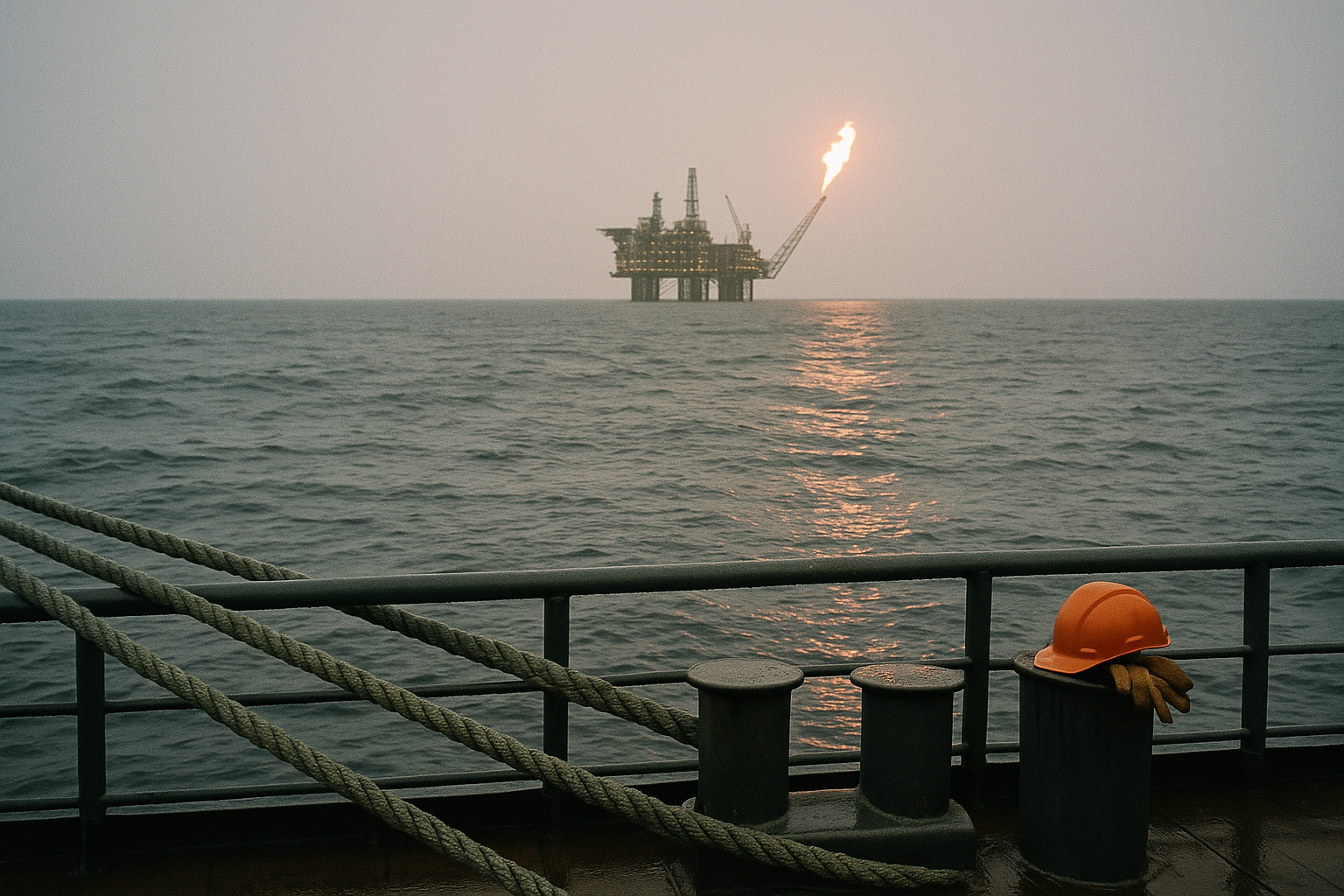
Attack on Qatar's Ras Laffan LNG complex threatens European gas supply, puts Norway in pivotal position
- Ras Laffan, one of the world's largest LNG complexes, has sustained extensive damage in an attack
- Europe now sources over 30% of its gas from LNG imports, with Qatar among the top suppliers
- Norway already delivers the single largest share of Europe's pipeline gas and faces pressure to increase output
- The disruption exposes the fragility of Europe's post-Nord Stream energy strategy built on seaborne LNG dependence
Qatar's Ras Laffan industrial complex — one of the largest liquefied natural gas facilities on earth, responsible for roughly a quarter of global LNG production — has been hit by an attack that VG reports caused extensive damage. Analysts quoted by the Norwegian outlet warn the consequences could be severe, particularly for Europe, which has staked its energy security on LNG imports since Russian pipeline gas was cut off.
The timing could hardly be worse. European gas storage levels, while adequate for summer, depend on continued high-volume LNG deliveries to refill ahead of winter. Qatar supplied approximately 16% of Europe's LNG imports in 2024, making it one of the continent's top three seaborne gas sources alongside the United States and Algeria. Any sustained outage at Ras Laffan does not merely reduce supply at the margins — it removes a structural pillar of Europe's post-2022 energy architecture.
That architecture was built in haste. After the destruction of the Nord Stream pipelines in September 2022, European governments raced to secure alternative supplies, signing long-term LNG contracts and building floating regasification terminals along the North Sea and Baltic coasts. Germany alone commissioned four new LNG import terminals in under two years. The implicit bet was that global LNG markets would remain liquid enough to keep Europe supplied. An attack on Ras Laffan tests that bet directly.
Norway sits at the centre of the recalculation. Equinor and other Norwegian producers already supply roughly 30% of Europe's natural gas through pipelines running to the UK, Germany, Belgium, and France. Norwegian fields operated near maximum capacity through 2023 and 2024, with the Troll field — Europe's single largest gas source — running at levels the operator described as historically high. The question now is whether Norwegian infrastructure can absorb any meaningful portion of a Qatari shortfall. Pipeline capacity is largely fixed in the short term; you cannot simply turn a valve and double output. Equinor's existing export infrastructure was designed for steady, high-volume delivery, not emergency surge capacity.
What Norway can do, however, is command higher prices. European gas futures spiked on reports of the attack, and every percentage point of supply uncertainty translates directly into revenue for Norwegian producers. The Norwegian state, which collects a 78% special tax on petroleum profits, stands to benefit enormously. In 2022, when Russian gas disappeared and prices surged, Norway's petroleum revenues hit 1.5 trillion kroner — more than triple the previous year. A sustained Qatari disruption would create similar conditions.
For the broader Nordic energy security debate, the attack underscores a point that has been made repeatedly since 2022 but rarely acted upon: Europe's replacement of Russian pipeline dependency with LNG dependency did not eliminate vulnerability — it redistributed it. Pipeline gas from Russia flowed through fixed infrastructure that could be sabotaged, as Nord Stream demonstrated. LNG flows from facilities that can be attacked, through chokepoints like the Strait of Hormuz that can be blockaded, on tankers that can be interdicted. The risk profile changed; the underlying fragility did not.
Nordic defence planners have spent two years discussing the protection of undersea cables and pipelines in the North Sea and Baltic. The Ras Laffan attack adds another dimension: the security of supply sources thousands of kilometres away, in regions where the Nordics have no military presence and limited diplomatic leverage. A Nordic energy strategy built on the assumption that Qatari and American LNG will always flow is a strategy built on someone else's security guarantees.
Equinor's share price rose over 4% in early trading. The company declined to comment on whether additional output from Norwegian fields was technically feasible.
Sources: VG