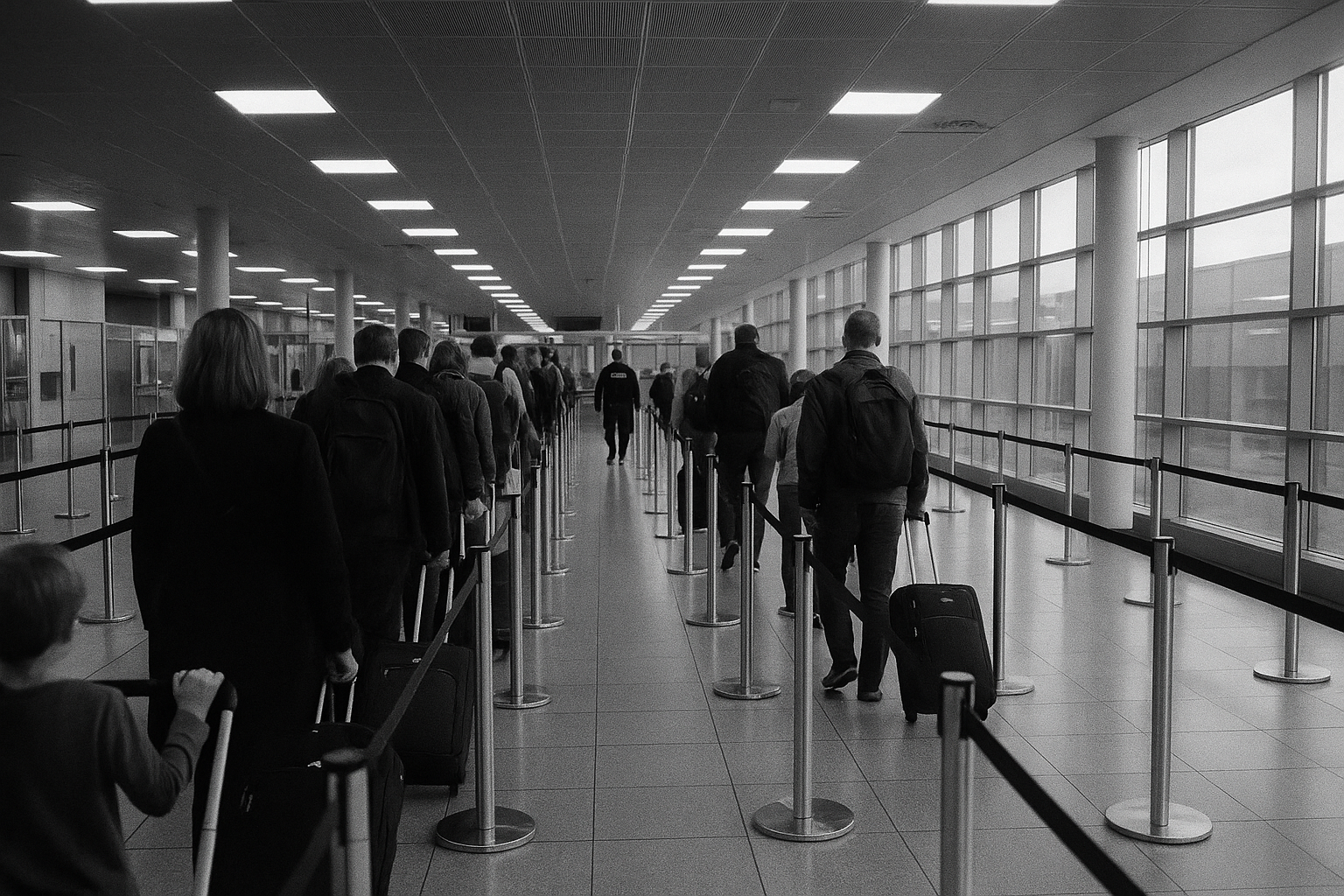
Britain warns on Copenhagen Airport queues, EU entry checks add pressure, Denmark’s main hub faces longer summer waits
- The UK government has updated travel advice to warn of long queues at Copenhagen Airport.
- The new EU Entry/Exit System will require extra border checks for travellers from outside the EU and Schengen area.
- Copenhagen Police say longer waiting times will continue under the new regime.
- The pressure falls on Denmark’s main hub, where border staffing and passenger flow now matter directly to the airport’s standing as a Nordic transfer point.
Britain has begun warning travellers about long queues at Copenhagen Airport, a problem Danish authorities say will not disappear when summer traffic eases. In a report by DR Nyheder, the Danish Broadcasting Corporation reports that Copenhagen Police expect longer waiting times to continue when the EU’s new passport control system takes effect.
The immediate change is procedural but expensive in minutes. Under the EU’s Entry/Exit System, non-EU travellers will no longer be waved through on the basis of a passport stamp alone. Border authorities will register entries and exits digitally and collect biometric data, including fingerprints and a facial image, when passengers use the system for the first time. Each traveller from outside the EU and Schengen area therefore becomes a longer transaction at the booth, and at an airport built around dense waves of departures and arrivals, a few extra minutes per person quickly becomes a queue.
That matters more in Copenhagen than at a smaller airport because Kastrup is Denmark’s main international gateway and one of the Nordic region’s central transfer hubs. Delays at passport control do not stop with the passenger standing in line. They spill into missed connections, tighter turnaround times for airlines, more pressure on terminal staff and a weaker selling point for an airport that competes with Stockholm, Oslo and Helsinki for transfer traffic. Britain’s warning makes the reputational cost visible: a foreign government is now telling its citizens to budget for the bottleneck.
According to DR, Copenhagen Police say the longer waits are expected to persist under the new EU regime. That suggests the issue is not a temporary surge but a permanent increase in the amount of labour required per passenger. More border officers can ease peaks, but the new system also requires equipment, training and physical space for checks that take longer than a stamp and a glance. If traffic rises faster than staffing and processing capacity, the queue becomes part of the airport’s normal operation rather than an exception.
Danish authorities have not offered passengers much comfort beyond the fact that the rules are coming from Brussels and will apply across the bloc. That is true as far as it goes, but the burden will still be distributed unevenly. Airports with heavy intercontinental traffic and large numbers of non-EU passengers will feel it first, and in Denmark that means Copenhagen. The terminal screens may still promise departure on time; the line in front of passport control is where the new system will be measured.
Källor: DR Nyheder