Cardiac arrest rescue revives AED access debate, Norway maps locked devices, preparedness stops at office hours
- NRK says the rescue of Dag Kristiansen is being cited in a campaign for more publicly accessible defibrillators.
- Many devices are installed indoors or behind locked doors, limiting use outside opening hours.
- The gap is not only how many AEDs exist, but whether municipalities, firms and housing associations make them reachable in an emergency.
Dag Kristiansen, 78, survived when his heart stopped because a defibrillator was nearby. NRK reports that the rescue in Møre og Romsdal is now being used by the Norwegian Heart and Lung Patient Organisation, LHL, to argue for more publicly accessible devices after years of installations that too often end behind locked doors.
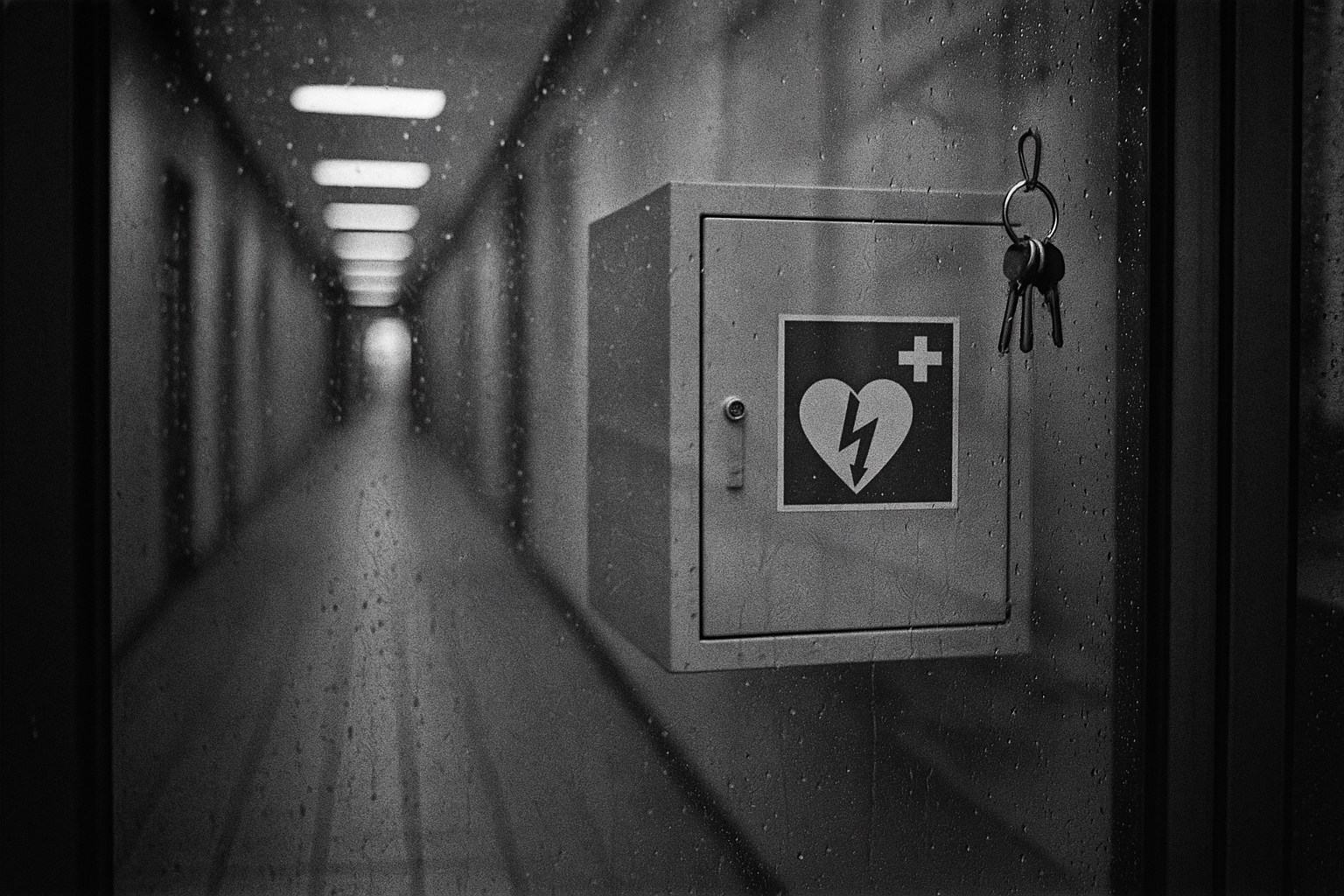
The problem is less dramatic on paper than on a pavement outside a closed building. Norway has defibrillators in workplaces, sports halls, apartment blocks and municipal premises, but a device mounted inside a reception area does little for someone collapsing at night, on a weekend or in a car park outside. NRK reports that LHL is now establishing what it calls “heart-safe zones”, an effort aimed at placing devices where bystanders can reach them immediately rather than where an institution finds room on a wall. That shifts the question from procurement to access: not whether a municipality, company or housing association bought a machine, but whether anyone can use it when the front door is locked.
The same gap appears across the Nordics. Local authorities and private property owners can point to installed equipment, while emergency value depends on location, signage, maintenance and whether dispatchers know the device exists. A defibrillator in a school corridor may count in an inventory and still vanish from practical use for most hours of the week. For residents, that can create a polished version of preparedness: the machine is there, the sticker is on the window, and the cabinet opens only when the building does.
NRK’s report puts pressure on the small decisions that determine whether equipment works as public infrastructure or private decoration. Outdoor cabinets cost money, maintenance routines require someone to check batteries and pads, and open access raises the usual concerns about vandalism, liability and responsibility. Those costs are modest beside the price of ambulances, hospital care and long rehabilitation after oxygen loss, but they still fall on a municipality budget line, a housing board or a business owner who did not choose to become part of the emergency chain.
That leaves a simple test for preparedness. If a passer-by cannot get to the device within minutes, the installation mainly serves the building that owns it. Kristiansen survived because one was close enough to use before the window closed.
Källor: NRK