Centre Party threatens fuel-tax revolt, Norway’s rural cost split reopens, right-wing majority beckons
- The Centre Party is threatening to break with the red-green bloc on fuel policy and seek support from the right.
- The dispute centres on petrol and diesel prices, fuel taxes and compensation for households and businesses outside the big cities.
- Any cut would reduce state revenue unless it is offset elsewhere in the budget.
- The episode mirrors a wider Nordic pattern: rural parties pushing back when climate policy raises daily transport costs.
Norway’s Centre Party is again raising the prospect of working with the Conservatives and the Progress Party to force through lower fuel prices. Nettavisen reports that the party is threatening to break with the red-green alliance if the government does not respond to what it calls sky-high petrol and diesel costs.
The warning matters because the Centre Party has built much of its support on voters who drive long distances, run farms, haul goods and have no practical substitute for the car. In the big cities, higher fuel taxes can be presented as climate policy paired with public transport. In much of the rest of Norway, they arrive as a direct monthly bill. That is where the argument shifts from emissions targets to household budgets, and from abstract transition plans to whether people can afford the school run, the commute or a tractor fill-up.
The measures on the table are the usual ones, but they carry different price tags. A direct cut in fuel taxes lowers pump prices quickly and visibly, which is why parties return to it. It also cuts revenue to the state unless the loss is covered by spending cuts, higher taxes elsewhere or a wider deficit. Compensation schemes are politically tidier on paper, because ministers can target selected groups, but they keep the tax structure in place and add another layer of administration. For drivers, the difference is simple enough: one lowers the number on the forecourt sign; the other asks them to pay first and wait for relief later.
The parliamentary arithmetic is what gives the threat weight. If the Centre Party joins the Conservatives and the Progress Party on a narrow fuel issue, the government can be outvoted. Whether that produces a stable line is another matter. The Conservatives have room to support lower driving costs, but they also want fiscal discipline and cleaner climate credentials than the Progress Party. The Progress Party, for its part, has long treated fuel prices as a ready-made revolt issue. A temporary majority for a tax cut is easier to assemble than a durable cross-bloc settlement on transport, taxation and regional policy.
The dispute also exposes how much of Norway’s rural policy now runs through fuel receipts and compensation formulas. When central government raises costs in the name of climate targets, it usually has to build a second system to soften the blow for the regions that cannot opt out. That leaves parties arguing over rebates, transfers and exceptions instead of the original question of whether the tax rise made sense for a country with long distances, dispersed settlement and heavy dependence on road transport.
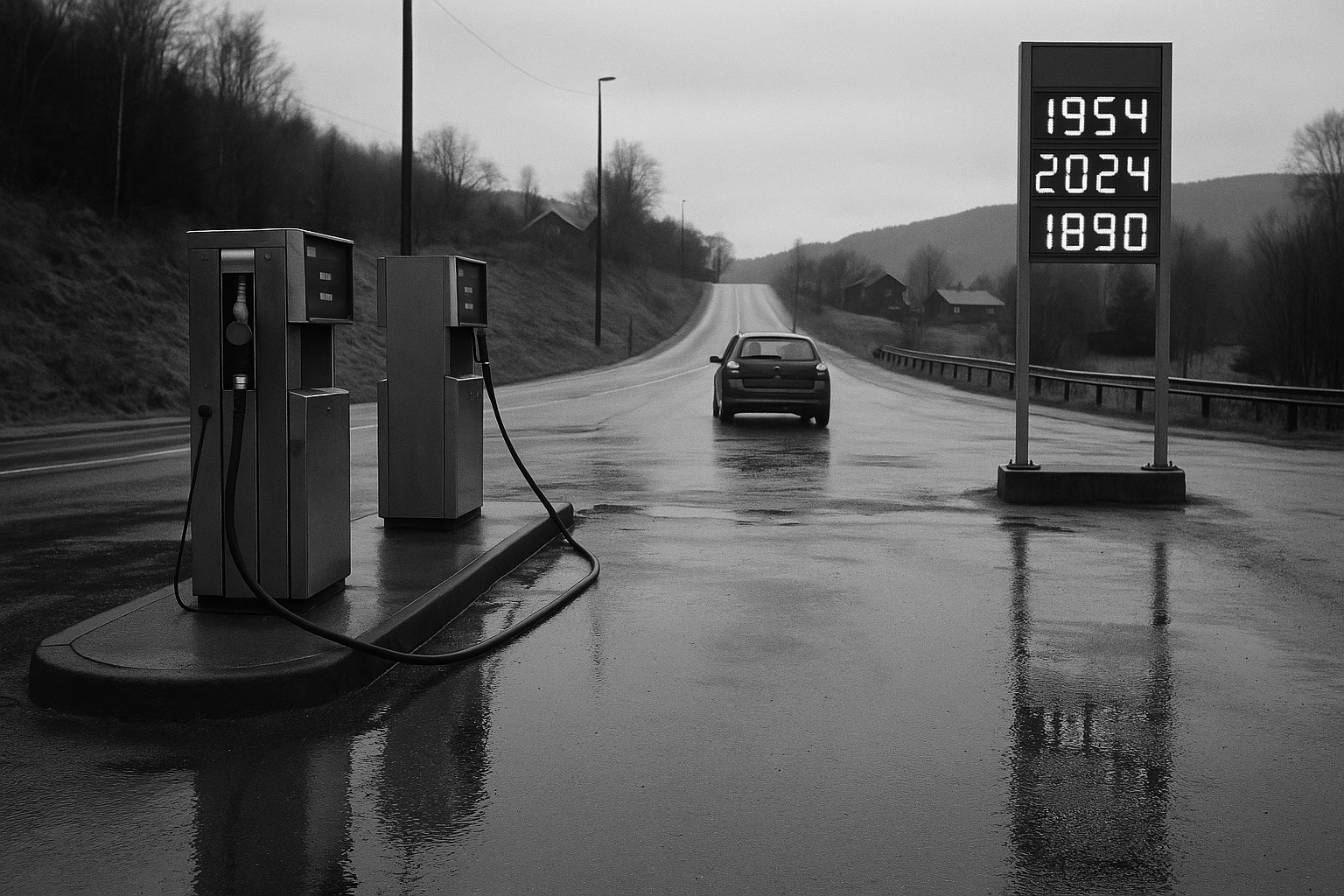
Across the Nordics, the same clash keeps resurfacing: urban climate policy sets the direction, rural parties count the cost per litre. In Norway, that argument is now back where voters can see it — on the signboard at the petrol station.
Källor: Nettavisen