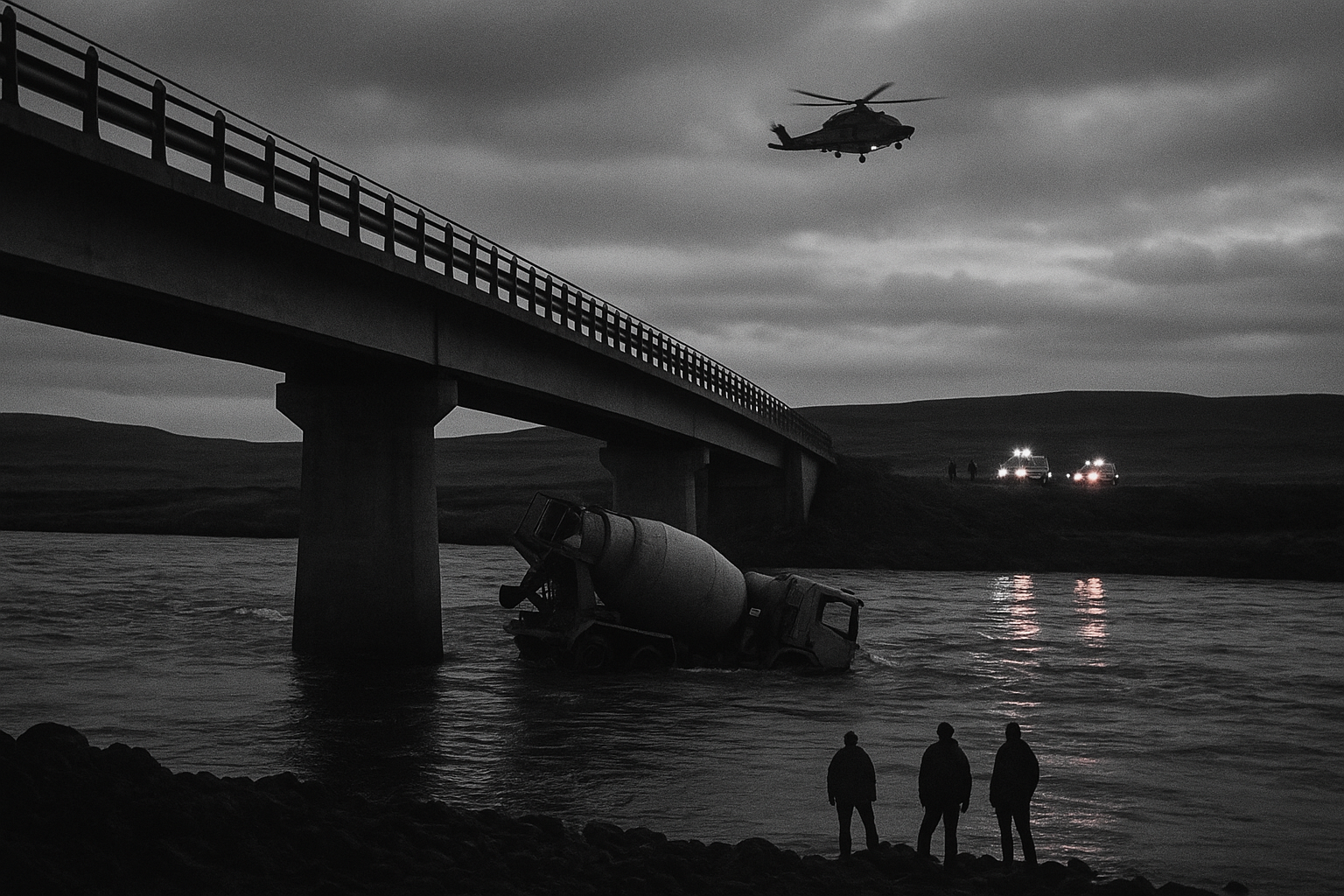
Concrete truck plunges into Þjórsá, bridge rescue halts key rural crossing
- Morgunblaðið reports that a concrete truck ended up in the Þjórsá river and the driver was rescued by emergency crews.
- The response included a helicopter and multiple rescue units, underscoring how quickly a single crash can consume limited resources outside the capital area.
- An accident involving a heavy vehicle on a bridge can also disrupt a vital route in a region with few alternative crossings.
A concrete truck went off a bridge into the Þjórsá river on Sunday evening, setting off a helicopter rescue and a large-scale emergency operation in southern Iceland. Morgunblaðið reports that rescue crews pulled the driver from the river after the vehicle ended up in the water.
The newspaper describes a crowded response scene, with multiple emergency units called out to recover the driver. Video and photographs published by Morgunblaðið show the truck in the river and the driver being hoisted to safety. The report says the rescue took place earlier in the evening, but did not in its initial account establish the driver’s medical condition in detail or the cause of the crash.
The site matters beyond the immediate rescue. Þjórsá is Iceland’s longest river, and bridge crossings in the interior and south are not easily replaced when one is blocked by an accident. A crash involving a heavy concrete truck does more than injure a driver: it can close a route, delay freight, and tie up rescue teams, towing capacity and air support that are thinly spread outside the Reykjavík area.
That arithmetic is harsher in rural Iceland, where long distances and sparse infrastructure leave little slack in the system. Heavy transport runs on roads and bridges built for difficult weather, narrow margins and low traffic volumes by continental standards. When a loaded industrial vehicle leaves the carriageway at a bridge, the response shifts at once from traffic incident to technical rescue, river hazard and transport disruption.
Morgunblaðið’s report did not say what caused the truck to leave the bridge, whether weather or road conditions played a role, or whether this crossing has a record of earlier incidents. Those questions will shape what follows: a driver’s recovery, an accident inquiry, and an assessment of whether the route itself presents recurring risks for heavy vehicles.
By late evening, the most visible fact was simpler than any investigation report: a concrete truck was sitting in Þjórsá, and a helicopter had been needed to get its driver out.
Källor: Morgunblaðið