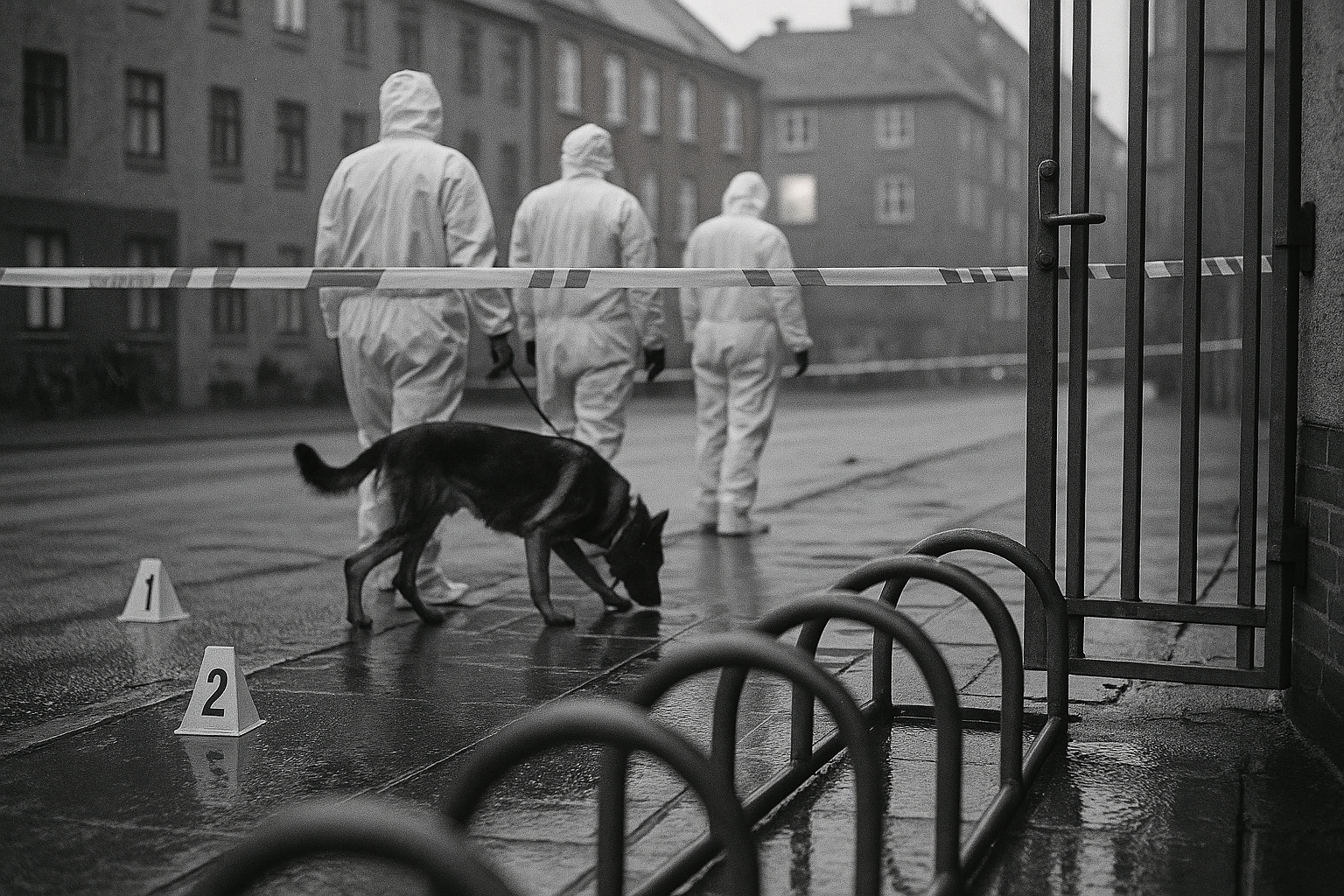
Copenhagen police probe death, forensic teams search scene, case treated as suspicious
- Berlingske reported that Copenhagen Police deployed investigators, forensic staff and dog patrols on Friday.
- Police described the case as involving a suspicious circumstance tied to a death in Copenhagen.
- No public explanation had yet been given for what officers found at the scene.
- The scale of the response suggests police were preserving evidence while determining whether a crime had been committed.
Copenhagen Police spent Friday investigating a death in the capital with detectives, forensic technicians and dog patrols at the scene. Berlingske reports that officers were examining what police called a suspicious matter connected to the death.
That wording places the case outside the category of an ordinary death from illness or age, at least at this stage. Danish police usually reserve larger deployments of technicians and search dogs for scenes where the sequence of events is unclear and physical traces still matter. The public information released so far is narrow: police confirmed the investigation, but not the identity of the dead person, the exact location, or what prompted the suspicion. Those omissions are common early in an inquiry, especially when officers are still mapping movements, securing the area and checking whether anyone else was present.
For residents, the immediate question is whether this was an isolated death behind closed doors or part of a wider problem tied to a building, a street or known violent activity. A suspicious death can point in several directions at once: assault, neglect, overdose, or an attempt to conceal what happened before police arrived. The use of dog patrols suggests investigators were not limiting themselves to the room where the body was found, but were also looking for traces beyond the immediate spot. Until police say more, the strongest fact is the scale of the response itself.
By Friday, the visible scene consisted of investigators, technicians and dogs working a death inquiry in Copenhagen. Police had not yet reduced it to natural causes.
Källor: Berlingske