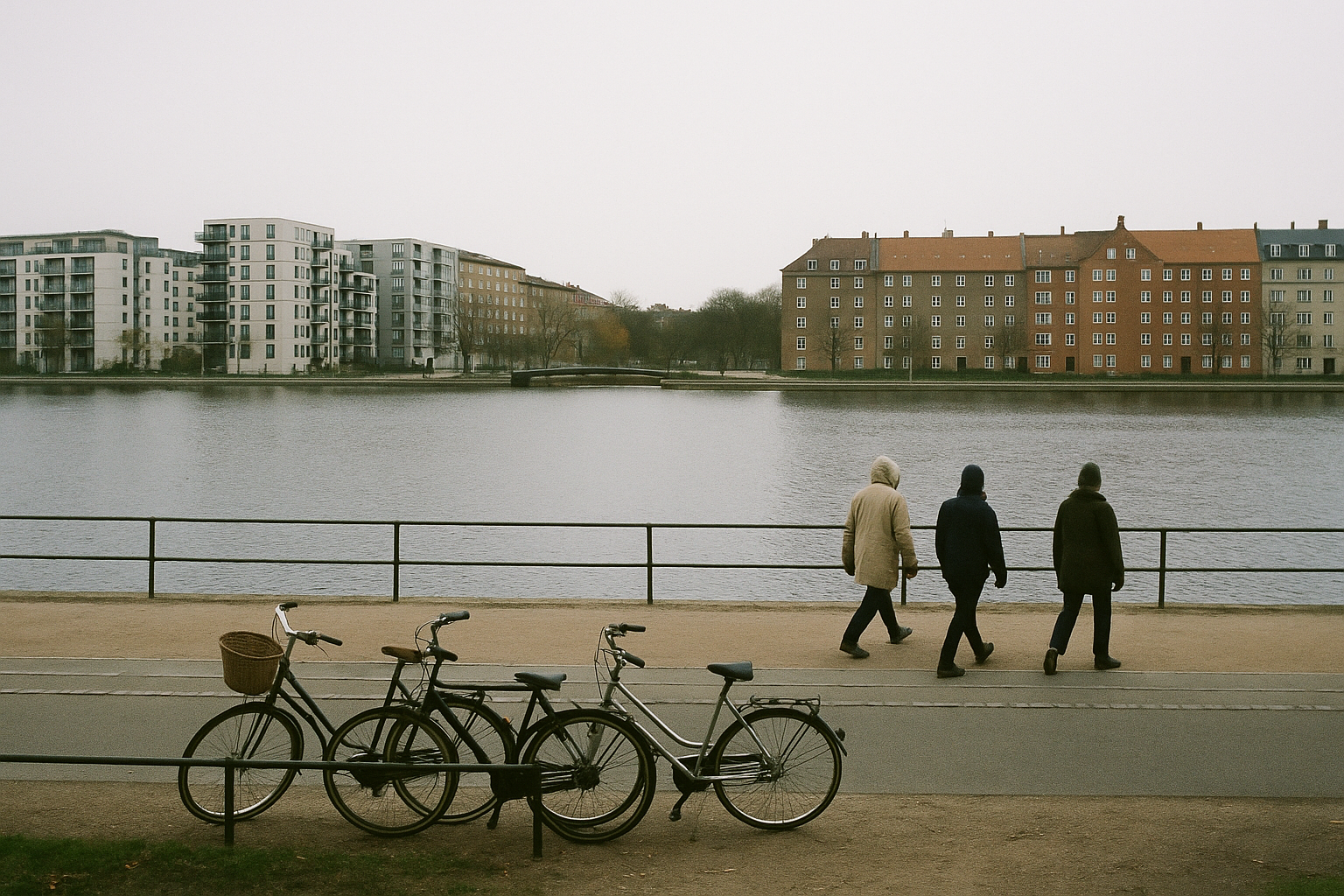
Copenhagen prices split by a lake, planning and prestige carve 27 percent gap within the city
- DR reports a 27 percent price gap between homes on opposite sides of a Copenhagen lake
- The differences appear within short distances near the city centre, not only between centre and suburbs
- School catchments, transit access, housing stock and neighbourhood reputation help drive the gap
- For buyers shut out of prime districts, a few hundred metres can mean a materially different mortgage
Homes on one side of a Copenhagen lake are selling for 27 percent less than homes directly opposite, according to a new local comparison by DR reports. The finding is less a curiosity about postcodes than a map of scarcity inside the Danish capital, where price differences that would define separate towns elsewhere can appear within a short walk of the city centre.
DR’s reporting points to a market where distance alone explains little. Buyers are not only paying for square metres or proximity to central Copenhagen, but for a stack of local filters layered on top of each other: school catchment areas, access to metro and S-train services, the age and type of housing stock, street-level reputation, and whether an area has been renovated, protected or left with a weaker status in the city’s internal hierarchy. A lake, a major road or a rail corridor can act as a hard border in valuations even when the physical separation is minor.
That is how a price cliff forms. On one side, the housing stock may be dominated by larger owner-occupied homes in districts with long-established prestige, stronger schools and easier access to the parts of Copenhagen where high-income households already cluster. On the other, there may be more mixed development, smaller homes, a heavier share of rental housing, or neighbourhoods that entered the owner-occupied boom later and at lower levels. Redevelopment can narrow such gaps over time, but it can also sharpen them by concentrating new investment in already expensive pockets while adjacent areas remain the city’s discount option.
Planning rules matter because they ration what can be built and where. In a city with tight supply, protected districts, height limits, slow approval processes and high demand for central addresses, each micro-area becomes its own market. That leaves ordinary buyers searching not for cheap housing, which central Copenhagen no longer offers, but for the least expensive side of a boundary that banks will still finance and households can still reach by bicycle, train or bus. A difference of 27 percent across a lake is a lifestyle distinction for some buyers; for others it is the difference between entering the market and staying tenants.
The result is a capital that looks continuous on a map but behaves like a chain of gated submarkets without gates. The water is the same on both sides; the monthly payment is not.
Källor: DR Nyheder