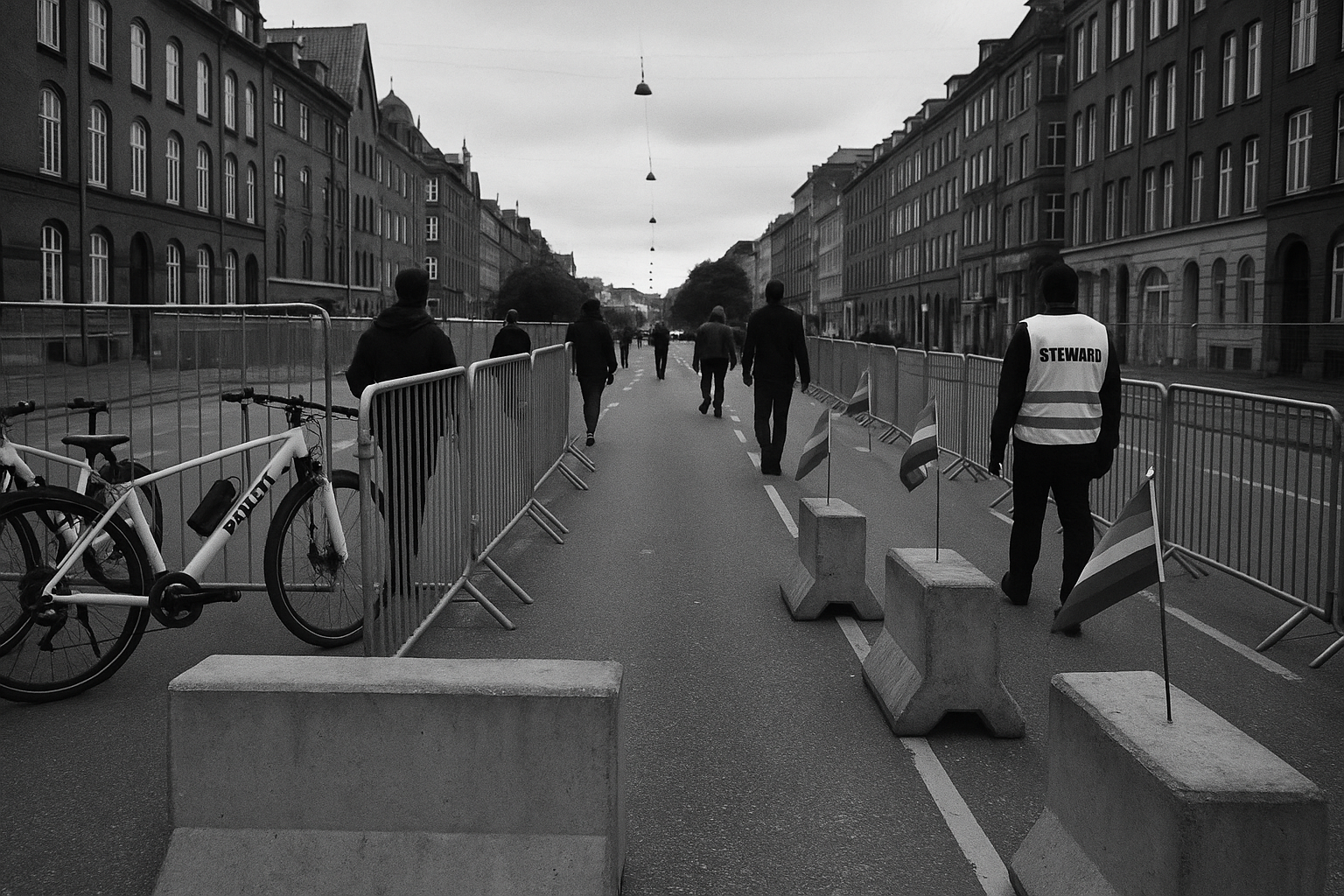
Copenhagen Pride tightens security, Berlin attack sharpens costs of open streets
- Copenhagen Pride says security has been a standing priority for years after the Berlin vehicle attack renewed attention on parade risks.
- Large public events in Nordic capitals now routinely plan for hostile vehicles, access control and emergency response alongside logistics and celebration.
- The trade-off is concrete: more barriers, road closures and police coordination mean higher costs and a more controlled event footprint.
Copenhagen Pride moved quickly to stress its security planning after the deadly vehicle attack in Berlin, where a car drove into a crowd and turned an ordinary public gathering into a mass-casualty scene. In Denmark, Berlingske reports that the organisers say the Copenhagen parade has had a strong security focus for many years.
That answer is reassuring up to a point, but it also describes a broader shift in how Nordic capitals now stage large summer events. A parade route is no longer just a route. It is a chain of roadblocks, access points, emergency lanes, radio links, medical plans and decisions about which streets can stay open and which cannot. Vehicle barriers, temporary closures and tighter traffic management do not merely protect crowds; they also change how a city moves for a day and who pays for the interruption.
For organisers, the costs are not abstract. More security means more coordination with Copenhagen Police, more staff, more equipment and less room for improvisation. For visitors and residents, it can mean longer detours, restricted access and a more managed event where the old idea of simply drifting in from a side street becomes harder to maintain. The same pressure is visible across the region, where major festivals, city-centre concerts and national-day gatherings are planned against scenarios that would once have belonged mainly to counterterror briefings.
Other Nordic cities have already moved in the same direction. Stockholm, Oslo and Helsinki all host large outdoor events in dense urban areas where hostile-vehicle protection, evacuation routes and emergency readiness now sit beside permits, stage schedules and sanitation. The pattern is visible even when officials avoid dramatic language: more concrete blocks, more patrol vehicles, more controlled entry points. Open civic rituals still go ahead, but they do so inside a thicker ring of logistics.
Copenhagen Pride's statement suggests the organisers want to show continuity rather than alarm. That is understandable. Public events built around visibility and inclusion depend on a sense of ease, and security works best when it does not dominate the scene. But the planning burden keeps growing, and each new attack elsewhere becomes a local budgeting and policing question within hours.
The parade can still look festive from the pavement. At street level, it is also a protected corridor where every parked vehicle, intersecting road and ambulance route has already been discussed.
Källor: Berlingske