Dalabyggð votes without lists, 534 names fill ballot, four volunteers cover seven seats
- Dalabyggð has 534 people on the electoral roll, while only four people declared for seven council seats and seven deputy seats.
- Seven Icelandic municipalities received no candidate list for the local elections, triggering open elections instead.
- Each voter must handwrite names on the ballot, and election officials must read every ballot and every name twice.
- Current councillors can decline re-election, and some residents may end up elected despite having little interest in serving.
Dalabyggð, a rural municipality in western Iceland, is heading into municipal elections with 534 eligible names on the ballot and only four declared candidates for seven council seats. As RÚV reports, no party list was submitted, so voters must choose from the municipality’s eligible residents one by one in an open election.
The arithmetic is awkward before a single vote is cast. Dalabyggð needs seven full council members and seven deputies. Four people offered themselves at a nomination meeting. Everyone else who is eligible, broadly healthy and under 65, can in principle be elected unless exempted. Former councillors may also decline service for as many terms as they have already served, which narrows the pool further in a place where the pool was small to begin with.
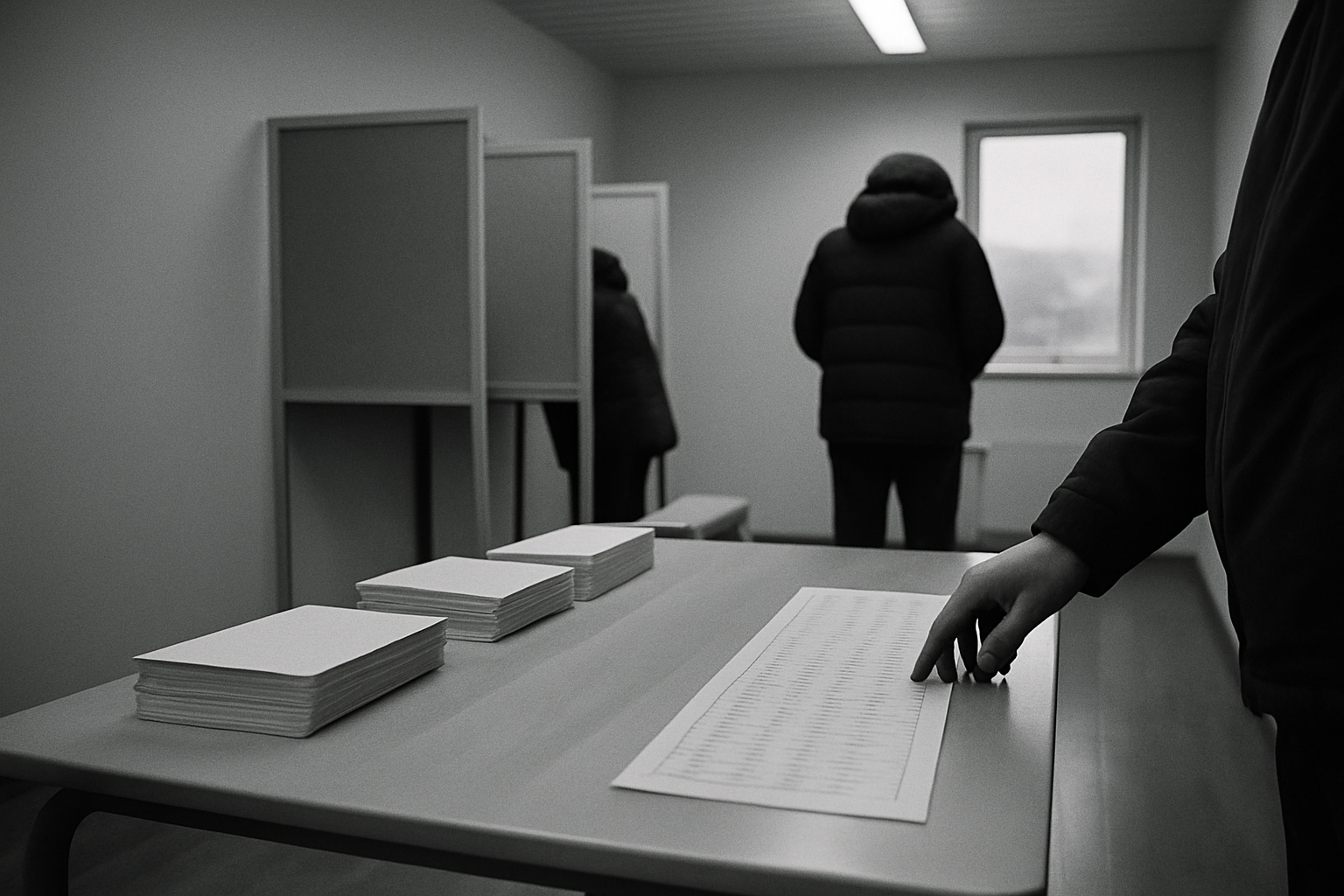
Dalabyggð is not alone. RÚV says seven Icelandic municipalities received no candidate list for these local elections, forcing open contests. Dalabyggð is the largest municipality in the country using this format, which turns a local election into a handwritten sorting exercise. Voters may write one name or as many as 14, covering both ordinary and deputy seats. The municipality is expanding from its usual two voting booths to six, and election officials must read every ballot and every name twice.
The system produces a council, but not necessarily one assembled around a common programme or even a shared willingness to serve. Sitting councillor Skúli Hreinn Guðbjörnsson, who has asked not to continue, told RÚV he would have preferred a list election because it gives elected members more backing and clearer points of support. In an open election, candidates do not campaign as a team beforehand, and some of those chosen may have made no case to voters at all. A council formed this way can begin its term with members who were selected individually, reluctantly, or by local name recognition rather than by any stated platform.
That points to the incentives around local office in small municipalities. The job carries responsibility for budgets, services and planning, but in a village-scale electorate it also carries visibility, friction and little room to hide from neighbours. Where too few residents actively want the role, the legal framework still has to populate the seats. The result is not a shortage of names on paper but a shortage of consent.
In Dalabyggð, election workers are asking voters to write clearly so there is no doubt about whom they mean. A municipality of 534 voters will spend election day deciphering handwriting to find seven people willing to govern it.
Källor: RÚV