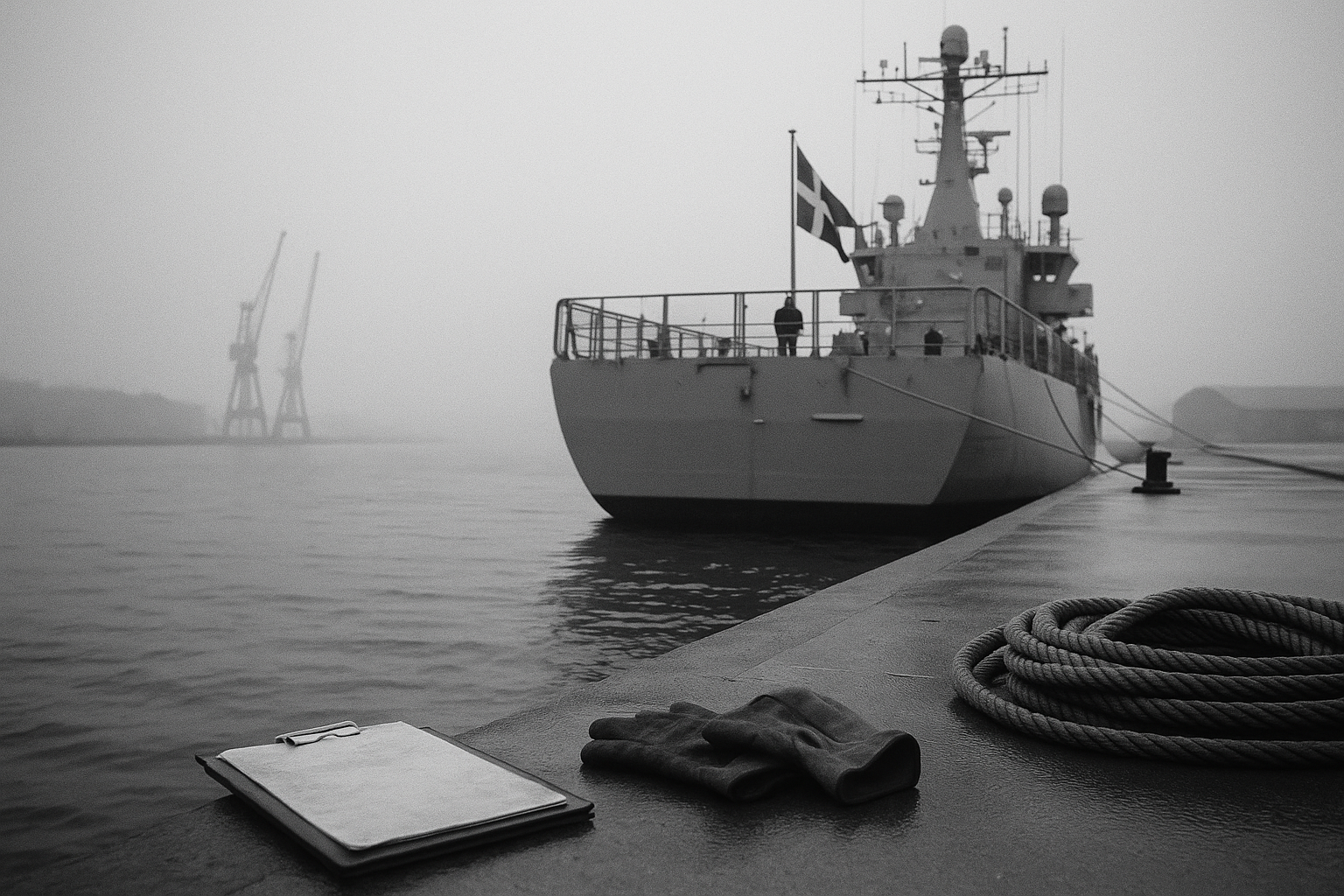
Danish navy runs 10% short, Baltic patrols and North Atlantic duties depend on fewer crews
- Documents obtained by TV 2 and DR show that about 10% of positions in the Danish navy are unfilled.
- The shortfall affects a service tasked with patrols, surveillance, infrastructure protection and sustained operations in the Baltic and North Atlantic.
- The gap sharpens a broader defence question: whether rising budgets are producing deployable capability or only larger procurement plans.
- A useful comparison now is with staffing levels in Denmark’s army and air force, and with civilian labour market competition for technical personnel.
Denmark’s navy is operating with roughly one in ten posts unfilled, according to internal documents obtained by TV 2 and DR and described by Berlingske, which reports that the service is struggling to staff key positions. For a small maritime state sitting between the Baltic and the North Sea, the figure is less an HR statistic than a measure of how many hulls can sail, how long they can stay out, and how often crews can rotate without wearing down the same people.
Denmark’s navy, the Søværnet, carries tasks that exceed simple coastal patrol. It monitors some of Europe’s busiest waters, contributes to Baltic security, protects critical maritime infrastructure after the sabotage of Nord Stream sharpened attention on pipelines and cables, and sustains operations stretching into the North Atlantic. A vacancy rate at that level means the pressure does not fall evenly. It lands on engineers, technicians, watch officers and specialists whose absence can keep a ship tied up even when the vessel itself is available. Defence budgets can rise on paper while usable sea time shrinks in the engine room.
The staffing gap also exposes a bottleneck that procurement announcements often leave untouched. Denmark, like its Nordic neighbours, has spent the past two years promising faster rearmament under pressure from Russia’s war in Ukraine and a harsher security climate in the Baltic region. Ships, sensors and weapons can be ordered with parliamentary appropriations; trained crews take longer. If recruitment lags, or if experienced personnel leave for better-paid civilian work, the state buys platforms before it secures the people needed to run and maintain them. The result is a force structure that looks fuller in budget documents than on the water.
The navy’s shortfall now invites an obvious comparison with the army and air force. If the problem is concentrated at sea, pay scales, deployment patterns and competition from civilian shipping, offshore energy and technical industries may explain part of it. If the same pattern appears across all three services, the issue sits higher up: training capacity, retention, housing, family life and a labour market that can often outbid the military for skilled workers. Denmark is not short of rhetoric about defence. It is short of sailors.
The number in the documents is simple enough: every tenth naval post stands empty. In a fleet measured in a handful of ships rather than dozens, that is the sort of arithmetic that leaves a berth dark at the quay.
Källor: Berlingske