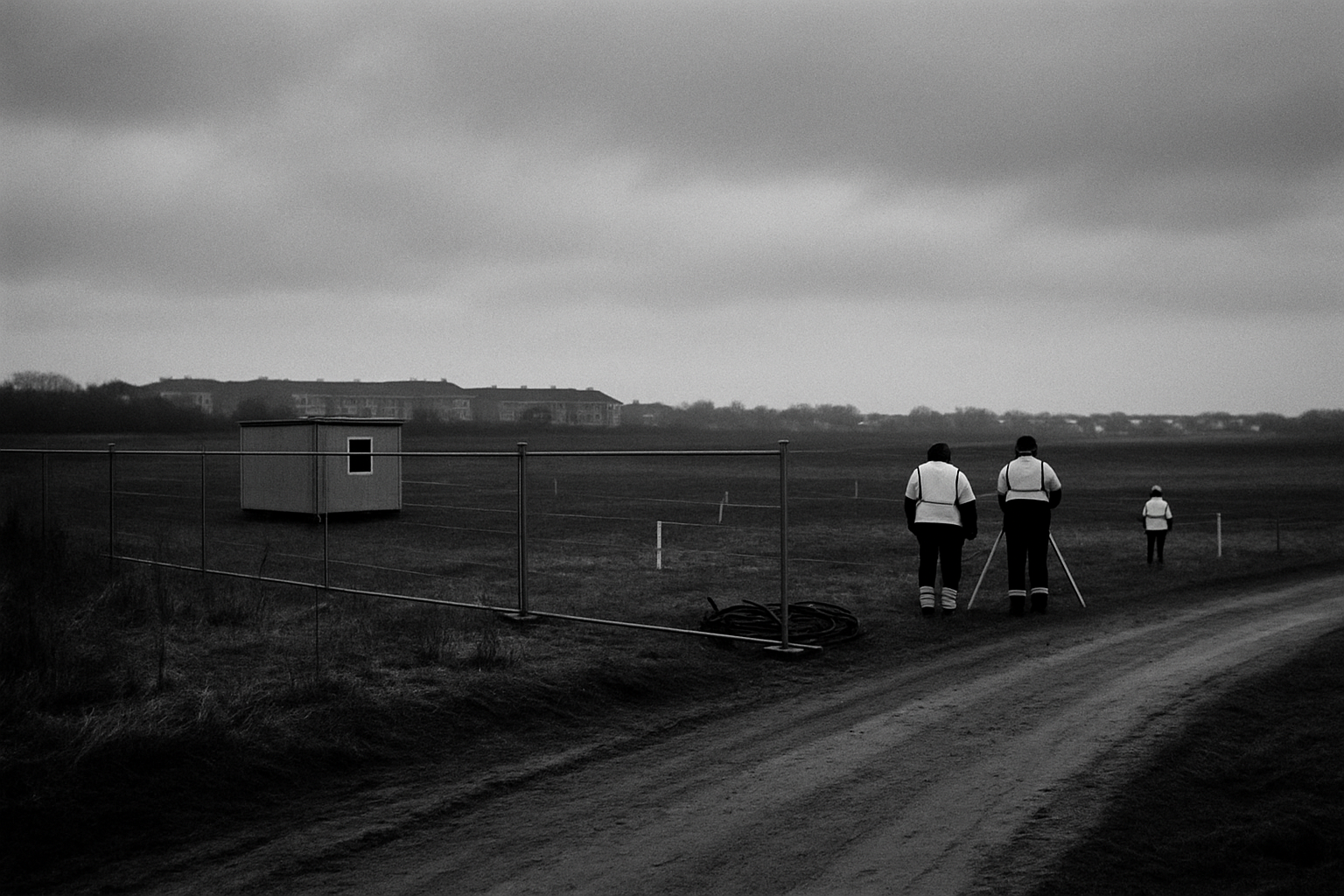
Denmark plans new barracks, leaked paper exposes land and budget test, rearmament reaches municipalities
- The recommendation from Denmark’s chief of defence says rising troop numbers require one or more new barracks.
- The issue turns military expansion into a municipal and budget question involving land use, roads, utilities and local acceptance.
- Personnel growth also requires housing, training areas, logistics and support functions, not just recruitment targets.
- The Danish case offers a concrete measure of how serious Nordic rearmament plans are once they reach construction and local politics.
Denmark’s military will need one or more new barracks as force levels increase, according to a leaked internal defence document cited by DR Nyheder. The recommendation, attributed to Chief of Defence Michael Hyldgaard, turns the country’s rearmament plans into a concrete fight over land, construction and municipal capacity rather than another round of personnel targets.
That shift matters because barracks are not an abstract line in a defence agreement. They require land, buildings, roads, utilities, training space, storage, maintenance and housing for soldiers who are meant to live and work there. A government can announce more troops in Copenhagen; a kommune, the Danish municipality, has to absorb the traffic, zoning conflicts and public works when the units arrive. The document described by DR suggests Denmark has reached the point where expansion can no longer be handled by squeezing more people into the existing estate.
That is where the real price of rearmament appears. New soldiers need instructors, depots, vehicle parks, ammunition handling, medical support and places to train. If existing bases are full or badly placed, the state must either build new capacity or accept that the headline numbers will outrun the armed forces’ ability to use them. The contest over location also creates winners and losers: municipalities that secure a barracks gain jobs and state spending, while nearby residents inherit noise, military traffic and land-use restrictions.
DR reports that the discussion has already become a political game over placement. That was predictable enough. Once a barracks moves from strategy paper to map, the question is no longer whether Denmark supports stronger defence in principle, but which municipality gets the payroll and which budget takes the bill for access roads, sewage, power connections and surrounding infrastructure. If the state wants speed, it may also have to test how hard it can push local planning processes aside.
The Danish case is also a useful read across the Nordic region. Every government in northern Europe now talks about larger armed forces, fuller mobilization stocks and stronger territorial defence. The bottleneck is rarely the speech. It is land, concrete, procurement lead times and the long chain of support functions that make a battalion more than a press release. Denmark’s need for new barracks is one of the first visible signs that rearmament is leaving the conference room and entering the planning office.
For the region, that has consequences beyond Denmark. If one Nordic country expands its army footprint, the others will face the same arithmetic: where units are stationed, who hosts training areas, which industries supply them, and how much duplication small states can afford. A serious Nordic force structure would divide tasks and build depth where each country already has strengths. Denmark is now at the stage where those choices show up as buildings on contested land.
The leaked document does not just ask where the next barracks should stand. It asks whether Denmark is prepared to fund the roads, pipes, training grounds and permanent footprint that come with every additional soldier.
Källor: DR Nyheder