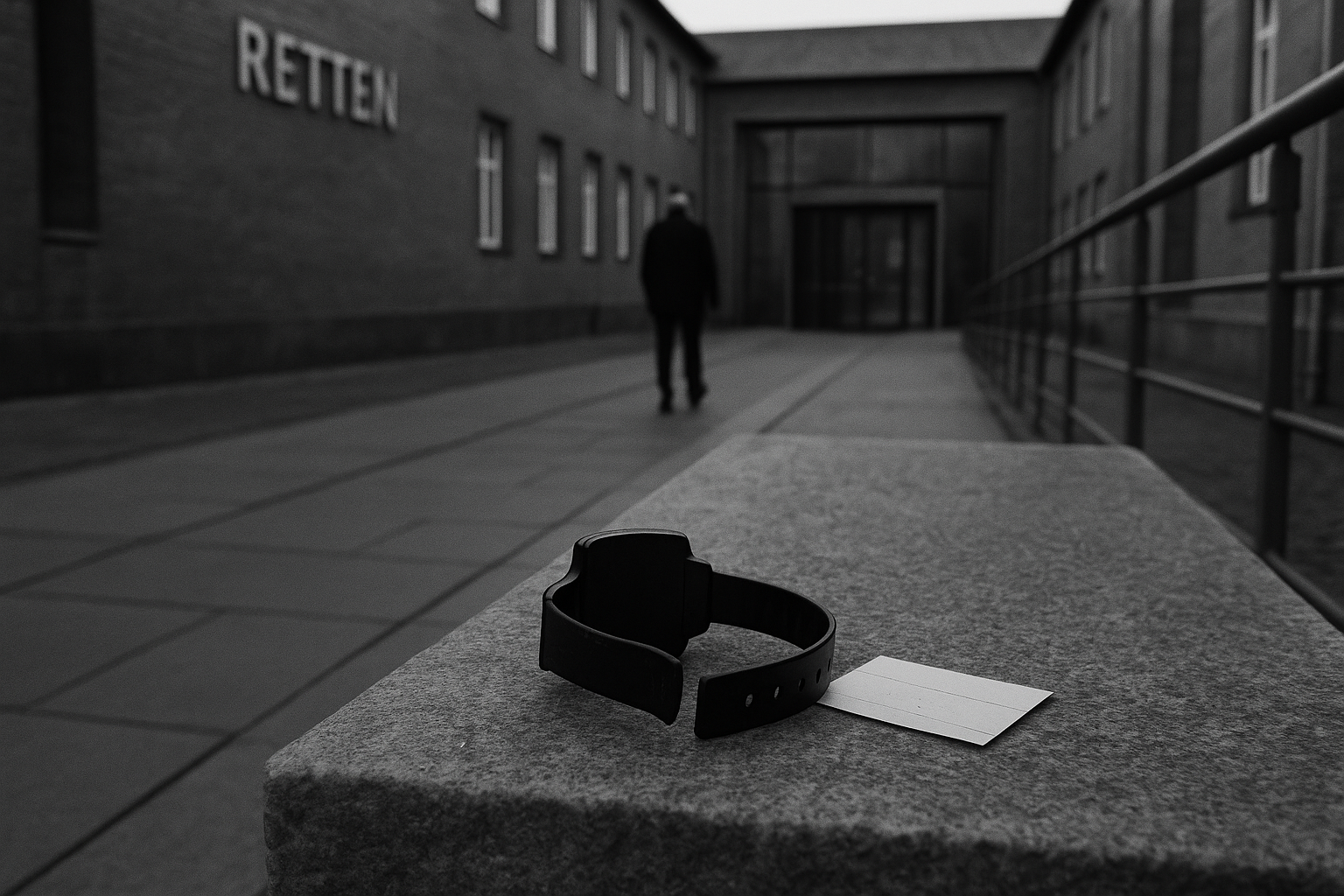
Denmark tests reverse ankle monitor, first court case probes custody alternative
- The defendant is accused of taking off the reverse ankle monitor and failing to attend required appointments.
- The case is the first court test of Denmark’s new monitoring scheme.
- The system was introduced as an alternative to remand custody in selected cases.
- Its credibility now depends on whether breaches carry fast and predictable consequences.
Denmark’s first criminal case over the “reverse ankle monitor” is heading to district court after a man was charged with removing the device and failing to appear for appointments where he was required to wear it. Berlingske reports that the prosecution case will become the first courtroom test of a monitoring system introduced as an alternative to pre-trial detention.
The scheme flips the usual logic of electronic tagging. Instead of confining a convicted offender to a home, the device is used to control where a suspect in a criminal case may go while remaining outside custody. That makes enforcement the central question. If a suspect can remove the tag, miss check-ins and remain at liberty long enough for the breach itself to become a separate court matter, the state has added a new administrative layer while leaving the original risk where it was.
The Danish state introduced the measure to give courts another option between remand custody and release on ordinary conditions. For defendants, the incentive is obvious: avoid jail while awaiting trial. For the authorities, the calculation is different. Pre-trial detention is expensive, politically sensitive and legally restrictive. A monitored release promises control at lower cost and with less visible coercion. The first prosecution suggests the system still depends on the oldest enforcement tool available: the threat that non-compliance will later be punished.
That matters beyond a single defendant. Courts only use custody alternatives if they believe violations are detected quickly and answered predictably. Police only treat them as workable if the equipment, reporting routines and breach procedures produce something firmer than paperwork. Otherwise the choice is not between detention and control, but between detention and a softer condition whose failure has to be processed after the fact.
Berlingske’s report identifies this as the first case of its kind to reach a district court. That alone says something about how new the system remains and how little public evidence there is on repeated use, breach rates and sanction practice. A control measure sold as a substitute for custody is now being tested through an allegation that the control itself was ignored.
The case concerns a man accused of taking off a state-issued ankle device and not turning up when he was supposed to have it on. The equipment was meant to keep him out of a cell.
Källor: Berlingske