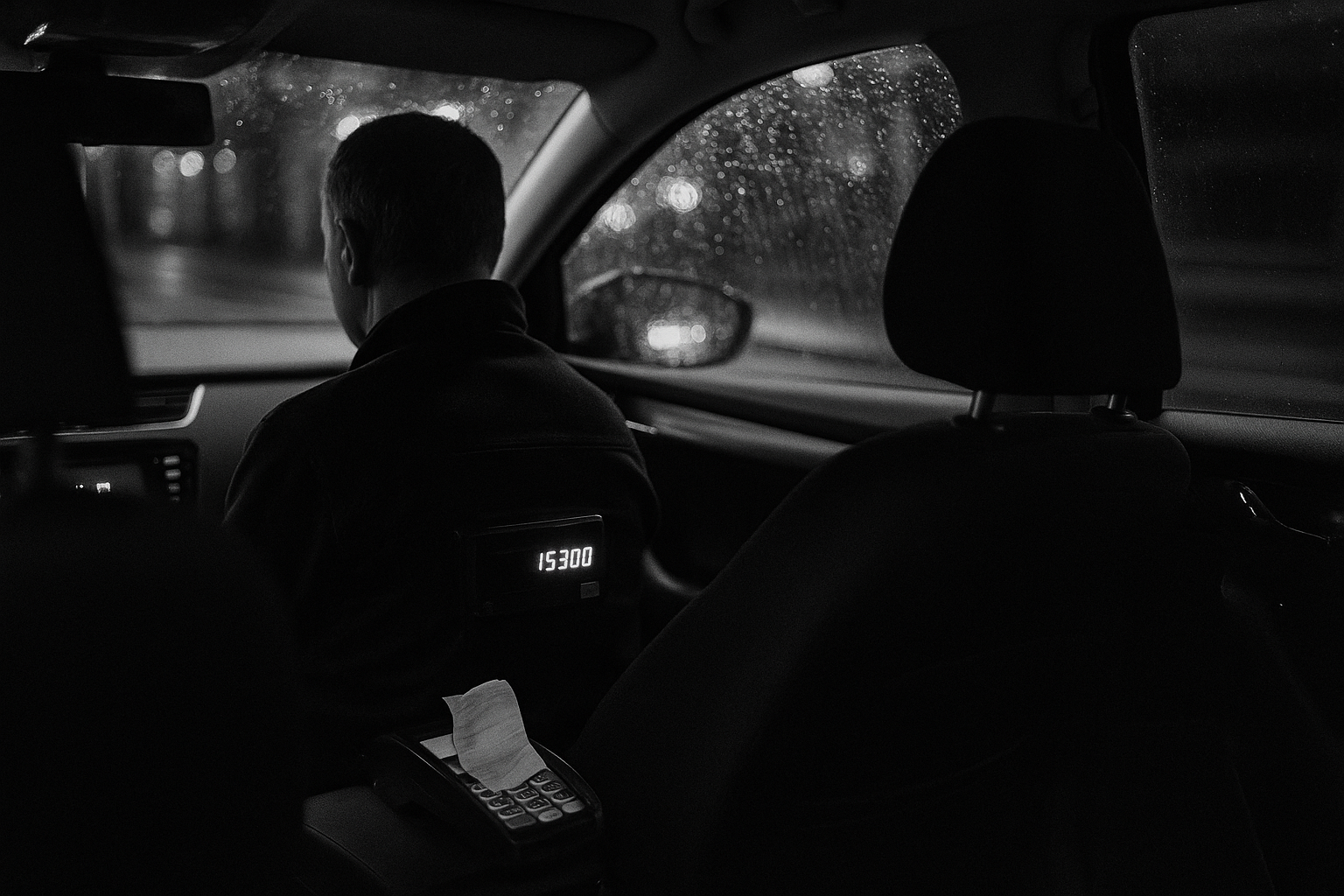
Drammen taxi assault, payment dispute turns violent, drivers tighten routines
- Police say the driver was struck several times after requesting payment from a customer in Drammen
- The incident adds to a recurring problem for taxi drivers and other front-line service workers exposed to violence over routine transactions
- Taxi firms have increasingly relied on card payments, camera systems and stricter pickup rules to reduce risk
- The cost of street-level disorder is often carried by workers with little ability to refuse, restrain or recover losses
A taxi driver in Drammen was allegedly punched several times after asking a customer to pay for the ride, a case Nettavisen reports from southeast Norway. Police were notified after the assault, which began with an ordinary fare dispute and ended with the driver absorbing the physical cost of enforcing a basic transaction.
On one level, it is a local crime brief: one driver, one passenger, one night in Drammen. But taxi work has for years concentrated several risk factors in the same seat — lone workers, late hours, intoxicated customers, cash or payment disputes, and a service model that requires drivers to transport strangers before payment is secured. When these encounters turn violent, the loss is rarely limited to the fare. Drivers lose work time, companies face higher security costs, and routine precautions become stricter for every passenger who follows.
Norwegian taxi operators have gradually moved toward measures designed for exactly this problem: more card-first payments, in-car cameras, partitions in some vehicles, GPS tracking, and internal guidance on when to terminate a trip or call police. Each change solves one immediate problem while making the service less flexible and more suspicious. A driver who insists on prepayment, refuses a stop, or avoids certain pickups is not inventing new rules; he is pricing in the last assault.
The same burden falls across other public-facing jobs. Delivery drivers, bus staff, shop clerks and security guards are expected to keep everyday commerce moving while handling the people least willing to follow ordinary rules. The state records the incident as assault or public disorder. The worker records it as another shift that now requires more caution, more documentation and less trust.
For Drammen, the useful question is whether this was an isolated attack or one entry in a longer police log of threats and violence against drivers in the area. If more cases are accumulating, the adjustment will not appear first in speeches or policy papers. It will show up in dispatch routines, cash-handling rules, rejected fares and cameras pointed at the back seat.
The reported trigger in Drammen was a request for payment. The driver was then allegedly beaten for asking to be paid.
Källor: Nettavisen