E6 closes again in Kåfjord, Troms route stays exposed, state leaves Nordnes to the next slide
- A landslide hit the E6 at Nordnes in Kåfjord overnight to Wednesday, forcing a closure.
- The E6 is the main north-south road through the area, so each shutdown hits residents, freight traffic and emergency travel.
- Repeated closures turn a local geotechnical problem into a regional transport bottleneck.
- The recurring disruption raises the cost of relying on temporary reopening rather than removing the underlying risk.
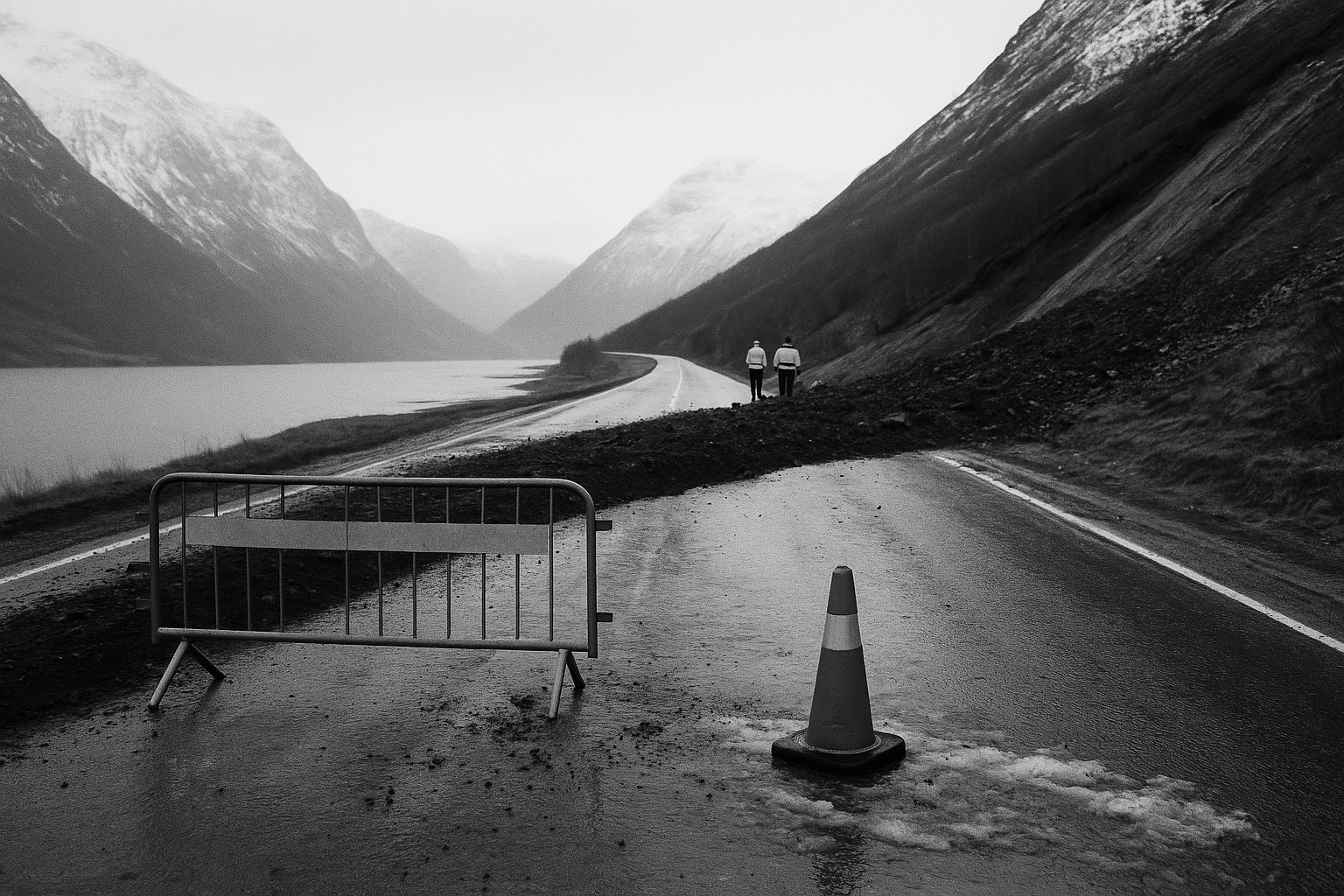
A landslide swept over the E6 at Nordnes in Kåfjord in Troms during the night to Wednesday, closing the road again on one of northern Norway’s main transport corridors. Nettavisen reports that the slide came overnight and left the route shut while authorities assessed the site.
The immediate disruption is local and concrete: motorists are stopped, freight is delayed, and a long, thin region loses capacity on the road that carries much of its daily movement. But the geography makes this more than a routine traffic incident. The E6 is the spine of road transport through northern Norway, and when a vulnerable section in Kåfjord goes down, the cost is spread across far more than the immediate area. Hauliers lose time, deliveries slip, workers and residents must reroute or wait, and emergency access becomes less predictable on a corridor that does not have abundant parallel options.
That is what repeated closures on the same route expose. A national road can be marked open on most days and still fail as infrastructure if users must price in the chance that a hillside will close it again. For local businesses, that means larger margins, longer buffers and less certainty. For households, it means planning around a road that is treated as permanent infrastructure but behaves like a provisional one. The state, meanwhile, can reopen a road after each event and still leave the underlying weakness in place, shifting the cost of that choice onto drivers, municipalities and firms that depend on the route.
In Troms, this carries a wider implication than road maintenance alone. Northern settlements depend on a small number of links for food distribution, commercial traffic, public services and medical transport. When the main north-south artery is repeatedly knocked out by the same type of event, resilience stops being an abstract planning term. It becomes a question of whether the state is willing to secure basic internal movement in its own territory or merely manage the interruptions after each slide.
At Nordnes, the recurring image is plain enough: mud and earth over the asphalt, barriers up, and the E6 reduced once more to a closed gate on the map.
Källor: Nettavisen