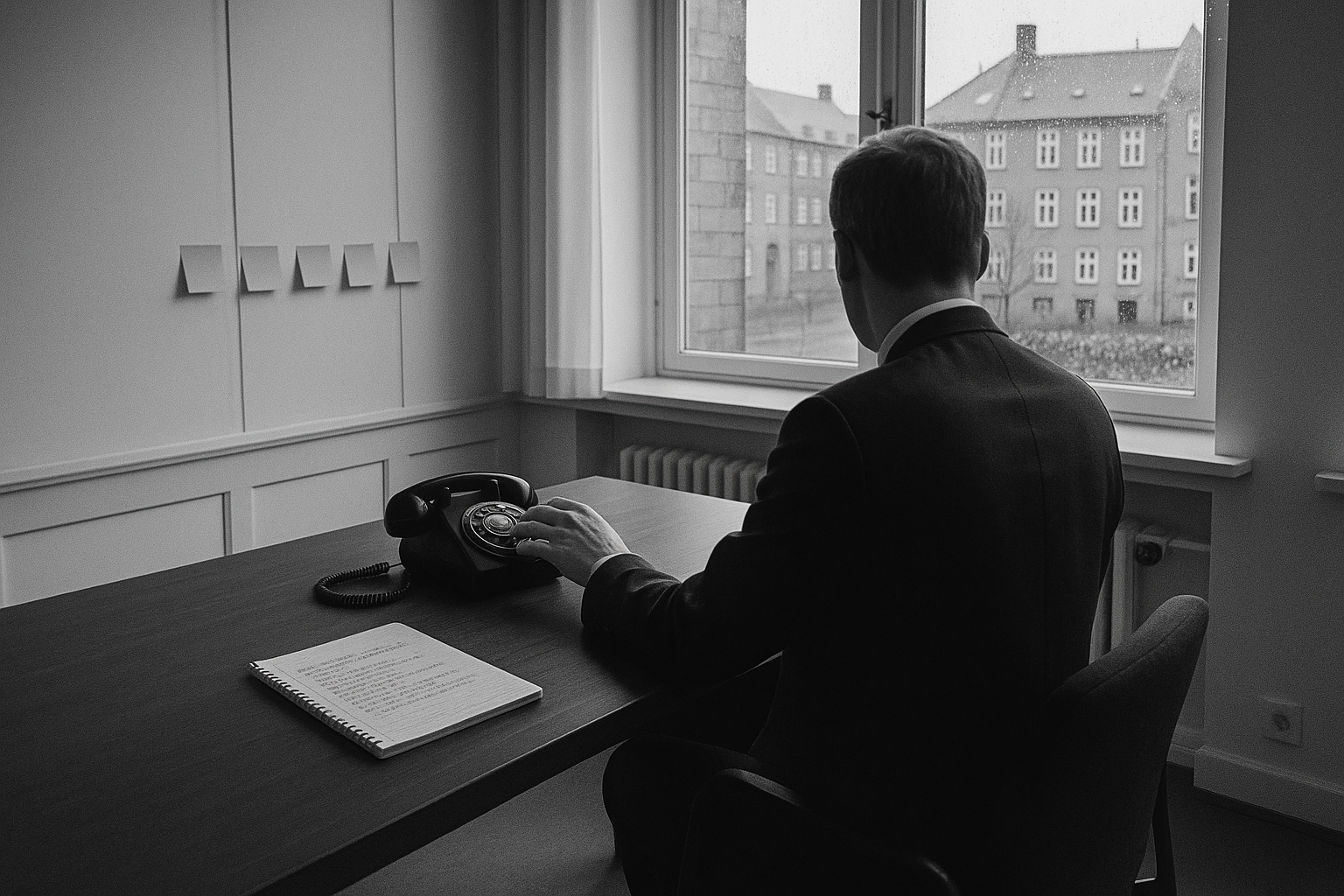
Engel-Schmidt opens startup phone line, Denmark tests business listening ritual, one hour will show what firms ask to remove
- The one-hour hotline is framed as direct access for entrepreneurs on the minister’s first day in office.
- What callers raise will matter more than the gesture itself: permits, tax rules, hiring costs, reporting burdens or financing.
- The move fits a familiar Nordic pattern in which ministers advertise accessibility while the underlying administrative load remains intact.
- A useful measure will be whether complaints lead to abolished rules or only more meetings and consultations.
On his first working day, Denmark’s new business minister Jakob Engel-Schmidt is opening a one-hour phone line for entrepreneurs. Berlingske reports that callers will be invited to say where “the shoe pinches” for Danish founders and small firms.
The gesture is small, but it is specific. A minister with a fresh title is not announcing a strategy paper, a partnership forum or a consultation process. He is asking companies to call directly. That makes the next question fairly plain: what arrives on the line when owners get a rare chance to skip the normal chain of agencies, municipal offices, tax authorities and labour-market rules. If the complaints cluster around permits, reporting duties, VAT, dismissal rules, pension obligations or access to staff, the ministry will have a rough map of where time and money are being burned. If the calls produce little beyond networking requests and general encouragement, the exercise will look more like stagecraft than diagnosis.
Danish politicians often present the country as founder-friendly, and on several international measures Denmark does perform well on digital administration, contract enforcement and general ease of doing business. That does not settle the question for small firms. A company can be easy to register and still spend its first years feeding information to multiple authorities, waiting for municipal approvals or paying fixed compliance costs that large incumbents absorb more easily. One hour of calls will not change that arithmetic. It can, however, expose which frictions entrepreneurs consider expensive enough to raise with a minister when the window opens.
The Nordic comparison sits in the background. The region is full of governments that promise simplification, digitisation and one-stop shops. Sweden, Finland, Norway and Denmark all market themselves as efficient states; small business owners in each country can usually list the forms, sector rules and employer obligations that survived the branding. The useful benchmark is not how quickly ministers answer the phone but how many permissions disappear, how many deadlines are merged, and how often a firm can expand without hiring an accountant before hiring a second employee.
Engel-Schmidt’s phone line will last an hour. The more durable test is whether the ministry later publishes what entrepreneurs asked to remove, and which rules are still there when the line closes.
Källor: Berlingske