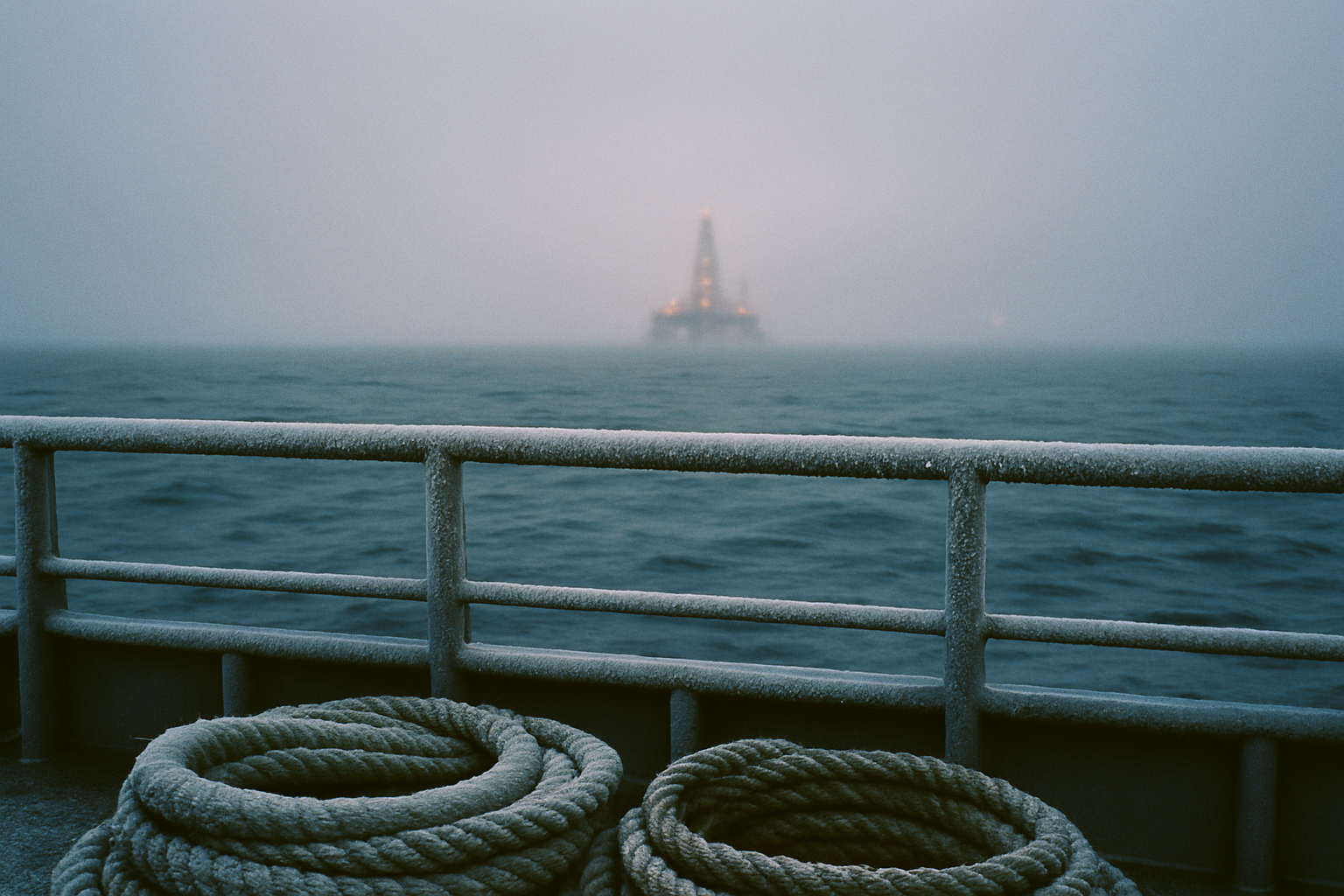
Equinor strikes oil in Barents Sea, extending Norway's Arctic hydrocarbon frontier near Russian border
- Equinor confirms oil find at Polynya Tubåen prospect in the Barents Sea
- Discovery strengthens Norway's fiscal and strategic position in the High North
- Barents Sea exploration sits at the intersection of energy policy, welfare state funding, and Arctic defence
- Every new platform near the Russian border doubles as a sovereignty marker
Equinor and its partners have made an oil discovery at the Polynya Tubåen prospect in the Barents Sea, Aftenposten reports. The find adds to Norway's hydrocarbon inventory in the country's northernmost — and most politically sensitive — exploration zone. Details on recoverable volumes and development timelines have not yet been disclosed, but any commercial discovery in the Barents Sea carries weight far beyond the barrel count.
Norway's Barents Sea acreage is not ordinary petroleum territory. It sits at the frontier of the Norwegian-Russian maritime border, in waters where NATO submarines patrol and where Russia's Northern Fleet operates out of Murmansk, barely a few hundred kilometres east. Every new drilling campaign in these waters is a sovereignty exercise as much as a commercial one. Oslo has long understood this: maintaining an active industrial presence in the High North is the most concrete way to assert jurisdiction over resources that multiple powers covet. A platform staffed and supplied from Hammerfest is worth more than a diplomatic note.
The discovery also lands at a moment when Norway faces intensifying pressure — from Brussels, from domestic green parties, and from climate litigation groups — to halt new exploration licences. The standard Norwegian rebuttal is fiscal: the Government Pension Fund Global, the world's largest sovereign wealth fund at roughly 18 trillion kroner, was built on oil and gas revenues, and the welfare state it underwrites still depends on continued production. The argument is difficult to counter with a straight face when Norway's public finances are the envy of every European treasury. Shutting down exploration would mean voluntarily abandoning wealth that competitors — Russia chief among them — would happily extract instead.
Norway's defence posture reinforces the point. Oslo has been expanding military infrastructure in the north, upgrading radar stations, increasing naval patrols, and hosting allied exercises in Finnmark. Energy installations and military assets share logistics chains, port facilities, and surveillance coverage. A commercially active Barents Sea gives Norway a reason to maintain the kind of permanent presence that deters encroachment — the same logic that drove Cold War-era fishing policy in Svalbard waters.
Equinor's partners in the Polynya Tubåen licence have not been fully detailed in initial reporting. The Norwegian state holds a direct financial interest in virtually all Barents Sea licences through Petoro, the state's own investment vehicle, ensuring that any commercial development flows directly into public coffers. Whether the discovery proves large enough to justify standalone development or will be tied back to existing infrastructure — the Goliat or Johan Castberg fields are the nearest options — will determine how quickly revenues materialise.
Brussels may object. Oslo will note that the fund just crossed another record high, and that the gas keeping German industry running this winter flows from Norwegian fields approved over similar objections a decade ago.
Sources: Aftenposten