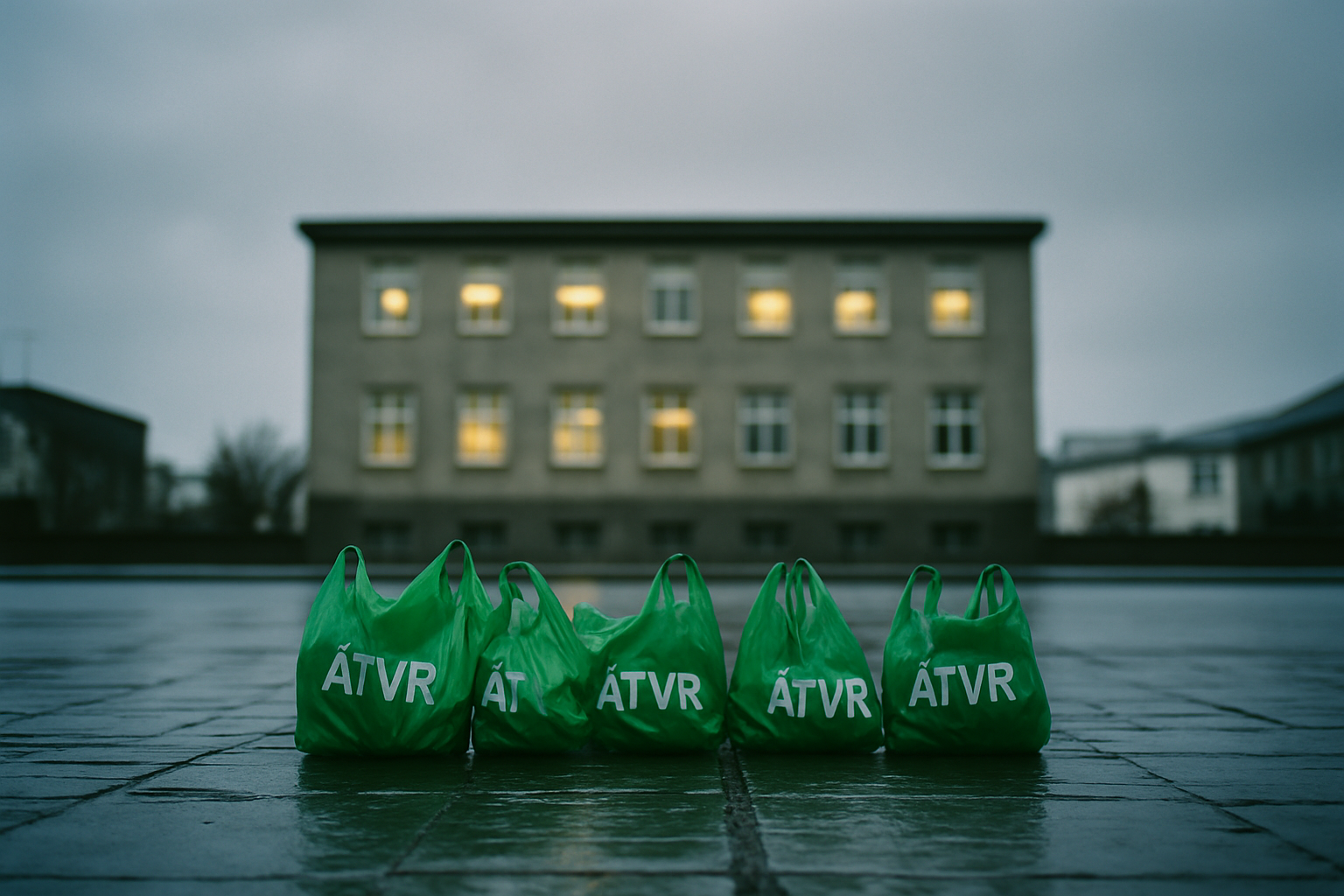
ESA Demands Iceland Justify State Alcohol Monopoly, Cites Eroded Public Health Rationale
- ESA acted on a November complaint arguing that the legal basis for ÁTVR's retail monopoly has collapsed
- Three specific breaches identified: on-site producer sales, privatised duty-free retail, and two decades of rising alcohol access
- ESA cites precedents where Norway and Sweden were found to have violated EEA rules on alcohol retail
- Iceland must explain how it justifies foreign online retailers already selling alcohol directly to consumers
The EFTA Surveillance Authority (ESA) has sent a formal letter to Iceland's Ministry of Finance demanding answers on whether ÁTVR — the state alcohol retail monopoly known to Icelanders as Vínbúðin — still complies with the EEA Agreement. RÚV reports that ESA received a complaint in November arguing that the legal foundations underpinning ÁTVR's monopoly position have eroded to the point of incompatibility with European single market rules. Iceland has until April 20 to respond to seven specific questions.
ESA's letter identifies three concrete ways in which Iceland has already undermined the public health rationale that makes state alcohol monopolies permissible under EEA law. First, the Icelandic state has permitted on-site sales of alcoholic beverages at production facilities, albeit limited to products under 12% alcohol by volume. Second, duty-free alcohol sales at Keflavík airport have been outsourced to private operators through a competitive tender — meaning the state has already decided that private parties can sell alcohol when it suits the treasury. Third, overall access to alcohol has increased over the past two decades, which directly contradicts the stated purpose of the monopoly: reducing consumption and improving public health.
The authority also raises the question of foreign online retailers registered in other EEA states that already sell alcohol directly to Icelandic consumers — a grey zone that the Icelandic government has neither regulated away nor formally authorised. ESA wants to know how Reykjavík justifies this de facto exception to ÁTVR's monopoly, and whether the state can still credibly invoke public health as the basis for maintaining it.
The legal pressure is not hypothetical. ESA's letter references two precedents in which Norway and Sweden were found to have breached EEA rules governing alcohol retail arrangements. Norway's Vinmonopolet and Sweden's Systembolaget have both faced challenges over their monopoly structures, and both cases established that a state monopoly must be genuinely non-discriminatory and consistently justified by the public health objective it claims to serve. A monopoly that the state itself keeps chipping away at — allowing producer sales here, privatising airport retail there — fits poorly into that framework.
Iceland's alcohol monopoly dates back to the end of prohibition in 1989, when beer was legalised and ÁTVR took over regulated retail sales. The public health argument was strong in a country where total prohibition had been in force from 1915 to 1935, and beer specifically remained banned until 1989. But thirty-seven years of incremental liberalisation have left the monopoly looking less like a coherent health policy and more like an institutional survivor clinging to a rationale the state itself no longer consistently applies.
ESA's seven questions ask Iceland to justify the 12% threshold for producer sales, explain the reasoning behind privatising duty-free retail, and assess whether the monopoly can still be defended on public health grounds at all. The Ministry of Finance has not yet commented publicly on the letter.
Iceland joins a pattern familiar across the Nordics: state monopolies built for one era, gradually hollowed out by exceptions and market realities, then tested by EEA rules that require the justification to match the practice. Vínbúðin's 47 stores across Iceland generated ISK 32 billion in revenue last year. The duty-free shops at Keflavík, run by private operators, sold alcohol to 1.8 million departing passengers.
Sources: RÚV