EU rewrites carbon market, Swedish forestry faces bill, Stockholm resists with little room
- Swedish forest owners and forest industry groups fear revised EU carbon rules will reduce room for harvesting while raising compliance costs elsewhere in the value chain.
- Pulp, paper and other electricity-intensive industries risk higher indirect costs if tighter emissions trading feeds through to power prices.
- Critics argue the system lets some emissions rise or shift while the cost lands on export industries in countries that already run relatively low-carbon production.
- The political question is whether Sweden wins a carve-out for forestry and industry or accepts another Brussels compromise.
Sweden’s forest industry is again bracing for a Brussels rewrite. Svenska Dagbladet reports that revised EU emissions trading rules and related climate accounting changes are stirring concern that Swedish forestry, pulp and paper, and other export industries will carry costs that larger emitters elsewhere avoid.
The immediate issue is not one single mill or one single forest owner, but the way the EU’s climate package reallocates pressure. Sweden has long relied on forests, hydropower, nuclear power and export industry to keep emissions lower than many peers while still producing steel, paper, timber and chemicals at scale. When Brussels tightens the cap, expands carbon pricing or changes how removals and land use are counted, the burden does not fall evenly across the union. It lands hardest on sectors that cannot move production without cost and on countries whose remaining emissions are tied to industry rather than coal-fired household electricity.
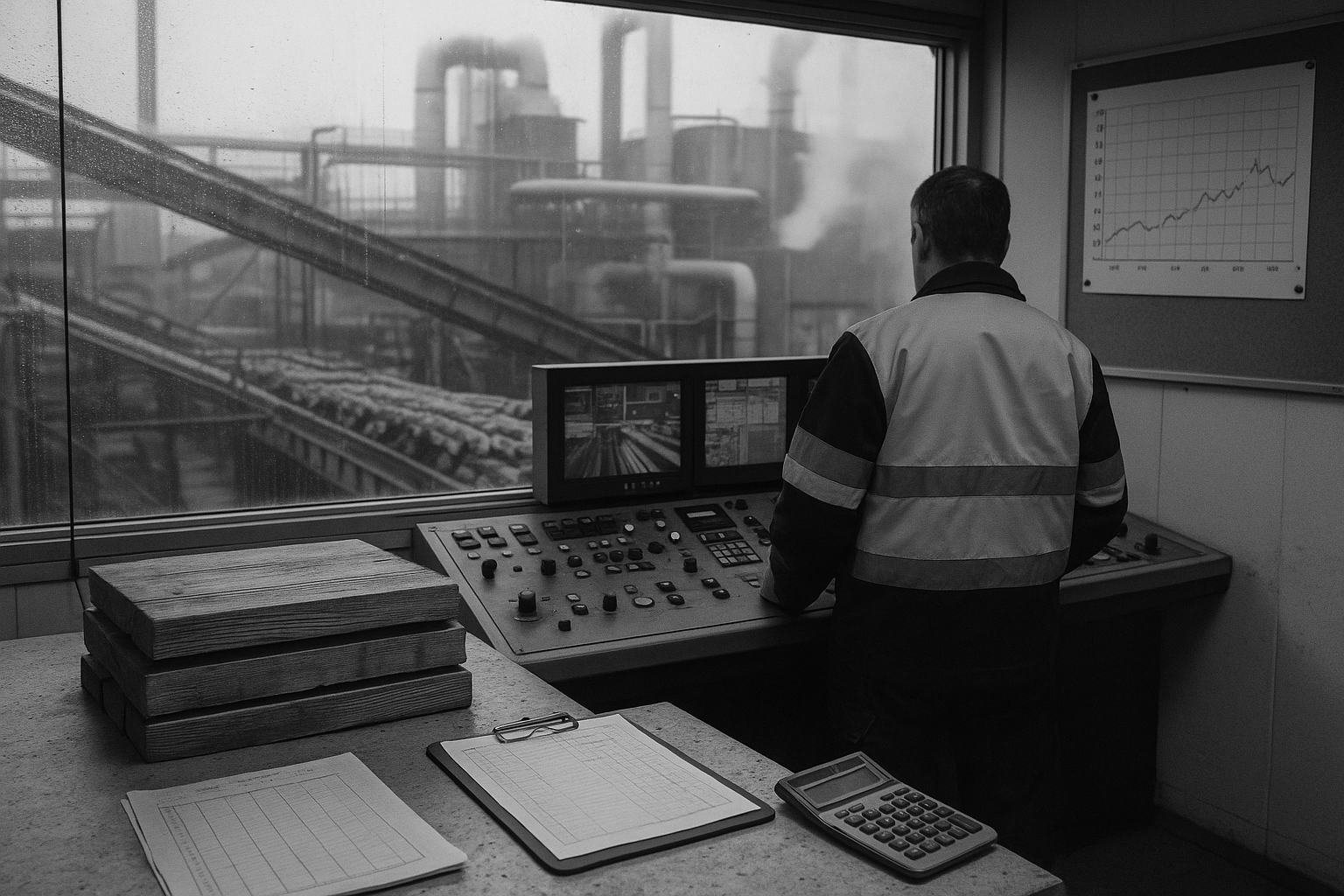
For forest owners, the concern is that stricter rules around land use, carbon sinks and harvesting can turn managed forest into a policy target. A cubic metre of timber that feeds sawmills, pulp lines or bio-based products becomes part of a carbon ledger first and an industrial input second. For pulp and paper companies, the exposure is twofold: direct climate compliance and indirect electricity costs. If emissions permits become scarcer or more expensive, power producers pass part of that cost through the market. Even in Sweden, where generation is comparatively low-carbon, the price is set in a wider European system. A mill in Norrland can end up paying for a carbon price shaped by gas and coal elsewhere.
That is where the critics’ complaint bites. If the political settlement allows higher emissions in one part of the economy to cushion growth or preserve room for larger member states, the offset can come from tighter treatment of forests, land use or industrial energy costs in countries such as Sweden. The accounting may satisfy the EU total. The invoice still arrives at the export sector. Timber owners, paper producers and energy-intensive manufacturers then face a narrower margin while competitors outside the EU face no such carbon bill at all.
Stockholm is resisting, according to SvD, but the record in these negotiations is not encouraging for sectors asking for durable exemptions. Sweden often argues that managed forests should count as a resource for substitution and carbon uptake, not merely as a reserve to be locked away on paper. Yet each revision of the rules creates a new set of benchmarks, caps and side conditions, and each one gives the Commission another handle on land use and industrial planning. The result is a familiar division of labour: Brussels writes the framework, Sweden explains why its own model is special, and industry waits to see how much room is left after the compromise.
The wider Nordic argument is the same one that has followed EU climate policy for years. Countries with forests, hydropower and export manufacturing are asked to absorb higher marginal costs so the bloc can present a common target, even when the emissions being cut are already among the least dirty in Europe. In Sweden, that debate now runs through the forest itself — from the private owner’s harvesting plan to the electricity bill at the paper mill.
The trees remain in Sweden. The carbon price is set in Brussels, and the power bill arrives every month.
Källor: Svenska Dagbladet