Eyjaganga drilling advances, municipalities and firms fund study, year-end results will decide tunnel’s fate
- First drilling phase in Vestmannaeyjar is complete; testing now continues at Landeyjar near Kross
- The current drilling campaign costs about ISK 200 million
- Funding comes from local municipalities and companies around Iceland
- Geological data on rock strength and water leakage will shape the next decision on whether further studies are justified
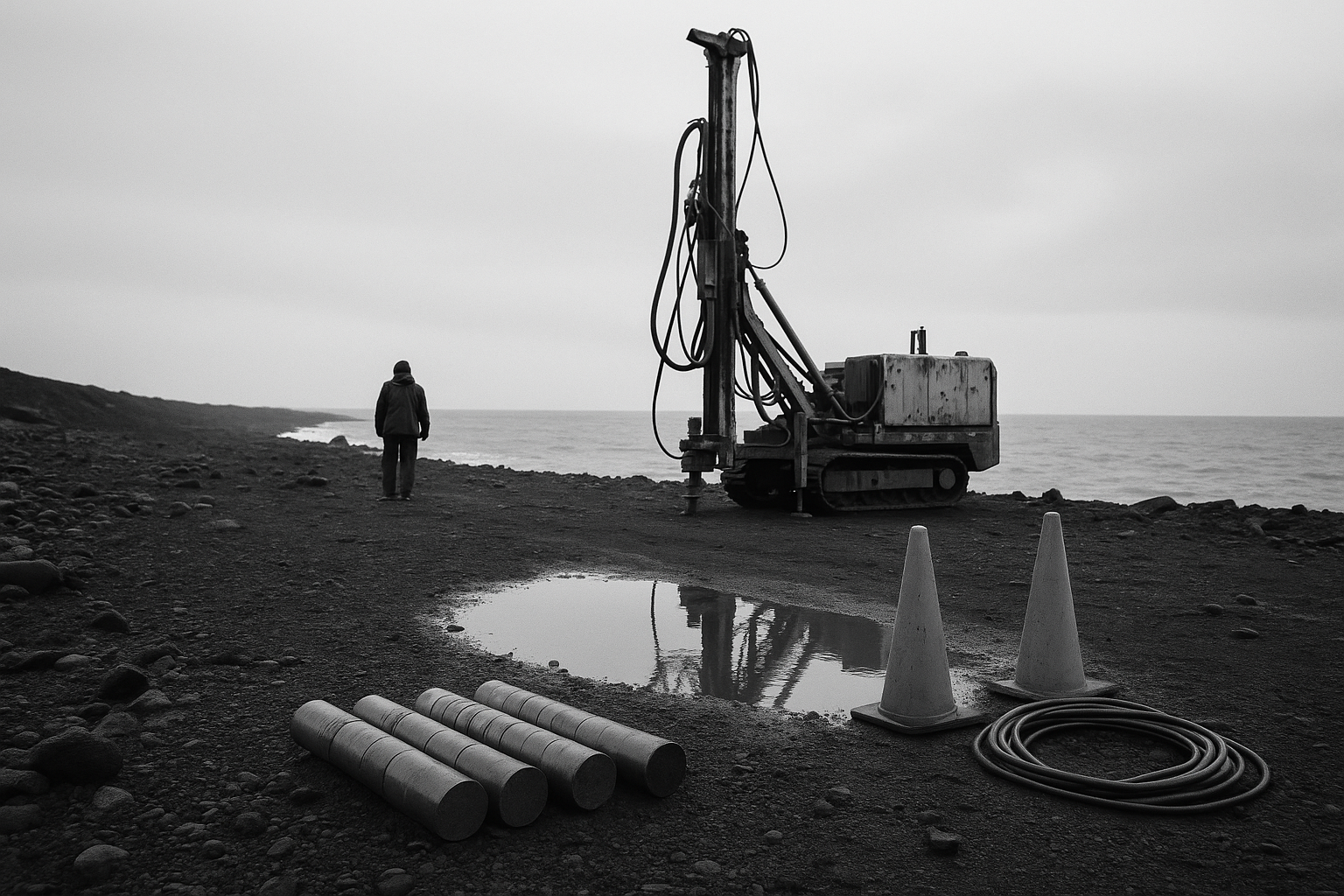
Core drilling for the proposed Eyjaganga tunnel between Vestmannaeyjar and Iceland’s south coast has finished on the islands, and the rig has now been moved to Landeyjar for the next round of testing. RÚV reports that the first phase, which began in April, has produced geological data intended to show whether the long-discussed link can move from local ambition to a financeable project.
The current drilling programme costs about ISK 200 million. According to Eyjagöng ehf. managing director Haraldur Pálsson, that money comes from municipalities in Vestmannaeyjar and South Iceland as well as companies around the country. That funding mix says as much about the project’s political position as the drill cores do: the tunnel still sits outside the category of settled national infrastructure and depends on a coalition of local authorities and private backers willing to pay for another round of evidence. For island communities that rely on ferries and weather windows, a fixed mainland connection would alter freight, commuting and emergency access. For taxpayers and investors, the immediate question is narrower: whether the rock can support a tunnel at a cost that does not collapse under water ingress, reinforcement needs and the usual arithmetic of remote megaprojects.
The drilling is examining two basic constraints that decide whether these projects remain brochures or become contracts: rock strength and how much water leaks through it. RÚV says the completed phase on Heimaey has yielded information that will be used in preparation and design, while the relocated rig, known as Karl Prins, will continue investigations on Landeyjarsandur near the farm Kross. Results from the wider study are expected before the end of the year. Pálsson said earlier that those findings will play a key role in judging how realistic the road tunnel is and whether further research can be justified.
That leaves Eyjaganga in a familiar Nordic infrastructure position: enough money has been found to study the project, but not yet to prove that the full bill belongs on a national balance sheet. For now, the hard asset is a stack of rock samples bought for ISK 200 million, and the next decision arrives when the year-end test results do.
Källor: RÚV