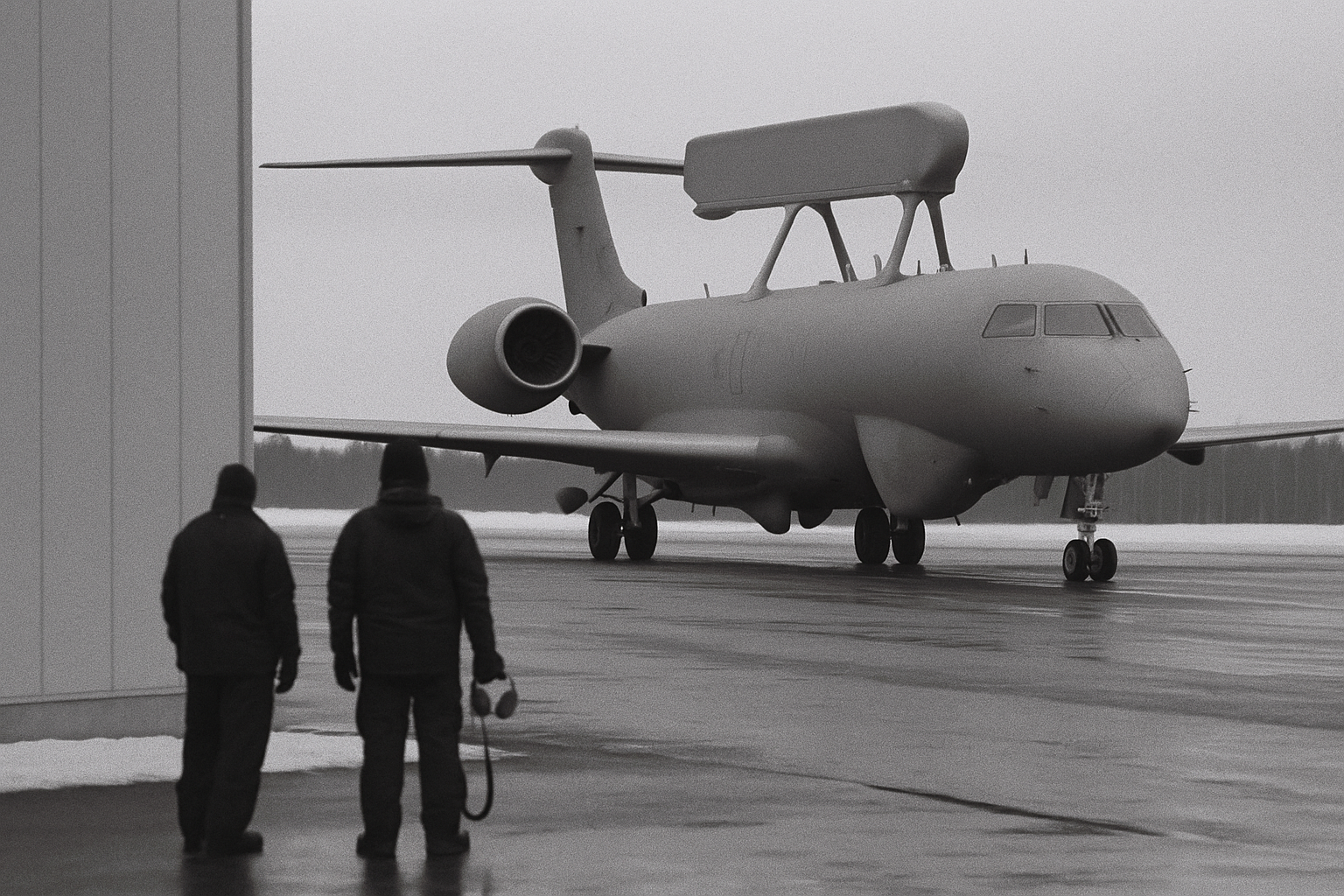
Finland buys GlobalEye, Saab tightens Nordic defence role, €400m-plus buys longer warning time
- Iltalehti reports Finland will buy Saab’s GlobalEye for about €400–500 million.
- The aircraft is designed to track air, sea and land targets and extend early-warning coverage beyond ground-based sensors.
- The deal deepens Finnish dependence on Swedish defence industry at a time of rapid Nordic rearmament.
- The operational question is whether one high-value surveillance platform delivers enough coverage and resilience for the price.
Finland is buying Saab’s GlobalEye surveillance and reconnaissance aircraft in a deal worth roughly €400–500 million, adding one of the most expensive single airborne sensors in the Finnish arsenal. In an interview with Iltalehti, the Finnish outlet reports that Saab chief executive Micael Johansson presented the aircraft as a system built to detect threats earlier than Russian counterparts and to give commanders more time to act.
That is the core of the purchase. Finland shares a 1,340-kilometre border with Russia, and warning time is a military asset of its own. Ground-based radars see what terrain, curvature and range allow them to see; an aircraft flying high can look farther, track more, and follow targets across airspace and maritime approaches. For Finland, that means earlier indications of aircraft movements, missile launches, ship activity in the Baltic Sea and force concentrations that might otherwise appear later and in fragments.
GlobalEye is marketed as a multi-domain platform rather than a traditional airborne early-warning aircraft. Saab says it can monitor air, sea and land targets from the same aircraft, which matters for a country that has to watch the Gulf of Finland, the Baltic approaches and its long eastern frontier at once. Johansson told Iltalehti that the system has been used in defending against Iranian attacks, a claim meant to place the aircraft in a real operational setting rather than a brochure. The sales argument writes itself: one platform, high altitude, long range, fewer blind spots.
The price raises a harder question. €400–500 million buys coverage, but it also buys concentration of risk. A small fleet of high-value aircraft can extend the sensor picture dramatically, yet each airframe becomes an expensive node that must be protected, maintained and kept available. Finland is not just purchasing radar range; it is purchasing a concept of operations that depends on trained crews, secure data links, fighter protection when needed, and integration with ground-based air defence, F-35s and naval surveillance.
The industrial angle is just as clear. Finland already flies Swedish-made systems in several categories, and this purchase gives Saab another strategic position inside Nordic defence planning. As the region rearms, Sweden is selling not just hardware but interoperability: common suppliers, shared maintenance logic and easier data-sharing across nearby air forces. That lowers some coordination costs while shifting more of the region’s surveillance architecture toward one defence company on the western side of the Gulf of Bothnia.
What Finland gets for the money will depend less on the headline price than on delivery schedule, fleet size and integration. A surveillance aircraft parked in a hangar adds little; one linked into fighters, coastal defence and command networks changes how quickly a country can see a threat forming. The invoice runs to hundreds of millions of euros. The value lies in how many extra minutes of warning the aircraft can buy over the Gulf and the eastern border.
Källor: Iltalehti