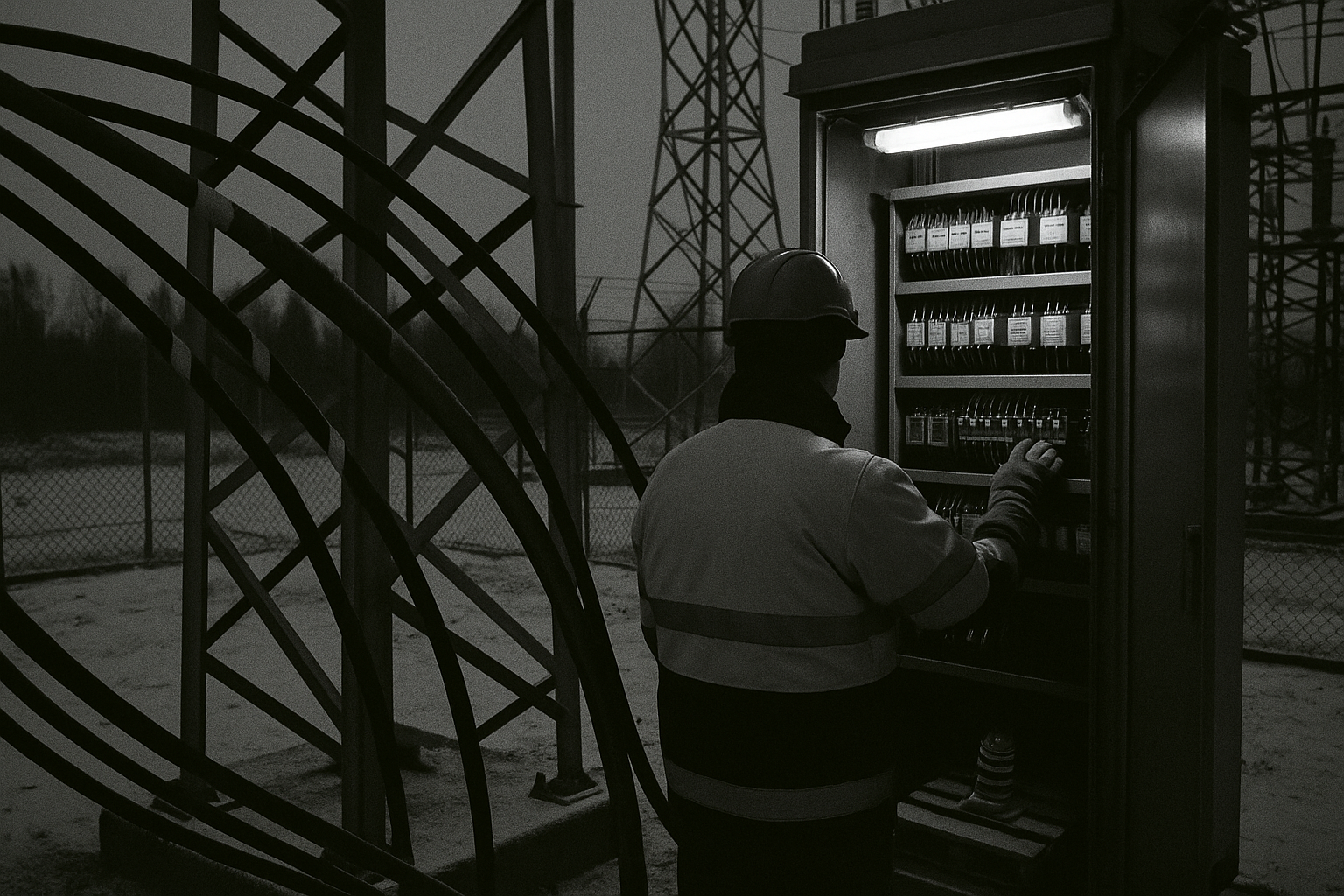
Finland hardens power grids, wartime planning replaces market logic for electricity security
- A report cited by Iltalehti says Finland must quickly strengthen grid resilience against cyberattacks, sabotage and drone threats.
- The report argues grids should be dimensioned for crises, not just for normal operating and market conditions.
- The proposed shift includes investment in backup capacity, spare-part stockpiles, cybersecurity and specialist personnel.
- The debate now moves from resilience rhetoric to a financing question: who pays to keep a power system running under attack.
Finland should rapidly redesign parts of its electricity system for crisis conditions, not just for normal commercial use, according to a new report on grid security. Iltalehti reports that the assessment warns power networks are now a direct target, shaped by lessons from Ukraine where attacks on electricity infrastructure have become a central tool of war.
The report’s prescription is concrete. Finland would need more investment in the grids themselves, larger spare-parts inventories, stronger cybersecurity and more skilled personnel able to restore service after disruption. Caruna chief executive Jyrki Tammivuori said in material released with the report that strikes on electricity systems can paralyse society without conventional warfare, and that the decisive question is no longer only what can be protected but how fast society can recover. That shifts the discussion away from abstract resilience language and toward engineering choices: duplicate lines, reserve equipment, protected substations, repair crews and warehouses full of components that may sit idle for years until the day they are needed.
Those choices cut against the logic that has governed Nordic energy systems for decades. Electricity markets reward efficiency, lean staffing and high asset utilisation. Security planning asks for slack: extra transformers, backup control systems, specialist contractors on call and domestic access to parts that are expensive to store. A grid built to minimise cost in peacetime is being asked to absorb sabotage, cyberattacks and drone threats without long outages. The report describes that mismatch without much ambiguity.
Finland enters this discussion with a different strategic habit than most of its neighbours. The country has a long tradition of stockpiling, territorial defence planning and treating infrastructure as part of national security rather than a separate commercial sphere. Sweden has also begun moving in that direction after a broader return to civil-defence planning, but its power debate has often centred on pricing, permits and generation capacity rather than the cost of operating networks under sustained attack. Norway’s wealth gives it room to spend, yet its hydro-based system and export politics have produced their own disputes over who should carry system costs. Denmark has pushed hard on interconnection, offshore wind and market integration; that model delivers efficiency, but it also assumes that cables, substations and digital control systems remain available when pressure rises.
The Finnish report leaves the hardest part hanging in plain view. If grids are to be dimensioned for crises rather than ordinary demand, someone has to fund the unused margin. That can mean higher network tariffs for households and industry, direct state support, or mandatory preparedness obligations imposed on private operators. Each option moves costs to a different column, but none makes them disappear.
Electricity still arrives through the same cables, substations and control rooms. The difference is that Finland is now discussing whether each of them should keep working after a drone strike, a cyberattack or a truck full of replacement parts fails to arrive.
Källor: Iltalehti