Finland hosts spy-linked data centres, HS report exposes security cost of digital investment
- Helsingin Sanomat reports, via Iltalehti, that Russian and Chinese actors use Finnish data centres for cyber-espionage.
- The Finnish Security and Intelligence Service says Russian espionage is currently the more substantial threat.
- Finland has promoted data-centre investment for employment, tax revenue and power consumption.
- The case raises questions about foreign control, oversight and whether data centres are being treated as strategic infrastructure.
Russian and Chinese actors are using data centres in Finland for cyber-espionage, according to a report relayed by Iltalehti, citing Helsingin Sanomat. The Finnish Security and Intelligence Service, Supo, told Helsingin Sanomat that espionage conducted by Russian actors is currently the more substantial threat.
The report lands in a country that has spent years courting data-centre investment. Municipalities have marketed land, grid access and cold climate; utilities have welcomed large, stable electricity demand; politicians have counted construction jobs and property-tax income. A server hall can look like an industrial win on paper. It can also function as digital terrain: a place where traffic, storage, remote access and legal ownership become harder questions than square metres and megawatts.
That trade-off is no longer abstract. If hostile states can use facilities on Finnish soil for cyber operations against Western targets, then data centres stop being ordinary real estate and start resembling other strategic assets that already face tighter scrutiny. Ports, telecoms networks and energy grids are routinely discussed in those terms. Rows of rented racks and anonymous shell companies have often drawn less attention, even though the service they provide is proximity, bandwidth and cover.
The report also fits a wider Nordic pattern. The region has sold itself as a safe home for digital infrastructure: politically stable, cool, well connected and rich in low-carbon electricity. Those same features attract intelligence services and state-linked operators. The more storage, cloud capacity and cross-border traffic the Nordics host, the more useful the region becomes not just as a target for cyber operations but as a platform from which they can be run.
What remains unclear from the public reporting is how Finland screens foreign ownership, tenancy and subcontracting in the sector, and which authority treats the whole picture as a security question rather than a zoning or investment question. Data centres can be built by one company, powered by another, managed by a third and filled with equipment leased through several jurisdictions. By the time a municipality sees jobs and a utility sees load growth, the ownership chain may already run far beyond Finland.
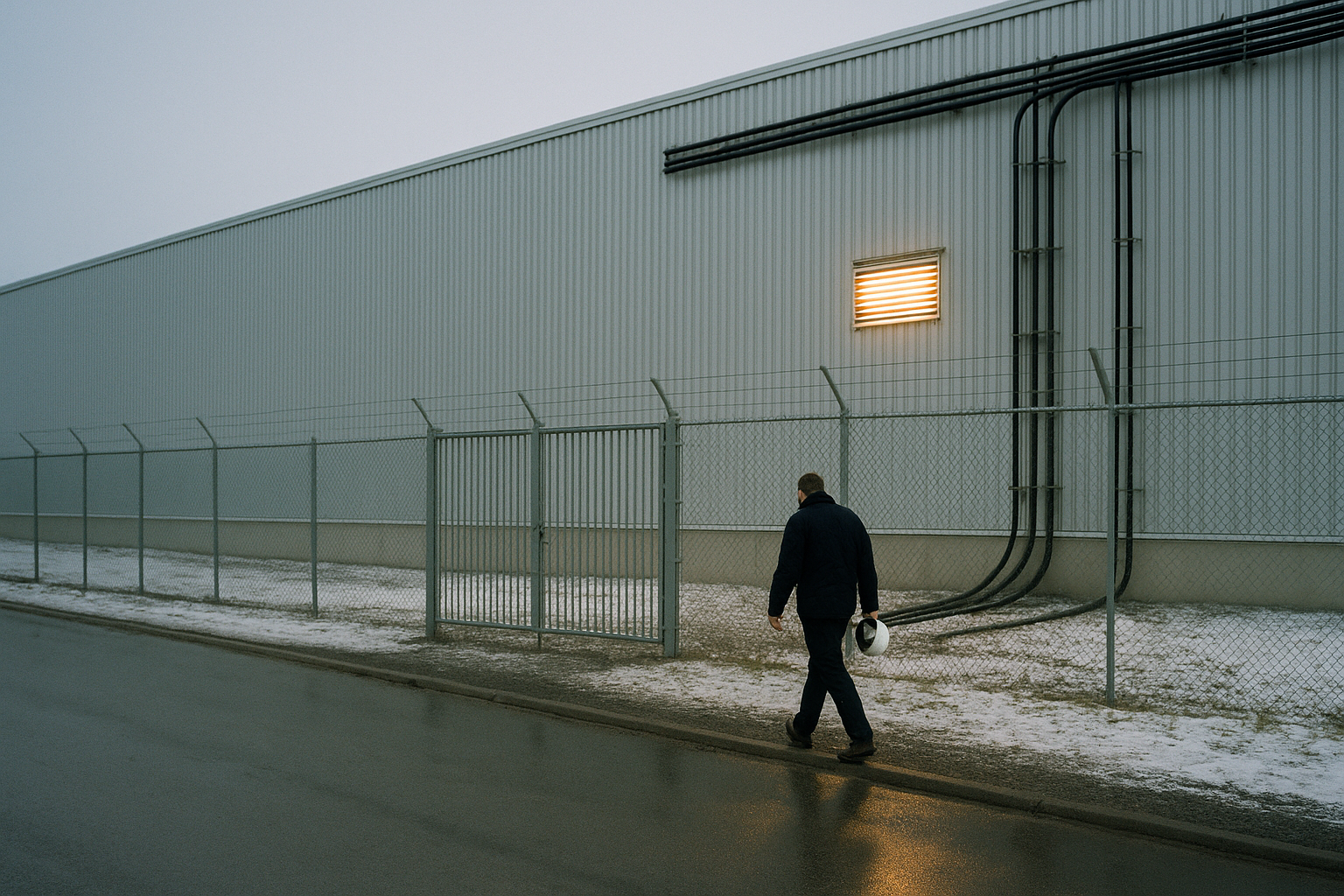
For Finland, the issue is not whether data centres bring economic activity; they do. The question is what price is attached when the same buildings can host foreign intelligence work under warehouse lighting, behind fences that look much like any other industrial site.
Källor: Iltalehti