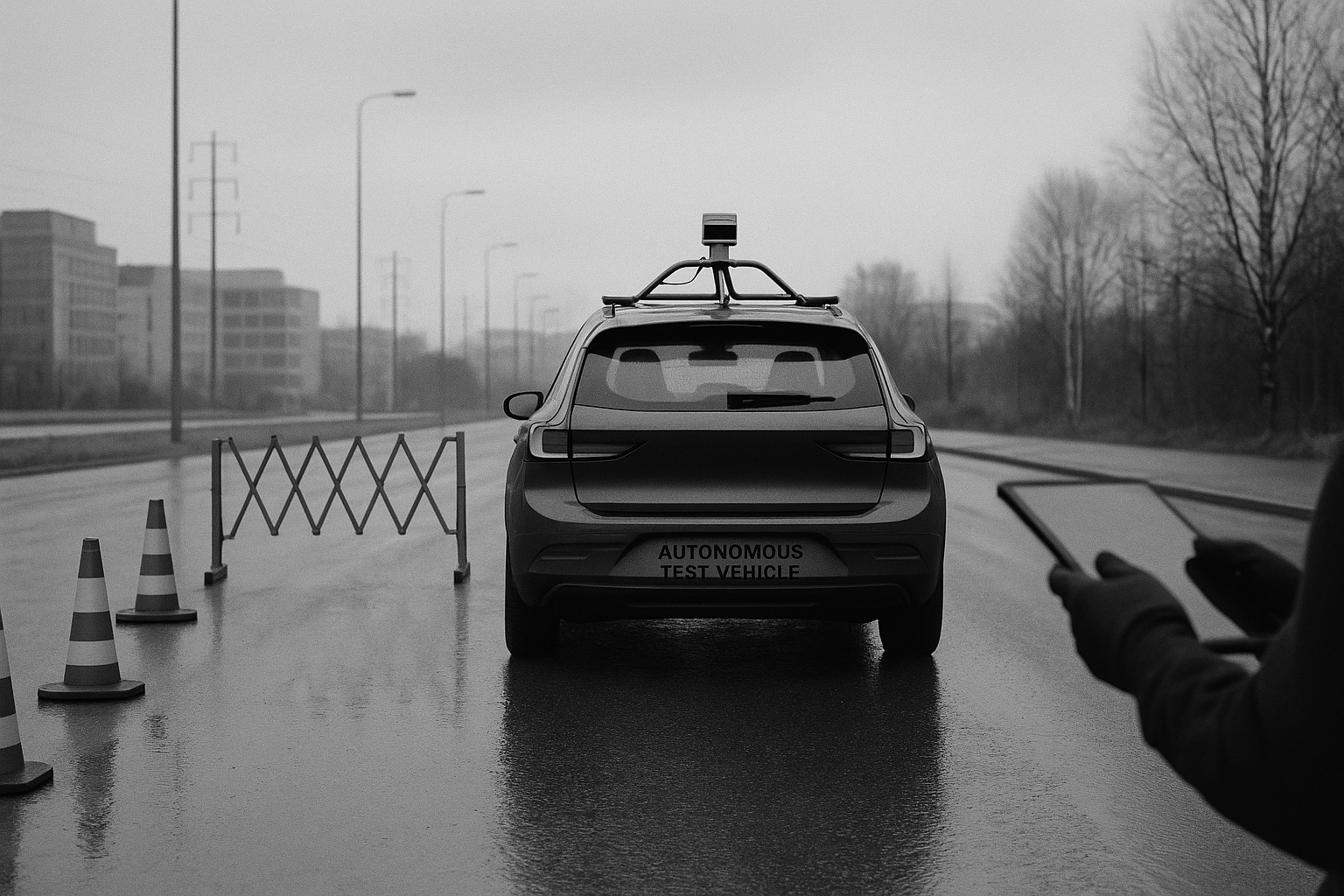
Finland joins EU self-driving test push, Brussels loosens borders, rule-bound system faces speed test
- Finland has entered an EU project designed to ease testing of automated driving systems.
- The EU is trying to reduce cross-border regulatory barriers that slow European vehicle testing.
- Finland's tightly regulated system could either attract developers seeking predictable rules or slow them with permits and fragmented oversight.
- Early gains are likely to cluster around existing Finnish test environments, urban pilots and major road corridors.
Finland has joined an EU-backed effort to make testing self-driving vehicles easier, a modest administrative step with larger commercial stakes. As YLE reports, the project is part of a wider push to remove barriers that now force companies to navigate different national rules when they want to test automated driving systems across Europe.
The timing is not accidental. Europe is trying to close ground lost to the United States and China, where companies have had larger home markets, deeper capital pools and, in some cases, more permissive testing environments. For Finnish firms, common testing rules could lower one of the expensive parts of development: proving that software and sensor systems can move from one jurisdiction to another without starting the paperwork from scratch. For regulators, the attraction runs in the other direction. A country that can offer cold weather, long distances, sparse traffic in some regions and dense urban conditions in others has something concrete to sell if the permits are predictable and the liability rules clear.
That leaves Finland's usual strength and weakness in the same place. The country is known for orderly administration, detailed road management and public authorities that generally do what the rulebook says. For a developer testing automated driving in snow, darkness and mixed road conditions, that can be useful: reliable mapping, maintained infrastructure and a regulator that documents decisions. The same system can also turn into delay if municipalities, transport authorities, police and road owners each control a separate piece of the process. A test corridor is only as open as its slowest permit desk.
The first beneficiaries are likely to be places that already have the ingredients rather than places starting from nothing. Helsinki, Tampere and other cities that have run smart mobility pilots have existing administrative routines and traffic environments suited to low-speed urban testing. Major routes linking ports, logistics hubs and industrial areas offer another path, especially for automated freight and shuttle trials where operators want repeatable journeys rather than publicity. Northern Finland also has an obvious niche: winter conditions that are difficult to simulate and expensive to find elsewhere.
Much of the competition now sits inside the rulebook. If Brussels succeeds in making cross-border testing easier, the question for Finland is not whether it can write careful rules. It is whether a country good at supervision can process applications quickly enough that developers choose Finnish roads before they choose someone else's.
The vehicles still need asphalt, permits and insurance. Snow and lane markings are already here.
Källor: YLE Uutiset