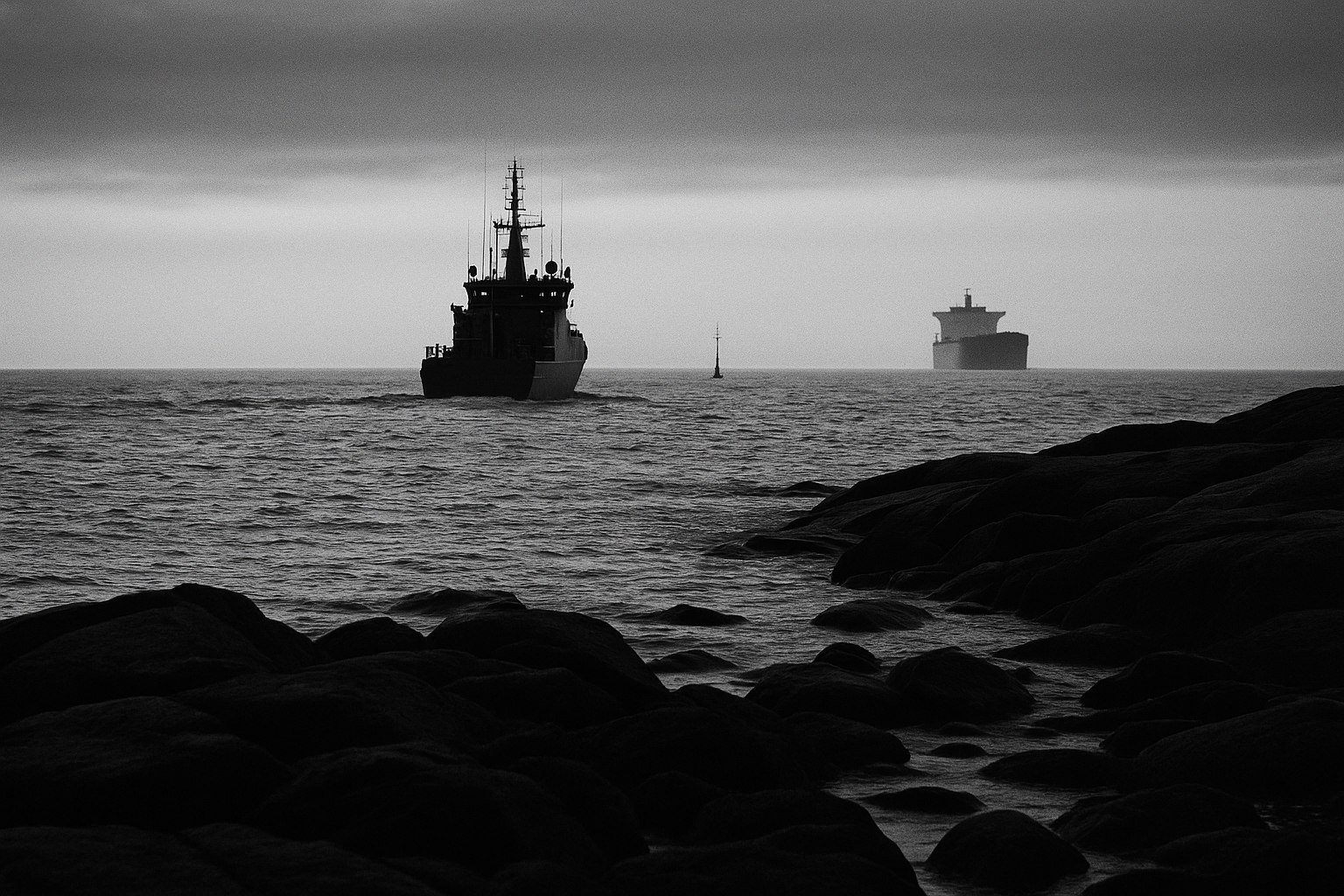
Finland restricts eastern Gulf traffic, Defence Forces impose closure near Russian border, Baltic corridor tightens
- The restriction covers both aviation and maritime traffic in the eastern Gulf of Finland.
- The measure was announced by Finland’s Defence Forces and affects a strategically sensitive Baltic corridor.
- The eastern Gulf of Finland is a narrow passage where civilian traffic, state borders and military activity overlap.
- The announcement raises immediate questions about duration, routing and whether the move reflects an operation or an exercise.
Finland’s Defence Forces have restricted air and maritime traffic in the eastern Gulf of Finland, placing temporary limits on movement in a narrow Baltic passage that runs toward the Russian border. YLE reports that the restrictions apply in the eastern part of the gulf, a stretch where civilian shipping, coastal aviation and military surveillance all operate in close proximity.
The announcement points to more than a routine notice to mariners. Closing or limiting both sea and air traffic at the same time usually means the authorities want a controlled operating area, whether for live military activity, weapons testing, surveillance work or another operation that leaves little room for civilian traffic. The eastern Gulf of Finland is one of the Baltic’s tightest corridors: south lies Estonia, east lies Russia, and north the Finnish coast with ports, patrol routes and critical infrastructure. Any restriction there carries immediate practical consequences even before the authorities explain the purpose in detail.
For civilian users, the first question is duration. A short restriction may amount to rerouting and warnings for vessels and aircraft; a longer one begins to affect schedules, local access and emergency planning along the coast. Commercial shipping in the Gulf of Finland is dense, and even a limited exclusion zone can push traffic into narrower lanes. For coastal residents and recreational boaters, the issue is simpler: whether waters that are normally open are now closed by order, and how quickly that order can change.
The wider setting is hard to miss. Since Russia’s full-scale invasion of Ukraine, the Baltic Sea has been treated less as open routine space and more as infrastructure under guard. Finland’s NATO membership, repeated concerns about sabotage against undersea cables and pipelines, and the concentration of military assets around the Gulf of Finland have all raised the value of control over short stretches of water and airspace. A restriction order in the eastern gulf does not by itself prove a crisis. It does show how quickly ordinary movement in the area can be subordinated to defence priorities.
Finnish authorities have in recent years moved from abstract preparedness language to visible control measures: border barriers, tighter surveillance, more exercises and more public notices affecting civilian movement. The eastern Gulf of Finland sits at the meeting point of those policies. A map line drawn for a temporary restriction can interrupt ferrying, fishing, private boating and flight paths long before any official uses the word escalation.
The Defence Forces have not turned the entire gulf into a closed zone. They have restricted a specific eastern section where Finland’s sea border, airspace management and military readiness meet within a few nautical miles.
Källor: YLE Uutiset