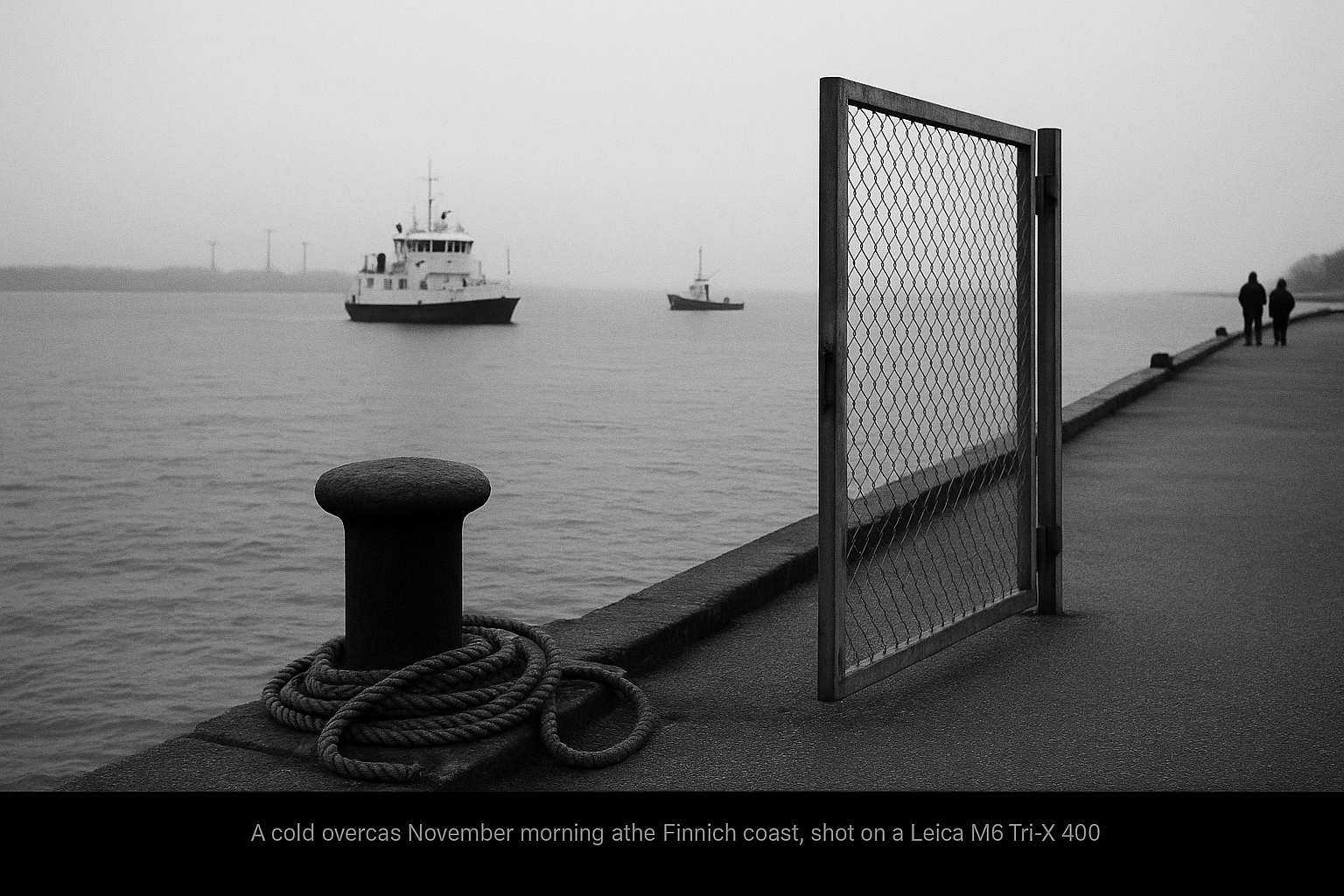
Finland restricts eastern Gulf waters, drone risk hardens coastal routine, civilian traffic faces new limits
- The Finnish Defence Forces say the restriction is meant to protect bystanders and preserve room to respond to possible drones.
- The affected area is in the eastern Gulf of Finland, one of the most sensitive stretches of water on Finland’s southern coast.
- The move adds civilian maritime traffic to the growing list of activities adjusted to a tighter security posture in the Baltic region.
Finland’s Defence Forces are restricting a maritime area in the eastern Gulf of Finland, saying the measure is needed both for civilian safety and to preserve the authorities’ ability to counter possible drones. YLE reports that the restriction applies to a section of coastal waters in one of Finland’s most sensitive maritime corridors, where commercial traffic, leisure boating and state security now sit much closer together than they did a few years ago.
The wording matters. The Defence Forces are not describing a generic training inconvenience but a safety measure tied to possible unmanned aircraft. That places even routine maritime space inside the logic of air defence: keep civilians clear, leave room for official action, and assume that low-cost aerial systems may appear over water used daily by ferries, cargo traffic and private boats. The eastern Gulf of Finland has long been strategically exposed by geography alone. Since Russia’s full-scale invasion of Ukraine, the Baltic has added sabotage fears, GPS interference, infrastructure incidents and repeated drone alarms to the list.
YLE’s report does not, on its face, settle the two questions that matter most to residents and operators: how large the restricted area is in exact coordinates, and how long the measure will remain in force. Those details determine whether this is a narrow operational buffer or a broader interruption to normal movement at sea. They also indicate whether the Defence Forces are reacting to a concrete incident or building a standing precaution into everyday coastal management. States rarely close off water without a reason; they also rarely volunteer more detail than they think they must.
For civilians, the practical effect is that access once governed mainly by weather, charts and maritime rules is now also governed by threat calculations. For the authorities, the trade-off runs the other way: every open lane of normal activity leaves less room to identify, track or neutralise a drone without bystanders nearby. The cost is borne first by boaters and local traffic, then more broadly by a coastline that is becoming less civilian in its daily rhythm.
On the map, the eastern Gulf of Finland is still the same stretch of water. The new element is that a possible drone is now enough to clear it.
Källor: YLE Uutiset