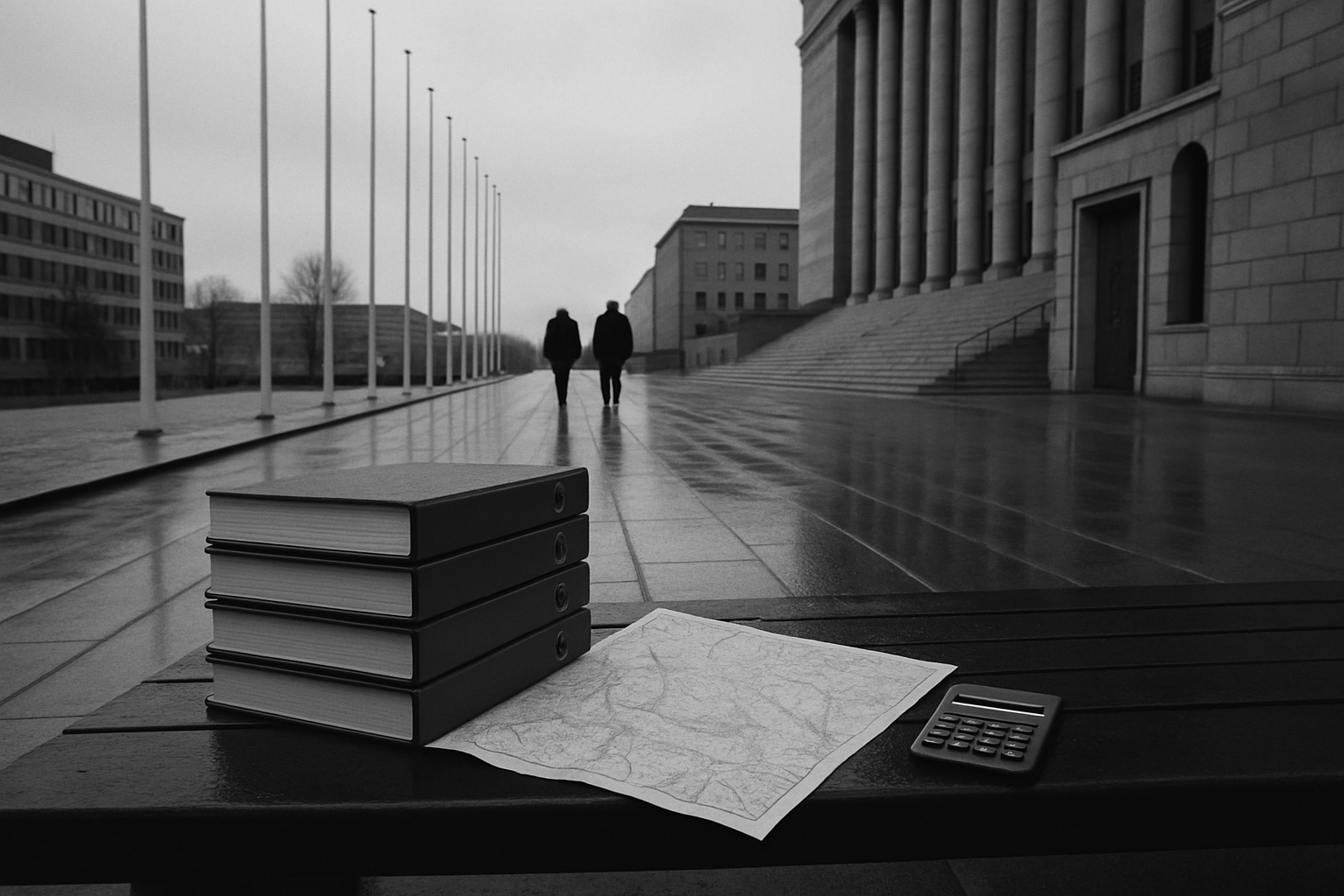
Finland weighs defence doubling, welfare budget strain blocks answer, Baltic pace sets harder benchmark
- Finland’s military says current funding leaves gaps in ammunition, troop numbers, air defence and other wartime capabilities.
- The dispute is no longer about whether Russia is a threat but about whether Finland will pay at Polish or Baltic levels.
- Parties support stronger defence in principle while avoiding concrete choices between welfare spending, debt and higher taxes.
- The gap matters beyond Finland: Nordic planning rests on what Helsinki can field, not on speeches about deterrence.
Finland’s defence debate has narrowed to arithmetic. The armed forces say the country would need to roughly double defence spending from current levels, but YLE reports that none of the main parties is prepared to present a bill for it. That leaves Helsinki in the familiar position of describing a deteriorating security environment while sidestepping the cost of answering it.
The figure matters because Finland already made its largest single defence purchase in decades with the F-35 fighter deal, joined NATO, and expanded the public case for military readiness after Russia’s full-scale invasion of Ukraine. Even so, the armed forces’ own calculations, as cited by YLE, point to shortages that go beyond prestige hardware: more money would be needed for wartime troop production, ammunition, air defence, naval capability, maintenance and the broader ability to sustain combat over time. Finland has long relied on conscription, reserves and territorial defence to compensate for its size. Those are cheaper on paper than a large standing force, but they still require stockpiles, training, equipment and replacement capacity.
The political problem is less military than fiscal. Finland’s economy has been weak, its population is ageing, and the welfare state is already under pressure from healthcare, pensions and municipal spending. A demand to double defence outlays lands in the same budget where every major item already has a constituency and a legal or political shield around it. Parties can endorse stronger defence and denounce Russian aggression at little cost; naming a tax increase, a pension trim, a hospital closure or another round of borrowing is where consensus thins out.
That puts Finland behind the tempo set by countries closer to the old fault line in Central and Eastern Europe. Poland has moved toward defence spending well above the NATO floor, using large procurement programmes to build mass quickly. The Baltic states, with far smaller populations and tax bases, have also treated rearmament as a first-order budget choice rather than an aspiration attached to future growth. Finland’s position is different in geography and force structure, but the comparison is still awkward: if the threat picture is severe enough to justify a doubling, current spending levels imply that other priorities still rank higher.
For the wider Nordic region, this is not an internal Finnish accounting dispute. Finland brings artillery, reserves and a long border with Russia to any serious northern defence plan. If Helsinki cannot finance the capabilities its own military says are missing, the burden does not disappear; it shifts to assumptions about allied reinforcement, borrowed time and a war stock that lasts long enough. The spreadsheets matter because they describe what can actually be fielded in Karelia and the Gulf of Finland, not what can be promised at a press conference.
In public, the debate still circles around commitment and resolve. In the budget, it comes down to whether Finland will spend like a frontline state or talk like one while the welfare state keeps the larger share of the ledger.
Källor: YLE Uutiset