Finland welfare reform floods job offices, basic-income recipients fill queues officials cannot clear
- Started job searches rose 20 percent in March after the social-assistance reform, according to Yle.
- Employment services say thousands of basic social assistance recipients are entering the system at once.
- Officials told Yle that many of the new clients are unlikely ever to find work through existing services.
- The reform appears to be moving people from one public office to another faster than it expands actual capacity.
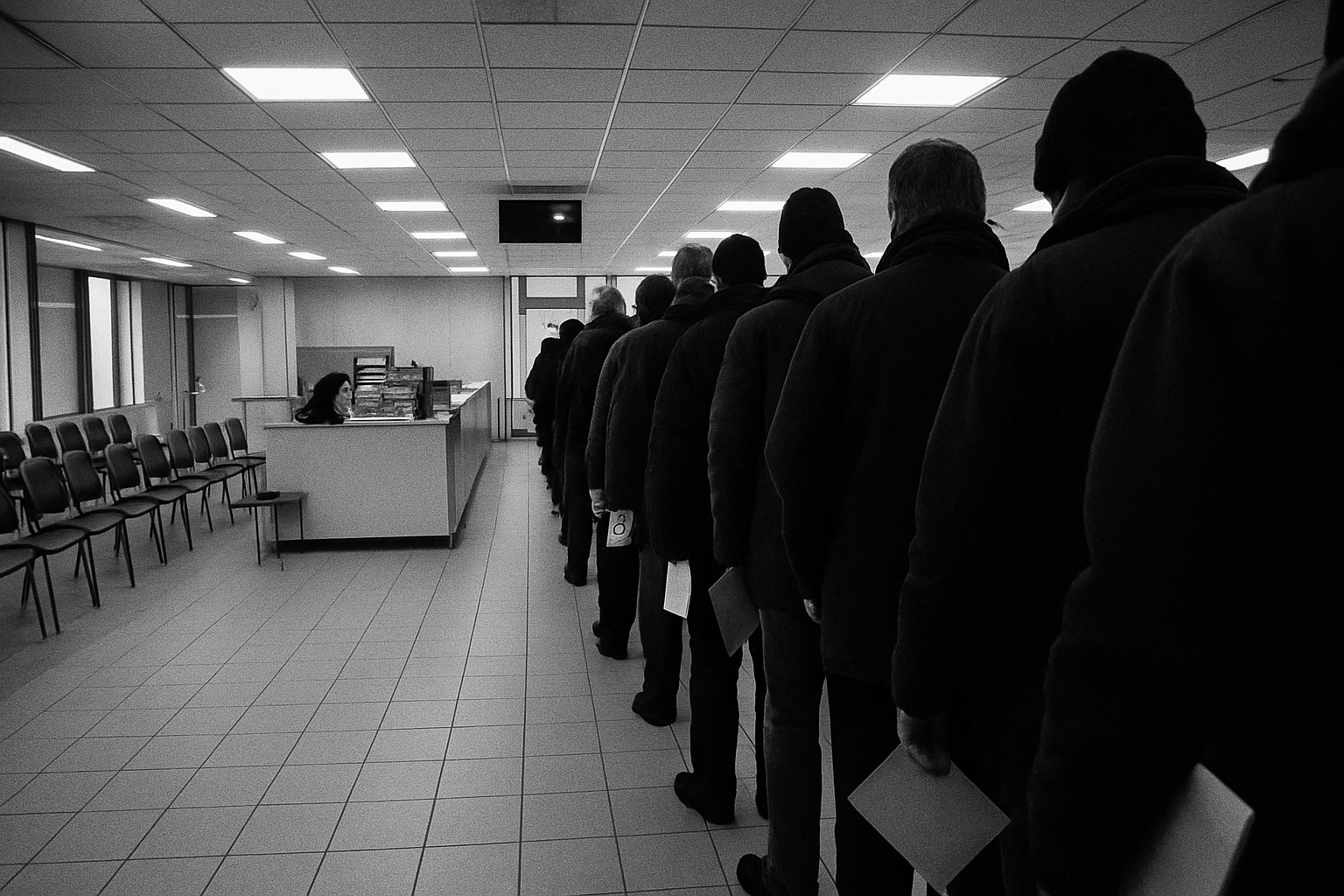
Finland's latest social-assistance reform produced an immediate queue. In March, the number of newly started job searches rose by 20 percent after changes to basic social assistance rules, and Yle reports that thousands of recipients are now crowding employment services even as officials say many will never be employed through the tools currently available.
The reform tightened the connection between toimeentulotuki, Finland's basic social assistance, and the obligation to register as a jobseeker. On paper, that enlarges the labour pool. Inside the employment offices, it means a sudden intake of clients with widely different prospects: some temporarily out of work, others carrying health problems, weak language skills, long absences from the labour market or social difficulties that job-matching alone does not solve. Yle's reporting points to a capacity problem as much as a policy one. The state has created more demand for case handling, interviews and activation measures without creating a comparable increase in staff, training places or tailored support.
That changes the numbers before it changes anyone's employment status. A person who previously dealt mainly with Kela, the Social Insurance Institution of Finland, now also enters the employment-services system, improving compliance statistics while adding another file to another desk. If the office cannot offer realistic pathways into work, the reform still generates appointments, plans, monitoring and sanctions. The fiscal burden does not disappear; it is redistributed across agencies. Finland's municipalities and state services have seen versions of this before: administrative activation raises traffic through the system faster than it raises wage income.
The bottleneck also exposes a harder question that Nordic welfare states often postpone. Some share of long-term assistance recipients are employable with modest support; some need intensive rehabilitation, treatment or sheltered work; some are being processed through labour-market bureaucracy because no other institution wants the case. Denmark and Sweden have both built separate tracks for people judged far from the labour market, though those systems also produce large caseloads and long waits. Finland now appears to be sorting more people into the jobseeker column without first expanding the categories, staff time or interventions needed to distinguish between a short spell of unemployment and permanent detachment from work.
Yle quotes officials saying they do not have the tools to help everyone. That leaves employment services measuring movement through queues they did not create, while the reform's success is first visible as a 20 percent jump in opened job searches.
Källor: YLE Uutiset