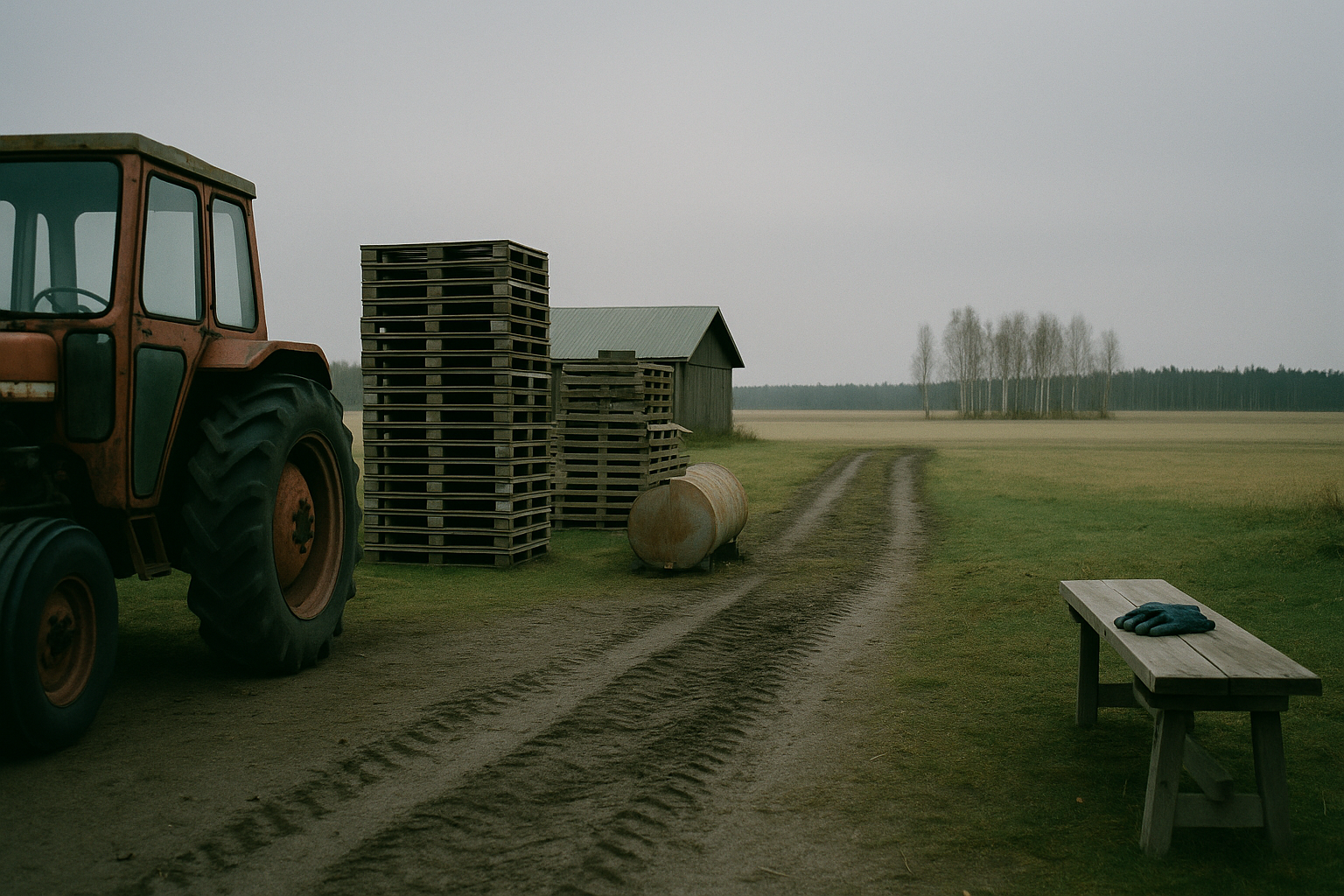
Finnish farm numbers halve, subsidy era delays consolidation, 25,000 holdings left by 2035
- A survey cited by Yle projects Finland’s farm count will fall to 25,000 by 2035.
- Respondents were more optimistic about crop production profitability than about livestock.
- The decline raises questions about whether subsidies preserve production or merely slow concentration into fewer, larger farms.
- Finland’s path differs from Denmark’s larger, export-oriented farms and Sweden’s more varied structure.
Finland is on course to have just 25,000 farms by 2035, according to Yle reports on a survey cited by Maaseudun Tulevaisuus. The estimate captures a long-running contraction in the country’s agricultural base: fewer holdings, larger average units, and a widening gap between crop farming, where expectations are less bleak, and livestock, where profitability remains under heavier strain.
The survey result matters beyond the usual story of rural decline. A falling farm count means production is being concentrated into fewer businesses that must carry higher capital costs, absorb swings in energy, feed and fertilizer prices, and comply with the same regulatory burden with less room for error. If crop producers are more hopeful than animal farmers, the arithmetic is plain enough: grain and plant production can scale differently, while dairy and meat producers face daily input costs, high labour demands and thinner margins. Public support can keep farms operating longer than the market would on its own, but the count still falls. That leaves a narrower question for policymakers: whether subsidies are maintaining domestic capacity or financing a slower version of the same consolidation.
Finland’s geography makes that question harder than in much of continental Europe. Short growing seasons, long transport distances and a northern climate raise production costs before a farm sells its first litre of milk or tonne of grain. Domestic food security has therefore never rested only on price efficiency. It has rested on keeping enough land in use, enough farmers solvent and enough regional production spread across the country to withstand shocks. When the number of farms drops, rural employment falls with it, along with local contractors, repair shops, feed suppliers and slaughter capacity that depend on a critical mass of nearby producers.
The Nordic comparison is instructive. Denmark has spent decades moving toward larger, more capital-intensive and export-oriented farms, especially in pig and dairy production. Sweden has also seen consolidation, but with a broader mix of farm sizes and regional conditions. Finland’s structure has been shaped more heavily by the costs of northern production and by support schemes designed to preserve output in places the market would price more harshly. The result is not immunity from consolidation, only a slower timetable. A farm sector can shrink for years while subsidy systems cushion the landing.
That leaves the food-security debate looking less abstract than it often does in Helsinki and Brussels. A country can keep support payments flowing, speak about resilience and still end up with fewer farmers, fewer animals and less spare capacity. By 2035, if the projection holds, Finland will have 25,000 farms left to do work once spread across far more hands.
Källor: Yle Uutiset