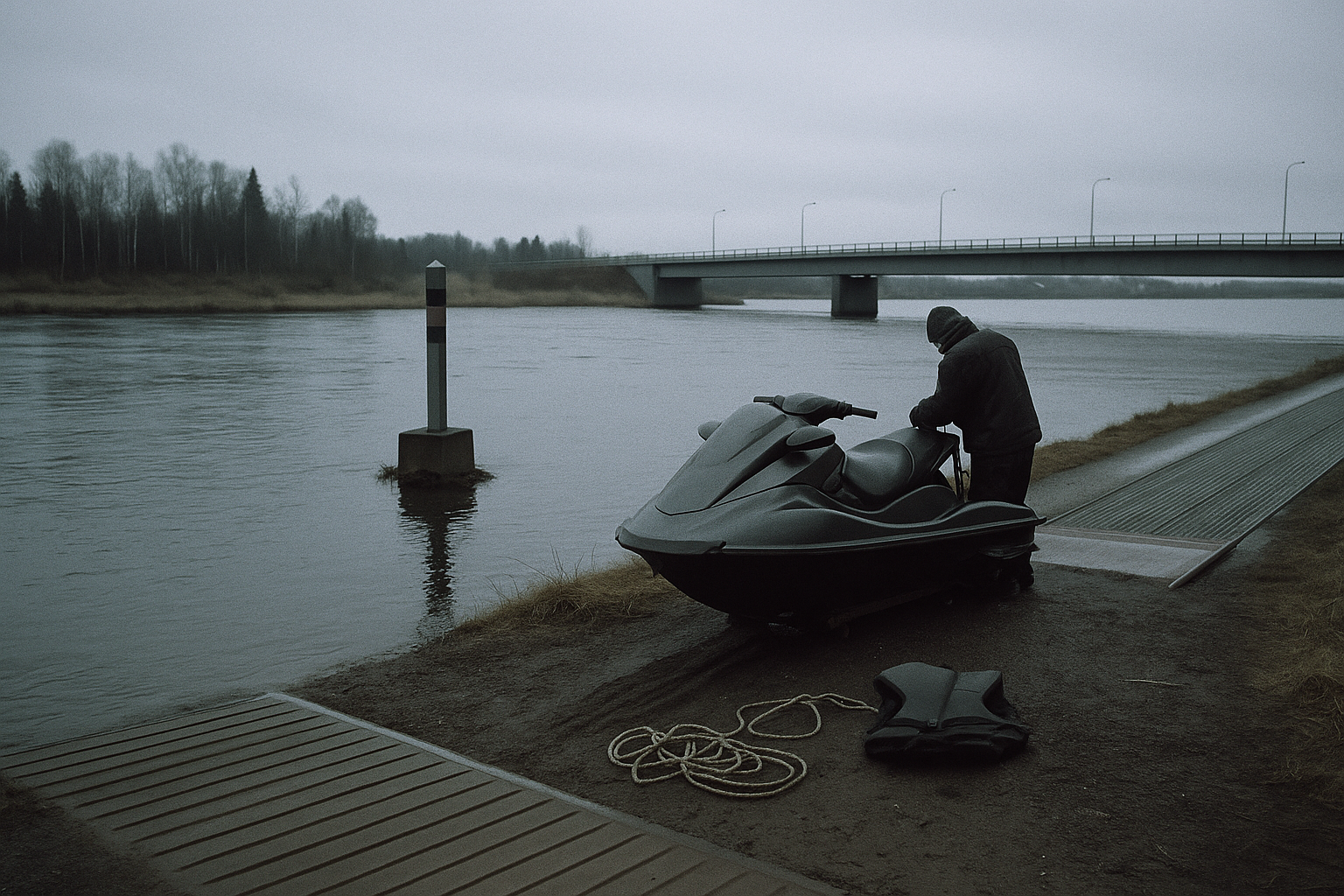
Finnish jet ski rider faces Swedish fine, Tornio border traffic hits licence mismatch, river crossing changes rules midstream
- Sweden requires a specific licence for water scooter operation; Finland does not.
- The mismatch affects border areas around the Tornio River and the northern Gulf of Bothnia.
- Border advisers say many residents and visitors do not know when a short ride becomes a Swedish legal matter.
- The case points to a wider problem of cross-border life running into small but costly regulatory differences.
A Finnish water scooter rider is likely to receive a fine in Sweden after operating without the licence Swedish law requires for jet skis, a rule that does not exist on the Finnish side. YLE Uutiset reports that the case has drawn attention to a narrow but persistent border problem in Tornio and Haparanda, where a short ride on the Tornio River or in the upper Gulf of Bothnia can carry residents from one set of rules into another.
The practical difficulty is geographic before it is legal. In the far north, the state border runs through waterways used for ordinary recreation, local transport and summer traffic. A rider launching from Finland may be in Swedish jurisdiction within moments, and Sweden requires a separate water scooter licence introduced in 2022. Border advisory services cited by YLE say few people know this, especially in places where daily life already moves back and forth across the frontier with little ceremony.
The mismatch is small enough to be overlooked and expensive enough to matter. Tornio and Haparanda function as a twin town split by a national line but tied together by work, shopping and leisure. That arrangement works smoothly until a permit, tax rule or vehicle regulation changes at the waterline. A jet ski licence is not a constitutional crisis; it is the sort of administrative detail that tests how open a border really is when police, insurers and licensing authorities are involved.
YLE says cross-border advisers see the issue as part of a broader run of practical frictions in the north, where residents often assume that habits formed on one side of the river carry over to the other. For Swedish authorities, the rule is simple: operate a water scooter in Sweden and the Swedish licence requirement applies. For Finnish residents, especially occasional riders, the distinction can arrive as a fine rather than a warning. The gap also exposes how unevenly border populations are informed. If local movement depends on knowing which country’s boating rules, licences and safety requirements apply at each bend in the river, the burden falls on individuals to discover it before enforcement does.
That makes the case less about one rider than about the cost of legal asymmetry in a region marketed as seamless. The Tornio River still looks like one river from the shore. On a water scooter, it can become two jurisdictions before the engine has warmed up.
Källor: YLE Uutiset