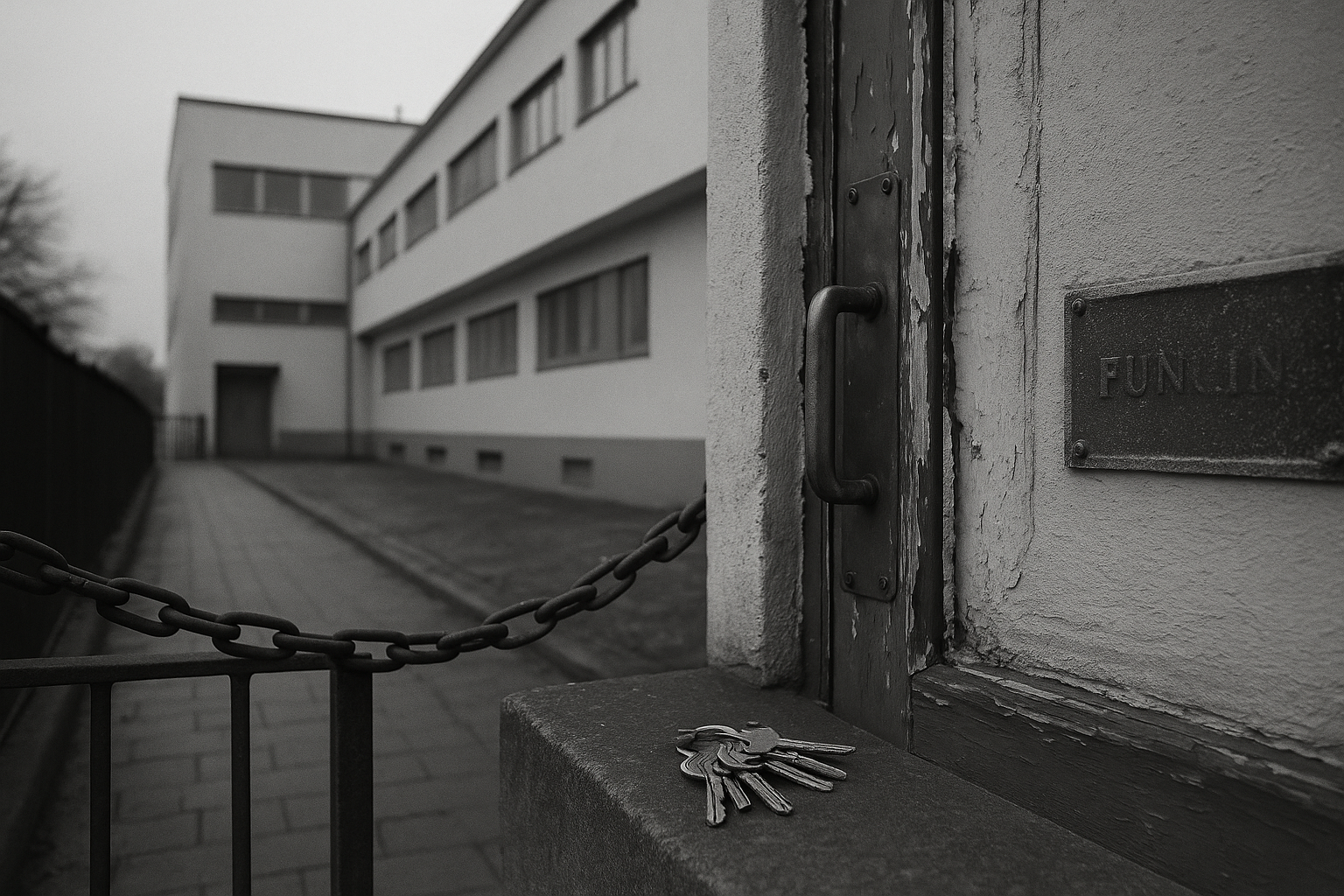
Finnish ministry targets protected state building, security claim collides with heritage policy, empty property keeps billing taxpayers
- The ministry says the building has no state use, generates costs and poses a security risk.
- Removing protection would make demolition or more extensive alteration easier.
- The case exposes how Finland manages vacant state property when preservation collides with budgets and official priorities.
A Finnish ministry is seeking to strip a state-owned functionalist building of its protected status after concluding that it serves no state purpose, costs money to maintain and has become a security problem. Yle Uutiset reports that the ministry now wants the protection marking removed, turning a preservation dispute into a test of how Finland treats unwanted assets in its own property portfolio.
The ministry's argument is blunt. The building is empty, the state has no use for it, and ownership produces expenses rather than value. Once a protected building falls out of active use, the bill does not disappear: heating, surveillance, repairs and liability remain, while the legal limits attached to heritage protection narrow the state's options. Calling the site a security threat adds another layer. An unused state building can attract trespassers, vandalism and theft, while a protected façade or structure can make adaptation slower and more expensive than disposal.
That leaves the state arguing against a status it once accepted. Protection is easy to defend when a building has a tenant, a budget and a function. It becomes harder when the owner itself says the property is surplus, cannot be repurposed on acceptable terms and sits as a deteriorating obligation on the books. The case also points to a wider problem in public real estate management: ministries and state property bodies are expected to preserve historically valuable sites, but they are also expected to cut costs and reduce risk. Empty buildings satisfy neither demand. They are too restricted to sell quickly, too expensive to maintain indefinitely and too politically visible to ignore.
The unresolved question is whether the state has exhausted alternatives before moving to weaken protection. Municipal ownership, private redevelopment or a long-term lease can keep heritage buildings in use when central government no longer wants them. Those options depend on location, condition and the cost of conversion. If no buyer or local authority is willing to absorb those costs, the state is left defending an empty building it says it does not need. If a transfer is possible, the current fight starts to look less like a security necessity than a disposal strategy.
For now, the ministry's position is plain: the building is not an asset to be preserved at state expense but a liability to be cleared. The protection marking remains; the invoices do too.
Källor: Yle Uutiset