Finnish pulp mills hold white-liquor tanks of similar scale, Tukes says US-style fatal failure could happen in Finland
- The ruptured US tank held 3.4 million litres; Finnish pulp mills also use multiple large white-liquor tanks.
- Tukes told Iltalehti that a similar accident is possible in Finland.
- The local question is less the US disaster itself than how Finnish mills are inspected, contained and prepared for a major release.
- Any large spill would raise immediate risks for workers and could also threaten nearby waterways and surrounding areas.
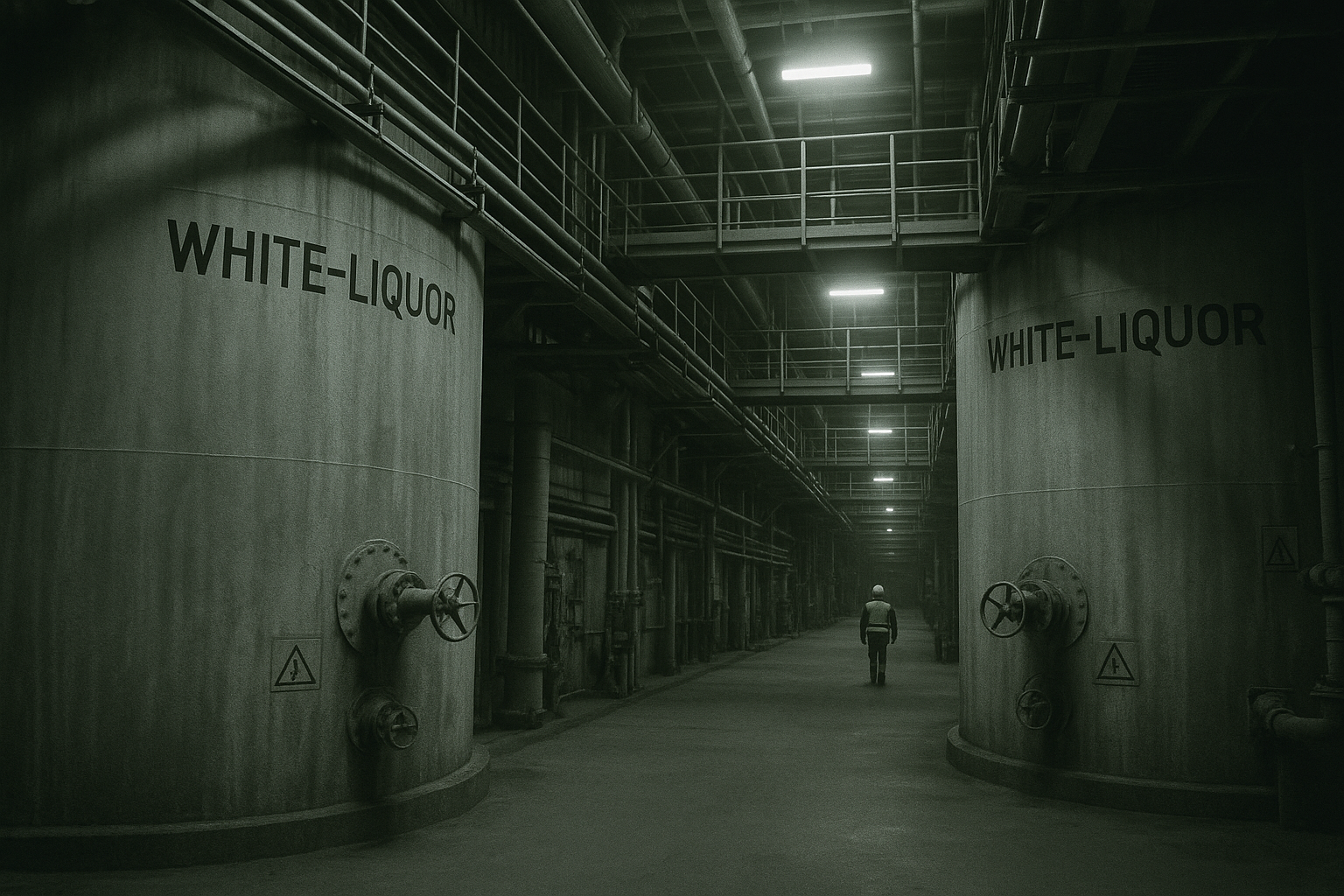
Every Finnish pulp mill has several large tanks filled with white liquor, the highly caustic chemical solution used in pulp production. After an identical type of tank failed in Longview, Washington, killing 11 people and injuring seven in late May, Iltalehti reports that the same kind of accident could also happen in Finland, according to Timo Talvitie, a leading expert at the Finnish Safety and Chemicals Agency, Tukes.
The US tank that ruptured held 3.4 million litres. That number matters because Finland’s forest industry is built around similar infrastructure: large-scale chemical storage inside mill sites that often sit beside rivers, ports or industrial communities. White liquor is not an obscure laboratory substance but a routine part of kraft pulp production, stored in volumes large enough that a structural failure is no longer a plant-level incident alone. Once a tank wall gives way, the question shifts from process safety to how much liquid can be contained, how fast workers can be evacuated and whether drainage systems keep the release inside the mill fence.
Iltalehti’s reporting puts Tukes at the centre of the Finnish angle. If the authority’s own expert says the scenario is possible here, the next issue is what sits between possibility and disaster: inspection intervals, ageing steel, foundation monitoring, secondary containment basins, and emergency plans tested against a full-volume release rather than a paper exercise. Finland’s pulp mills are among the country’s most valuable industrial assets, but they are also concentrated stores of corrosive chemicals, steam systems and pressurised processes. A serious failure would first hit operators and contractors on site; after that come runoff, nearby waterways and the municipalities that host the mills and collect the tax revenue that follows them.
The forest industry has long been treated as Finland’s industrial backbone, which gives it both political protection and a high tolerance for complexity hidden behind plant gates. Yet the physical fact is plain enough: multiple giant tanks of hazardous liquor stand at each pulp mill, and the US accident showed what happens when one of them does not stay standing. The issue for Finland is whether current rules assume that such a rupture is improbable, or whether mills are required to prove that the consequences stay limited when probability fails.
In Longview, one tank collapse killed 11 people. In Finland, the same chemical sits in several giant tanks at every pulp mill.
Källor: Iltalehti