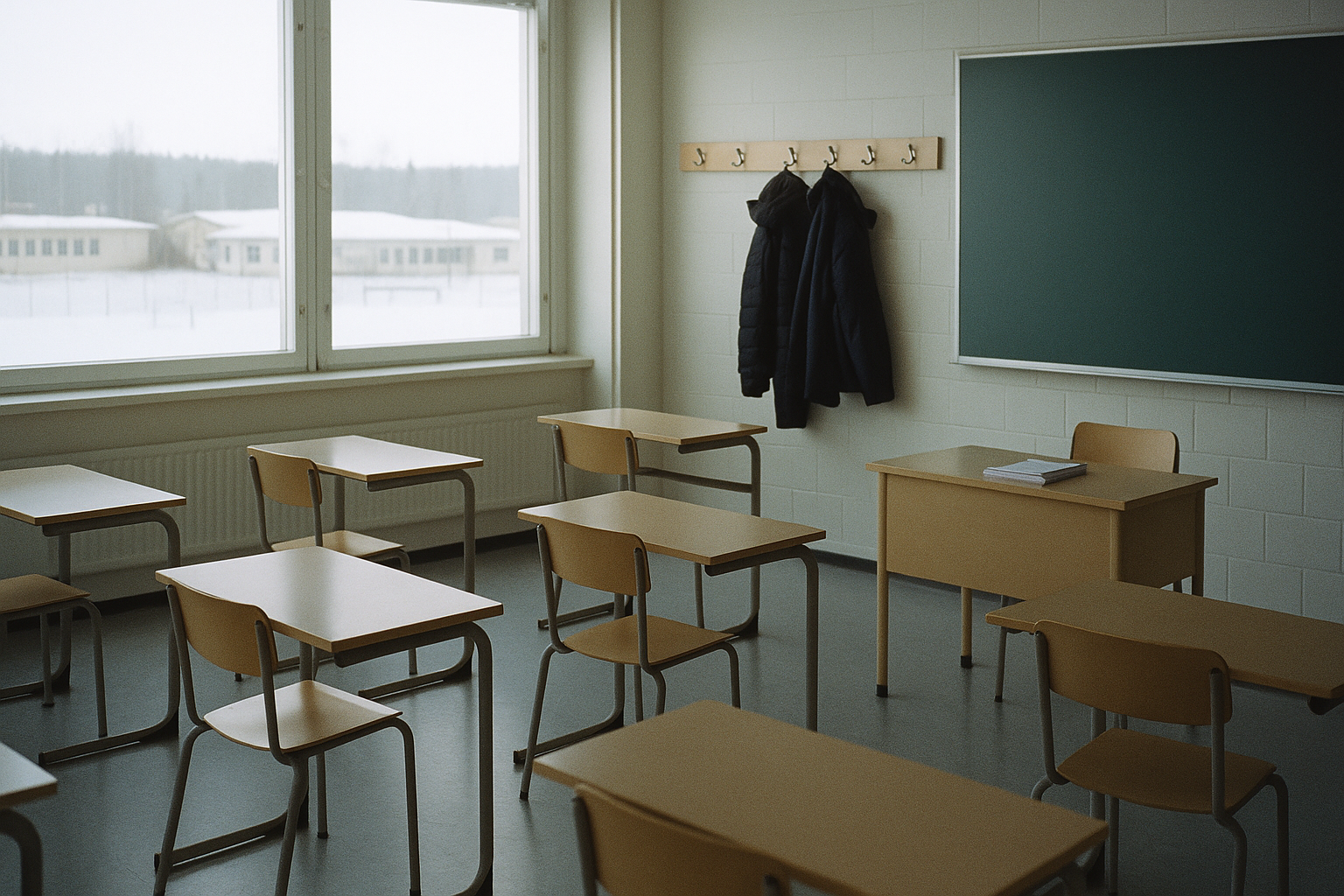
Finnish small-town schools rely on foreign pupils, Orpo fees threaten rural lifeline, municipalities face empty classrooms
- Small municipalities have used international students to keep upper secondary schools open despite shrinking local youth cohorts.
- The proposed annual fee could reach €15,000, a price that may be hard to sustain for students choosing remote Finnish towns.
- School closures would hit more than education: municipalities also use schools to retain services, housing demand and local activity.
- The policy exposes how rural Finland has quietly outsourced part of its demographic decline to a fragile inflow from abroad.
In several Finnish small towns, upper secondary schools have remained open because students have been recruited from the other side of the world. According to YLE reports, Prime Minister Petteri Orpo’s government has decided to introduce tuition fees for non-EU and non-EEA students in general upper secondary education, threatening a model that many municipalities have used to keep classrooms full.
The price under discussion is about €15,000 per school year. That changes the arithmetic for a family comparing a boarding-style education in a remote Finnish municipality with larger cities or cheaper alternatives elsewhere. For the schools, the issue is less abstract: a handful of missing students can decide whether a programme survives, whether teaching groups can be formed, and whether the municipality keeps a lukio, the Finnish academic upper secondary school, at all.
YLE’s reporting shows that this is not an isolated arrangement but a quiet adaptation to depopulation. Small municipalities with shrinking age groups have brought in foreign students to offset the collapse in local enrolment. The benefit has extended beyond the school budget. A lukio helps a municipality market itself to families, supports local rental housing, keeps teaching posts in place and preserves services that are harder to justify once a school closes. When the school goes, the municipality loses one more reason for young households to stay.
The state, meanwhile, is changing the terms after municipalities built around the old ones. If a rural school has been balancing its numbers with students from Asia or elsewhere outside Europe, a new annual fee does not just affect those students; it reaches into transport planning, housing, staffing and the wider municipal balance sheet. The government’s decision also raises a narrower question that YLE puts plainly: how many students would pay €15,000 for a year in a small Finnish municipality’s upper secondary school?
The answer will vary by town, which is why the exposure is likely to be uneven. Municipalities that made international recruitment central to their school strategy now carry the highest risk. Those with larger domestic age cohorts or schools near regional centres have more room to absorb the change. The places most exposed are the same places already managing long distances, ageing populations and a thin tax base. A lost intake there does not stay inside the school walls.
What emerges is a picture of rural Finland held together by narrow margins and temporary fixes. Foreign students filled seats, municipalities kept schools open, and the state now plans to charge a level that may empty those seats again. In some towns, the difference between a functioning school and a closure may be a dozen teenagers who arrived by plane.
Källor: YLE Uutiset