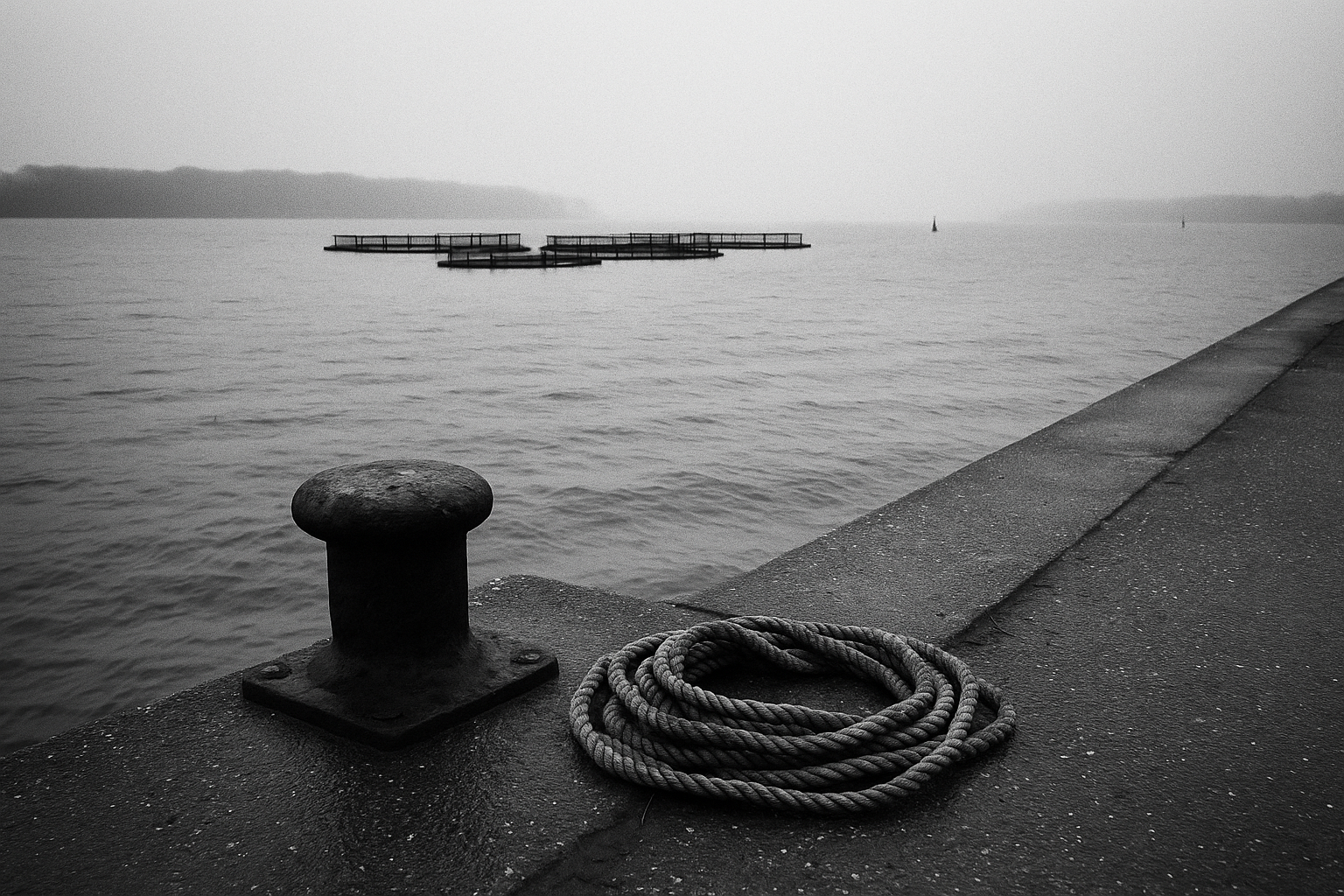
Fish farms shadow Lillebælt park, Denmark shields permits, pollution crosses map lines
- Environmental groups say fish-farm discharges do not stop at the park boundary.
- The park map reportedly excludes or skirts three existing havbrug operations.
- The dispute turns on whether conservation goals can coexist with older aquaculture permits.
- The case tests Denmark’s green image against its marine permitting regime.
Denmark has designated Naturnationalpark Lillebælt as a new protected nature area, but the map leaves room for three marine fish farms operating inside or near the park zone. DR reports that the park boundary was drawn with circles and deviations so it would not collide directly with the existing havbrug sites, a choice that has triggered protests from local environmental associations.
The criticism is less about cartography than water flow. The groups argue that nutrient and waste discharges from open-net fish farming spread beyond the lines on the state’s map and into the same waters now presented as a restoration project. That leaves the state defending two positions at once: designating Lillebælt for stronger nature protection while preserving permits for industrial aquaculture in the same marine system. The arrangement suits existing operators, who avoid an immediate permit fight, while the ecological cost is carried by the fjord and by the restoration effort taxpayers are expected to finance.
Lillebælt is not just any coastal stretch. It is one of Denmark’s most closely watched marine areas, known for its porpoises, eelgrass and narrow waters between Jutland and Funen. A national nature park there carries branding value for Copenhagen as well as local authorities. The dispute described by DR cuts into that image: if a protected marine area must be drawn around existing pollution sources rather than over them, the legal designation changes faster than the permitting regime beneath it.
The unanswered questions are practical and measurable. How large is the nitrogen and phosphorus load from the three fish farms? Which authority granted or renewed the permits, and under what environmental assumptions? If the park’s conservation targets require cleaner water, the conflict may end up not in a press release but in permit law, impact assessments and compensation claims. Denmark has spent years tightening rules for land-based emissions into coastal waters; offshore cages with legacy approvals are a harder political target.
On the map, the park border bends neatly around the farms. In the water, the current runs through all of it.
Källor: DR Nyheder