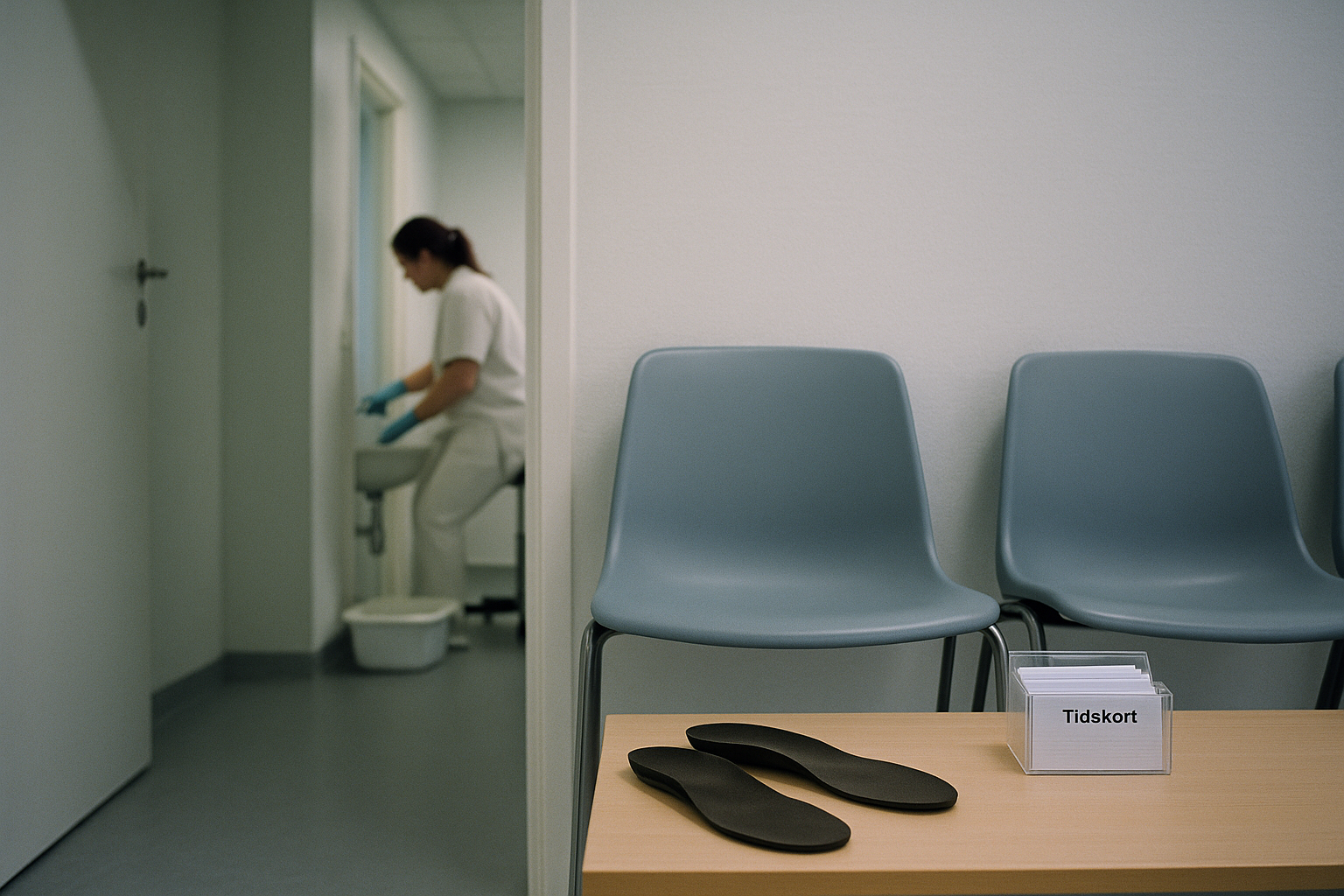
Foot therapy queues swell in Central Jutland, non-urgent care slips, patients wait nearly six months
- DR reports waiting times in Region Midtjylland have risen to nearly half a year for foot therapy.
- The treatment is routine rather than acute, but delays can worsen pain, mobility problems and foot injuries.
- The queue raises questions about whether the region lacks staff, funding or is effectively rationing access through delay.
- A regional comparison would show whether Central Jutland is an outlier or part of a wider Danish pattern.
Patients in Region Midtjylland, the Central Denmark Region, are now waiting nearly half a year for foot therapy. DR reports that the queue for what patients and clinicians describe as decisive treatment has continued to grow, leaving people to manage pain and reduced mobility while they wait.
Foot therapy sits in the unglamorous part of the health system: not emergency surgery, not cancer care, not the services politicians front in press conferences. That is precisely why the queue matters. When routine treatment is pushed far enough back, the distinction between "non-urgent" and "unimportant" starts to collapse. A foot problem left untreated can mean altered gait, less movement, more pain, and for some patients a higher risk of wounds and complications that later become more expensive to treat.
DR's reporting points to a region where demand is outrunning available appointments. Whether the bottleneck comes from too few practitioners, too little reimbursement, or an administrative cap on how much treatment the region is willing to buy, the result for patients is the same: access is limited by waiting. That is a familiar way for tax-funded systems to control costs. The price does not disappear; it is shifted into months of discomfort, lost function and, for those who can afford it, pressure to pay privately instead.
The case also says something about how health systems prioritise. Acute and life-threatening care will always come first, and few would argue otherwise. But once a queue for basic maintenance treatment stretches toward six months, the system is no longer merely sorting by urgency; it is allowing conditions to deteriorate until they become urgent enough to command attention. That usually costs more later, both medically and financially.
A comparison with Denmark's other regions would clarify whether Central Jutland is failing on its own terms or reflecting a wider shortage in publicly financed foot care. If similar queues are appearing elsewhere, the issue is national. If not, the pressure falls back on regional management, contracting and staffing choices.
For now, the number attached to the problem is simple enough: nearly six months for treatment of the body part people stand on every day.
Källor: DR Nyheder