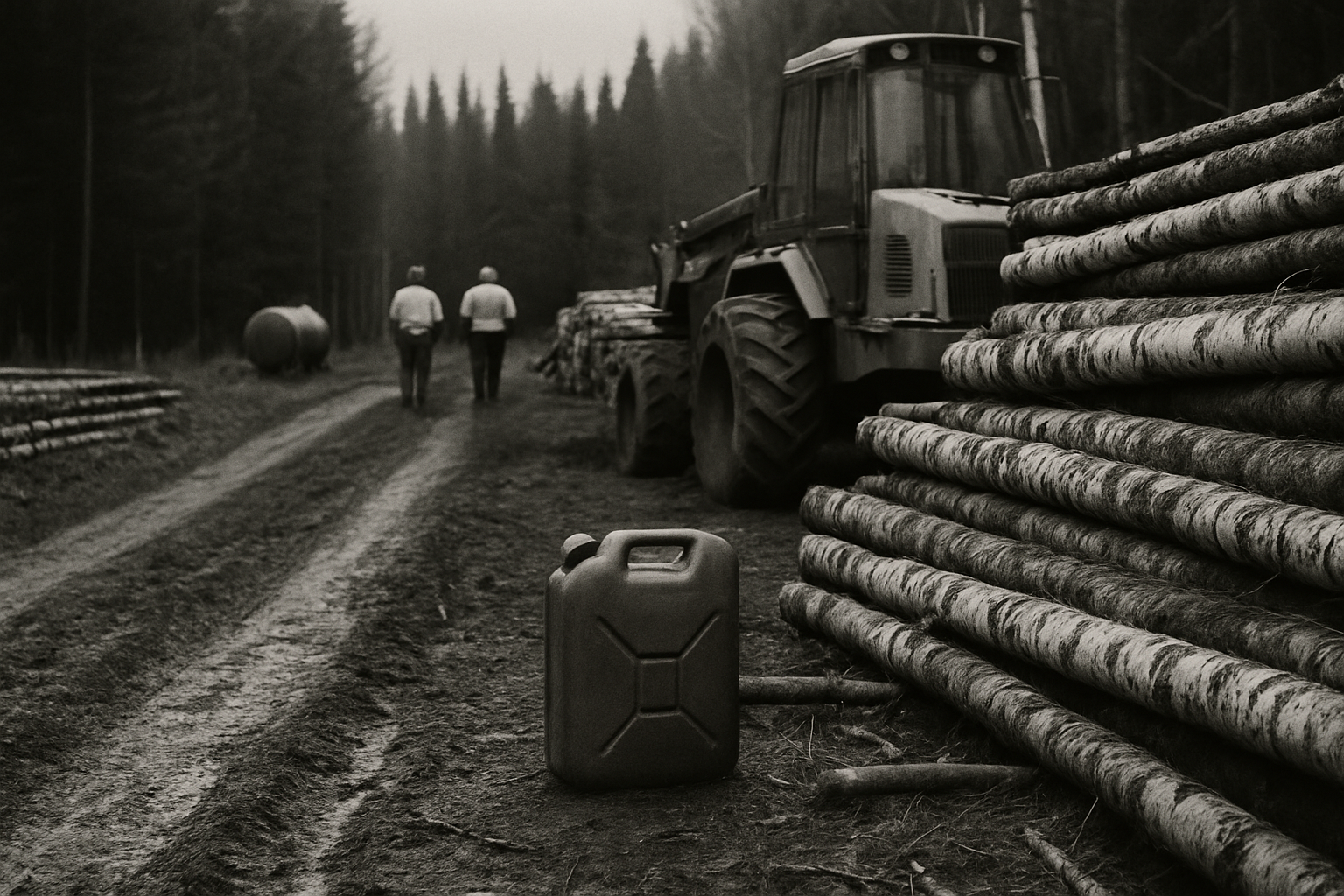
Forest contractors seek wartime diesel priority, Sweden’s civil defence meets rural supply chains, fuel and labour become allocation fights
- The industry group Skogsentreprenörerna says many forestry firms would face severe problems in a major crisis or war.
- Its chairman argues forestry contractors are socially important and should receive fuel during rationing.
- The group also wants firms to be allowed to keep staff if Sweden enters wartime mobilisation.
- A seminar on forestry’s role in civil defence is being held as Sweden expands preparedness planning.
Sweden’s forest contractors are asking to be treated as essential in wartime planning, with priority access to diesel and exemptions that would let them keep staff if a severe crisis or war hits. Sveriges Radio Ekot reports that the industry organisation Skogsentreprenörerna says many companies in the forestry sector would face major problems under such conditions.
Chairman Kolbjörn Kindström says forestry companies are socially important and should therefore receive fuel if rationing is introduced. He also argues they should be able to retain their personnel in wartime rather than lose them to broader mobilisation. The demand arrives as Sweden rebuilds civil defence after decades of thinner stockpiles, leaner logistics and greater dependence on just-in-time supply chains. On Thursday, a seminar is being held on the forestry sector’s importance to the country’s civil defence.
The request points to a harder part of preparedness policy than stock phrases about resilience. Forest machines, timber trucks and contractors operate far from ports, ministries and military headquarters, but they clear roads, move raw materials and support one of Sweden’s largest export industries. If diesel is scarce, every priority list becomes a map of political choices: food transport, emergency services, defence units, public transport, heavy industry and the private firms that keep rural production running all draw from the same tank. Labour raises the same problem. A contractor that loses mechanics, drivers and machine operators may still own the equipment, but the machines stay parked.
Forestry sits in an awkward place in that hierarchy. It is privately run, heavily subcontracted and dispersed across the country, yet it feeds sawmills, pulp mills, district heating plants and export revenue. A state planner can call it business; a municipality cut off from fuel, timber roads or local contractors may use a different word. The industry group’s intervention suggests it does not trust that this distinction has been settled in its favour. That is what happens when preparedness leaves the abstract and reaches the pump, the payroll and the road into the forest.
For now, the concrete ask is simple: when rationing starts, forestry wants diesel, and when mobilisation starts, it wants to keep its crews. The seminar is being held on Thursday; the harvesters still run on fuel that has to arrive first.
Källor: Sveriges Radio Ekot