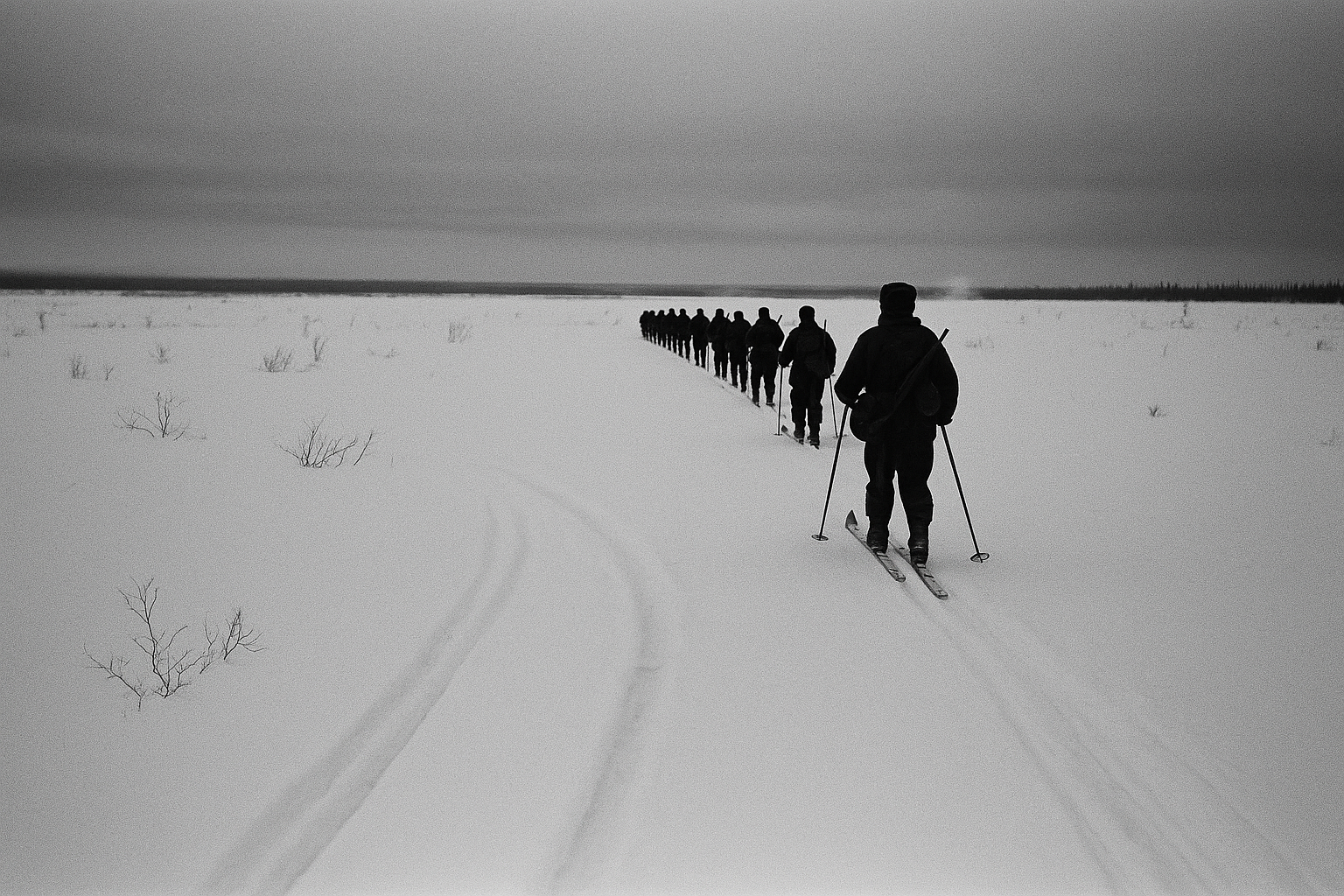
French, Italian Mountain Troops Assigned to Defend Finnish Lapland Under New NATO Plan
- French and Italian alpine troops are formally assigned to fight alongside Finnish forces in Lapland under NATO's new defence architecture
- Finnish Brigadier General Manu Tuominen calls the southern European units 'a positive surprise' in Arctic conditions
- NATO's Norfolk headquarters ordered Cold Response participants to execute the drill as though war were imminent
- Finland's Arctic defence now depends on French and Italian coordination rather than a Nordic framework
NATO's revised defence plans place French and Italian mountain troops in Finnish Lapland — tasked with fighting alongside Finnish units in one of Europe's most demanding operational environments. Brigadier General Manu Tuominen, speaking to Iltalehti, called the southern European units "a positive surprise," praising their operational capability in Arctic conditions. The assignment emerged during the Cold Response exercise, where NATO's Norfolk headquarters issued a pointed directive: conduct the drill "as if it were the last before war."
Norway's Army Commander, Major General Lars Sivert Lervik, was photographed wading through slush with a submachine gun — an image that captured the exercise's tone. Cold Response has long served as NATO's primary Arctic proving ground, but the Norfolk order signals a shift from routine training to operational rehearsal. The question is whether the units assigned to the Nordic Arctic can actually perform there.
French Chasseurs Alpins and Italian Alpini are among Europe's most experienced mountain forces, with decades of high-altitude warfare training in the Alps and operational deployments in Afghanistan's mountains. Tuominen's praise suggests they can handle Lapland's cold. But Lapland is not the Alps. The terrain is flat bog and forest, not ridgelines. Temperatures drop below minus forty. Daylight vanishes for weeks. The logistical chain stretches across the entirety of Scandinavia before it reaches a French or Italian port. These are solvable problems, but they require sustained training rotations, pre-positioned equipment, and language interoperability — none of which materialise from a single exercise.
The more striking fact is who is not assigned to defend Finland's north. Sweden shares a 614-kilometre border with Finland and fields units trained for subarctic operations. Norway literally hosts the exercise. Denmark has expeditionary Arctic experience from Greenland. Yet under NATO's plan, it is Rome and Paris — not Stockholm, Oslo, or Copenhagen — that bear formal responsibility for Lapland's reinforcement. The alliance's command structure routes decisions through Norfolk, Virginia, not through any Nordic headquarters. Finland's Arctic defence now runs on an axis that passes through the Alps and across the Atlantic before it reaches Rovaniemi.
For Nordic cooperation advocates, the arrangement is awkward. The four Nordic NATO members — Finland, Sweden, Norway, and Denmark — share languages close enough for battlefield communication, operate similar equipment, and train in the same climate year-round. A Nordic framework would place reinforcement decisions closer to the theatre, shorten supply lines, and eliminate the cultural translation layer that any Franco-Finnish or Italo-Finnish joint operation requires. Instead, coordination runs through an American-led command structure that assigns units based on alliance-wide availability, not geographic logic.
None of this diminishes what the French and Italian mountain troops bring. Alpine warfare produces soldiers comfortable with cold, altitude, and misery — qualities that transfer. Tuominen's endorsement carries weight; Finnish officers are not given to diplomatic flattery about combat capability. But the arrangement reveals what NATO membership actually means in practice: Finland gets reinforcements chosen by Norfolk, not neighbours chosen by Helsinki.
The Cold Response directive — train as though war is next — suggests NATO planners believe these assignments may be tested. Lervik's submachine gun was not a prop. The Chasseurs Alpins and Alpini will need to learn the difference between an Alpine pass and a Lapland swamp before that test arrives.
Sources: Iltalehti