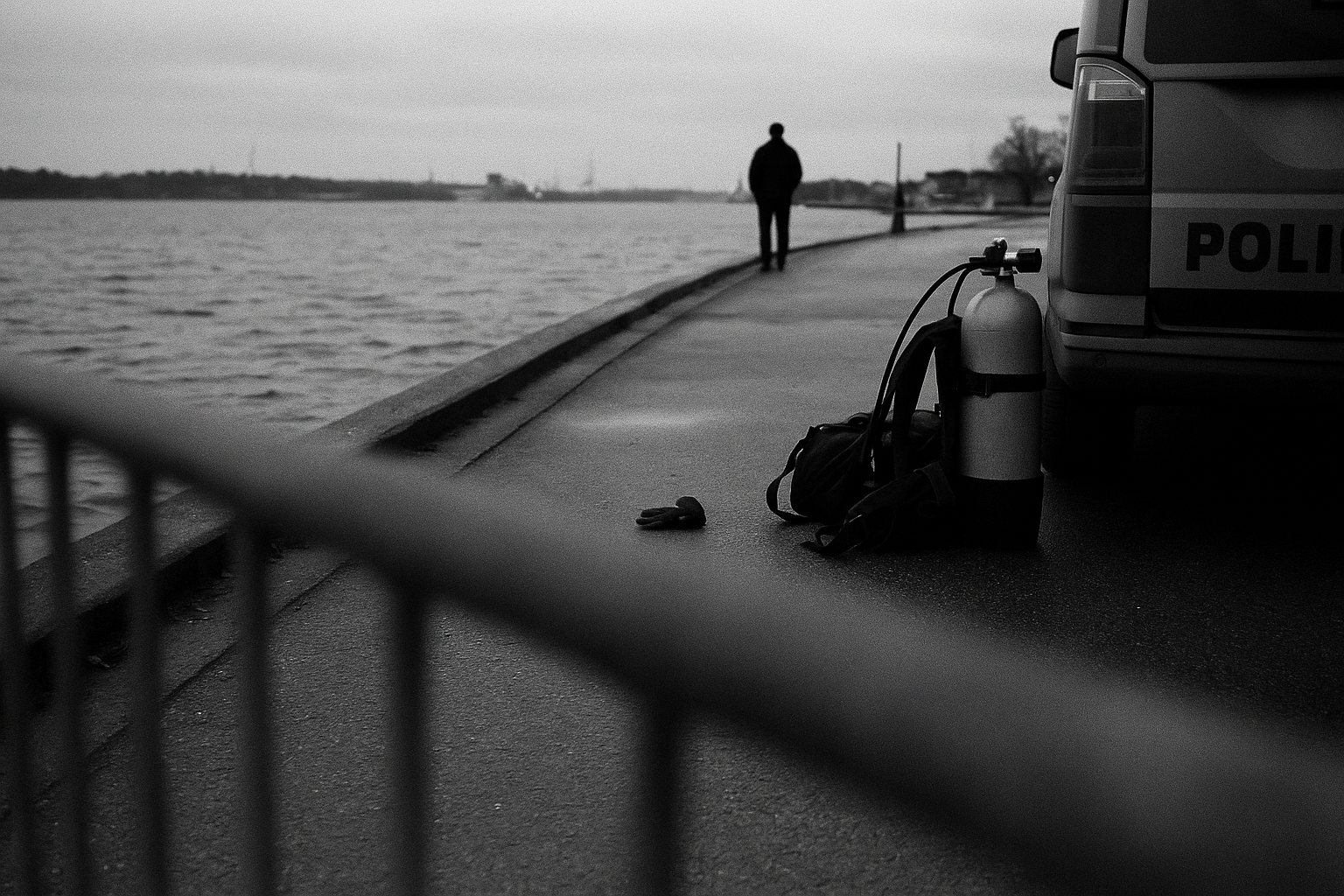
Girl dies in Västerås, diver finds child after fall into water, questions turn to barriers and response
- The child fell into the water in Västerås and was later located by a diver.
- She was taken to hospital after the rescue operation and subsequently died.
- The case puts focus on supervision, rescue times and physical safety measures around public waterfronts.
- Police have opened a preliminary investigation to clarify what happened.
A girl aged about four has died after falling into the water in Västerås and being found by a police diver. Aftonbladet reports that the child disappeared near the water, triggering a search that ended when a diver located her below the surface; she was taken to hospital but later died.
What is publicly established so far is narrow and brutal. The child is said to have fallen into the water, emergency services were called, and rescue personnel searched the area before the girl was recovered. Police have opened a preliminary investigation, a routine step in cases involving a child's death, to establish the sequence of events and whether any negligence or environmental factors played a part. The immediate questions are practical ones: how long the child was in the water, who saw her last, how quickly the alarm was raised, and how long it took for divers or other rescue units to reach the spot.
The site itself now matters as much as the timeline. Public waterfronts in Swedish cities often mix walkways, quays, marinas and open edges with little standing between a child and cold water beyond a curb, a low ledge or nothing at all. If there were barriers, warning signs, rescue ladders or life-saving equipment at the Västerås location, those details will shape how this death is understood locally. Municipalities control much of this physical environment, and the difference between an ornamental edge and a fenced-off drop can be measured in seconds.
The case also fits a recurring pattern across the Nordic region: a child disappears from view in an ordinary public setting, the emergency response becomes a race against water and temperature, and the hard questions arrive only after the ambulance has left. Condolences cost little. Fences, railings, visible warnings, throw lines, rescue poles and routine risk reviews cost money, alter public space and force municipalities to decide which hazards they are willing to leave in place.
In Västerås, the known facts remain stark. A four-year-old fell into the water, a diver brought her up, and the rescue ended at the hospital.
Källor: Aftonbladet