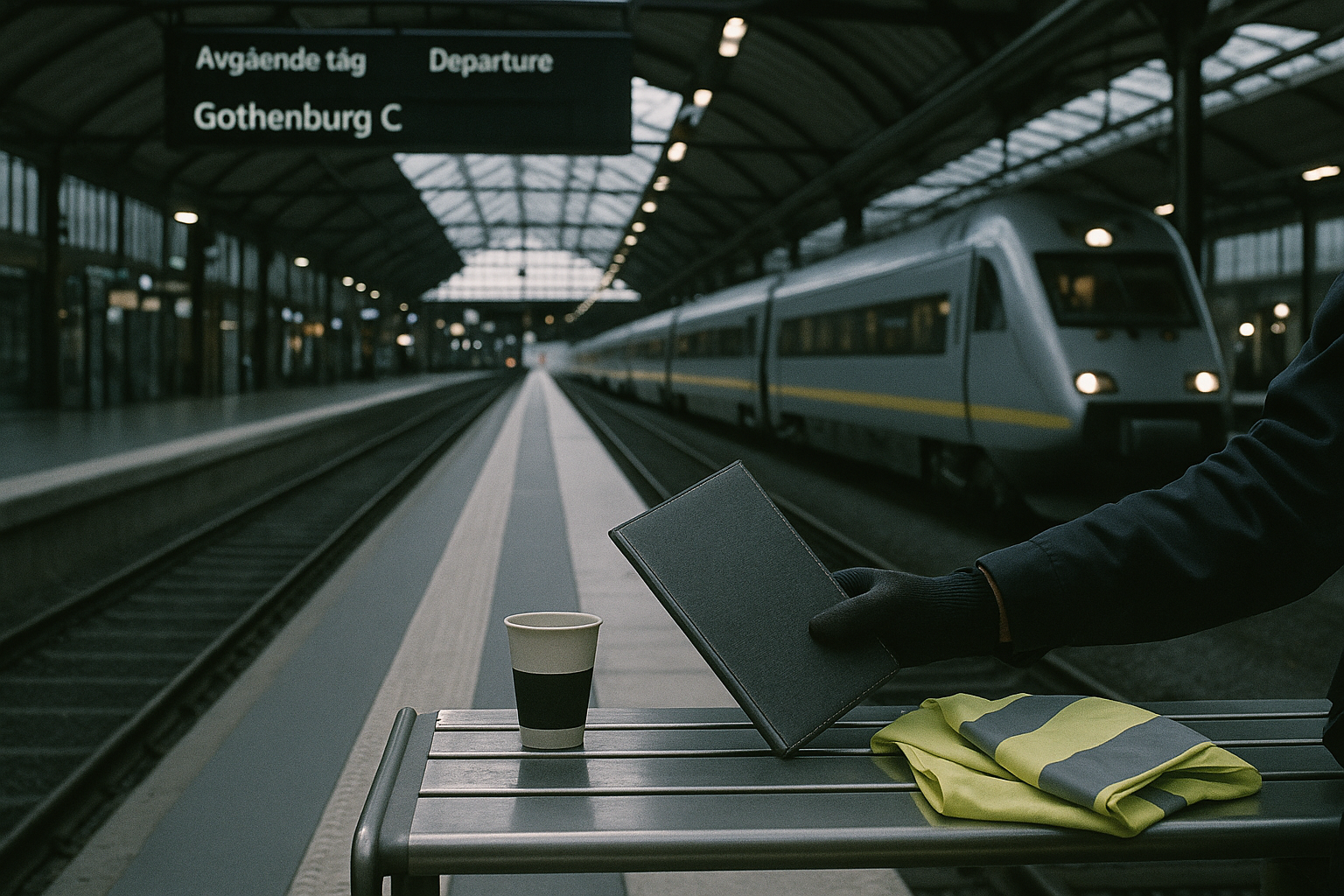
Gothenburg gets Berlin train, Vy tests cross-border rail on short-haul air route
- Vy plans to run a direct Oslo-Berlin service stopping in Trollhättan, Gothenburg, Halmstad, Helsingborg, Lund and Malmö.
- The route would connect western Sweden more directly to Denmark and Germany without a change of train.
- A viable service depends on cross-border timetable coordination, track access and enough spare capacity on busy southern Swedish lines.
- The line would test whether rail operators can win passengers from airlines on a major Nordic-German corridor.
Norwegian rail operator Vy plans to start a direct train from Oslo to Berlin in two years, with stops in Trollhättan, Gothenburg, Halmstad, Helsingborg, Lund and Malmö. Svenska Dagbladet reports that the service would give Gothenburg a through-train to the German capital rather than another connection built around transfers and optimistic timetables.
That makes the proposal larger than a tourism story. The Oslo-Gothenburg-Malmö-Copenhagen-Berlin corridor overlaps with one of northern Europe’s busiest short-haul air markets, where speed on paper is only part of the calculation: airport access, security time, missed connections and overnight stays all affect what passengers actually buy. A direct train can compete on convenience only if it is punctual across national borders, easy to book and frequent enough to matter. One new departure with fragile margins would advertise ambition; a stable timetable would advertise a market.
For Gothenburg, the route would tighten the city’s role as western Sweden’s main rail junction toward both Norway and the continent. The station already sits between Oslo traffic to the north and the Öresund link to Denmark in the south. A through-service to Berlin would turn that geography into a saleable product for business travel, leisure travel and onward connections, while giving passengers from Bohuslän and western Sweden a simpler route to Germany than changing in Copenhagen or Hamburg. If the service works, Gothenburg gains traffic without building a new airport terminal.
The harder part is not the map but the path. Southern Swedish rail is already crowded, especially on stretches shared by long-distance trains, regional services and freight. International rail also depends on timetable coordination between infrastructure managers and operators in Norway, Sweden, Denmark and Germany, plus rolling stock approved for several national systems. Each border adds another point where a late departure, maintenance work or crew issue can spread down the line. Airlines solve that with separate aircraft rotations; rail solves it only if the whole chain holds.
The economics will rest on load factors and regularity. A direct train spreads fixed costs over a long route, but empty seats over several hundred kilometres are expensive, and delays make the service harder to sell to business travellers who pay the highest fares. The route does have obvious demand pockets: Oslo-Gothenburg, Gothenburg-Copenhagen, Malmö-Berlin and the full end-to-end market. But those passengers are buying different products at different prices, and the operator needs enough volume in each segment to keep the train full in both directions.
Vy has now put a date on an idea that Nordic politicians and rail advocates have discussed for years. The remaining test is less glamorous: available train paths, approved vehicles, functioning border coordination and enough slack in the timetable that a train leaving Oslo can still arrive in Berlin as a train, not as a press release.
Källor: Svenska Dagbladet