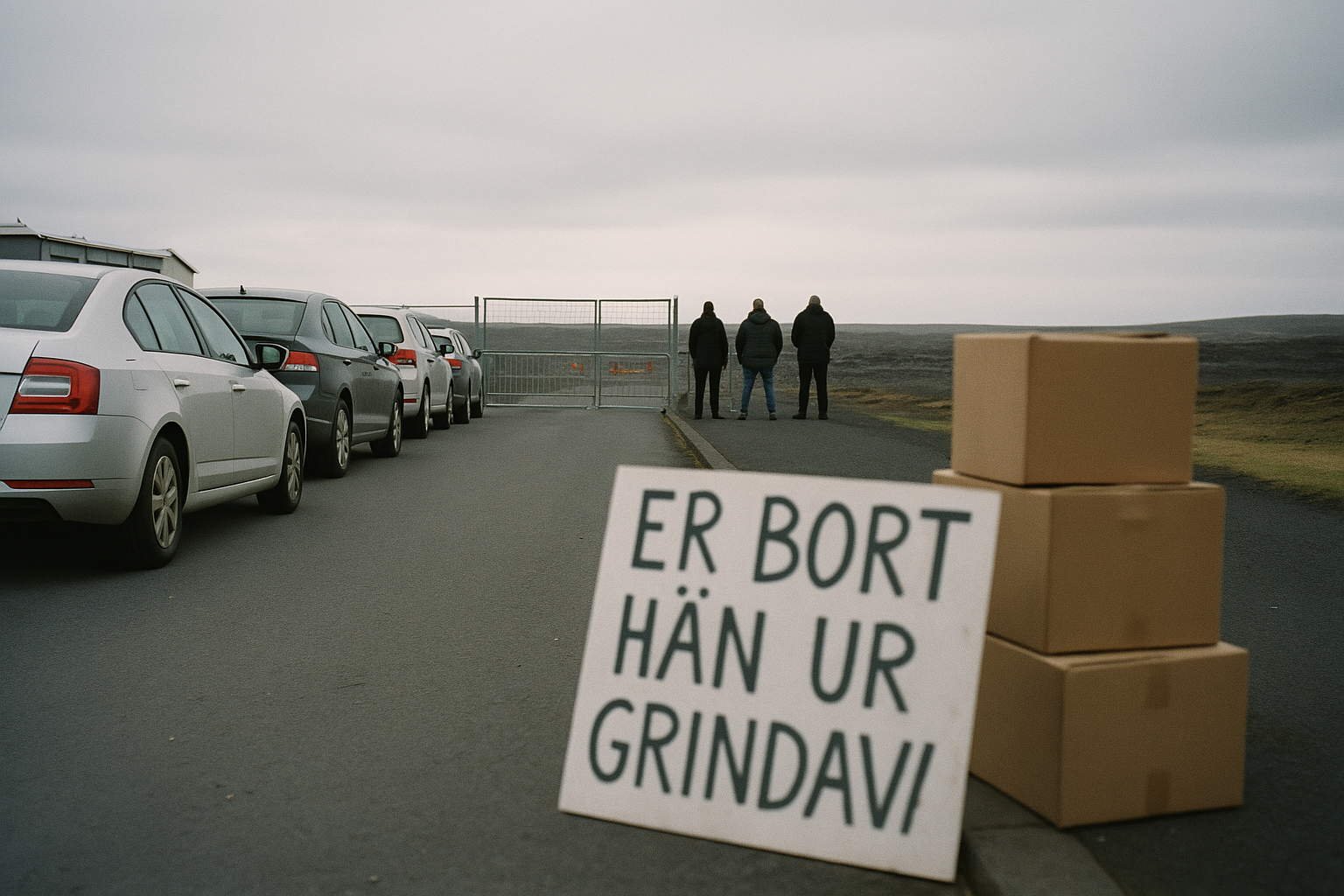
Grindavík residents resist housing ban, volcanic crisis drags into property limbo, 1 September deadline nears
- The ban covers permanent residence in Þórkatla-owned homes in Grindavík and is set to apply from 1 September.
- Residents quoted by Morgunblaðið say they are being kept from returning home despite wanting to live in the town again.
- The case exposes the longer aftermath of the volcanic crisis: state-backed property control, uncertain safety assessments and residents left in temporary arrangements.
Residents of Grindavík are pushing back against a renewed ban on permanent residence in homes owned by the real-estate company Þórkatla, with the restriction set to take effect on 1 September. In a report by Morgunblaðið, locals describe growing frustration at being prevented from moving back into houses in the fishing town after months of displacement caused by the Reykjanes volcanic crisis.
The immediate dispute concerns a narrow legal and administrative category: homes now owned by Þórkatla, the company created to acquire residential property in Grindavík after repeated eruptions and evacuations. But the argument reaches beyond one landlord and one deadline. Once the state, directly or indirectly, becomes the buyer of last resort in a disaster zone, it also decides who may return, on what terms, and for how long. Residents who sold or transferred property into that structure can end up with a house standing in town, a key in hand, and no right to live there permanently.
Morgunblaðið’s reporting captures that mood in blunt form. The headline quote — roughly, “Somehow they do not want us home” — points to a widening gap between official caution and local tolerance for risk. Grindavík has spent much of the past two years in a stop-start existence: evacuation orders, partial reopening, infrastructure repairs, police controls and shifting hazard assessments. For families trying to decide where children should attend school, whether to sign leases elsewhere, or whether to keep paying for temporary accommodation, each extension turns a temporary measure into a housing regime.
The unresolved question is whether the September ban reflects a current safety judgment or an administrative default. If authorities still consider permanent habitation too dangerous in Þórkatla properties, that is one kind of decision, with a clear if severe logic. If the restriction survives because no agency wants responsibility for lifting it, the burden falls on residents through another winter of suspended normal life. The cost is then dispersed: extra rent, commuting, split households, and houses that remain empty in a town built to be lived in.
Morgunblaðið’s article focuses on the dissatisfaction among residents rather than a full accounting of how many households are affected or what compensation and housing alternatives remain available. Those details matter. A ban that covers a handful of homes is one thing; a ban that keeps a substantial share of former residents from returning is another. The same goes for support arrangements: temporary housing assistance can cushion an evacuation for weeks or months, but it does not settle what happens when a town is neither fully closed nor fully open.
By 1 September, the formal rule will be easy to state. In Grindavík, the harder fact is that some homes will still be standing empty while their former residents live somewhere else.
Källor: Morgunblaðið