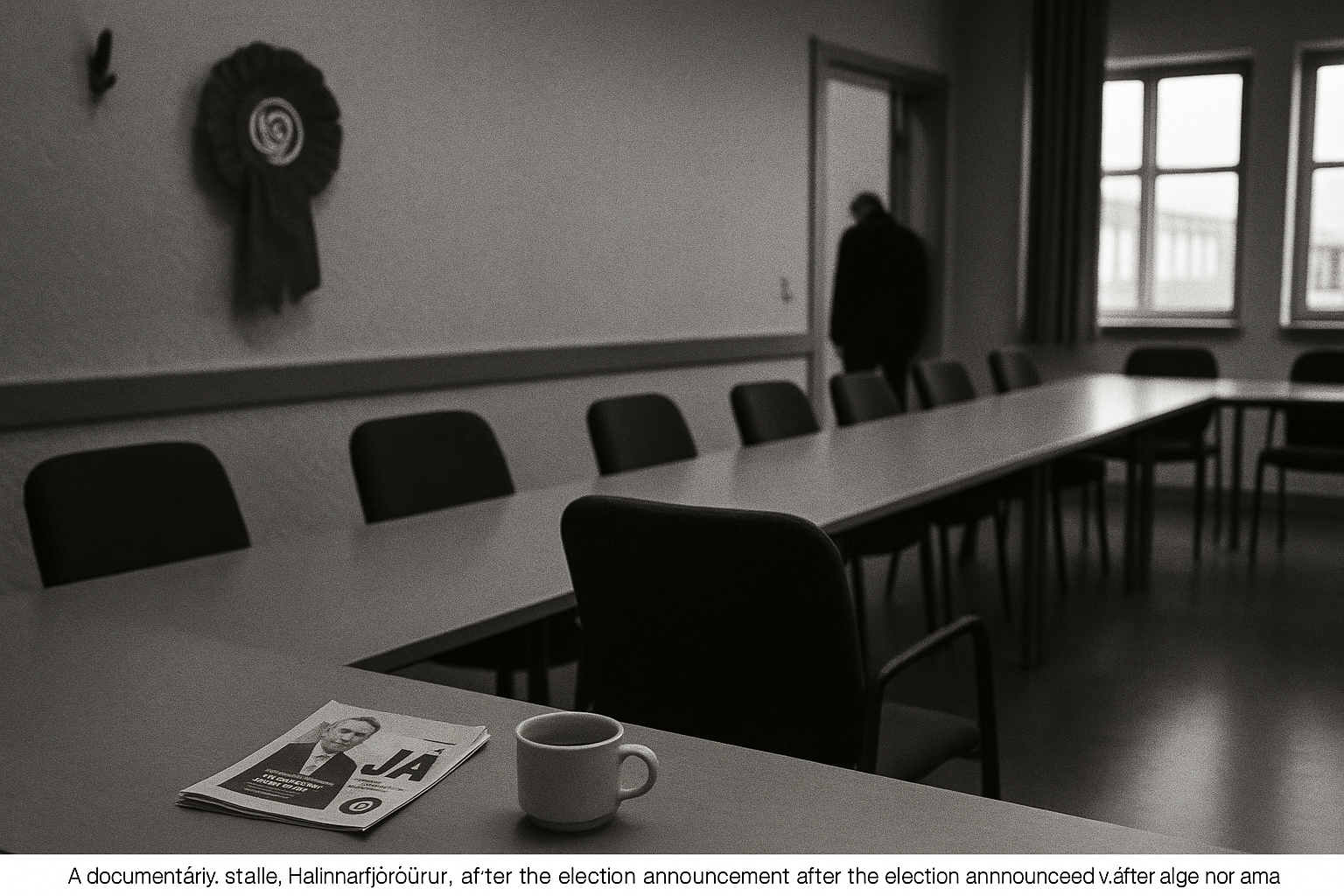
Hafnarfjörður result hits Social Democrats, local leader prepares exit, setback reaches Reykjavík belt
- Guðmundur Árni said he takes full responsibility for the Social Democrats’ poor result in Hafnarfjörður.
- He told media he plans to step aside, though he did not say when.
- Hafnarfjörður is a key municipality in the Reykjavík area where national parties test local organisation and voter appeal.
- The result raises questions about whether voters punished the party over housing, spending priorities or municipal services.
First figures from Hafnarfjörður put the Social Democrats on the defensive and pushed their local leader toward the exit. Writing from the count, Vísir reports that Guðmundur Árni, the party’s lead candidate in the southwest Iceland municipality, said he takes full responsibility for the loss and will step aside soon, though he declined to give a date.
The contrast on election night was plain. Vísir described the leaders of the Progressive Party and the Social Democrats as being in entirely different moods once the first numbers arrived. Guðmundur Árni did not try to spread blame across the list or the national party. He said demand for him was no longer there. For a municipal election story, that is unusually direct language and it matters because Hafnarfjörður is not an isolated outpost: it sits in the Reykjavík commuter belt, where parties test canvassing strength, candidate quality and message discipline in front of a large suburban electorate.
The immediate numbers in Hafnarfjörður matter less on their own than the direction they suggest. When a local leader moves this quickly to accept defeat, it usually means the result was not treated as a narrow miss or a temporary fluctuation. Municipal voters often punish what they meet every week: housing queues, school and care services, road maintenance, planning disputes and the size of the local bill. The source material does not assign a single cause, but those are the pressure points in towns like Hafnarfjörður, where growth, housing demand and municipal spending collide in visible ways.
That gives the result a second life beyond town hall arithmetic. National parties in Iceland use municipalities around Reykjavík to see whether their organisations can still turn brand recognition into votes on the ground. A setback here says something different from a bad night in a smaller, more remote municipality. It points to trouble among middle-class suburban voters who are close enough to the capital to compare services and taxes across municipal lines, and close enough to national politics to treat a local ballot as a message upward.
For the Social Democrats, the damage is therefore twofold. They lose support in a municipality that carries weight in the capital region, and they now face a leadership vacancy created in real time by the result itself. Replacing a local list leader after an election loss is not only a personnel matter; it is an admission that the campaign, the message or the municipal record failed to hold voters who were available to be kept.
By the time the first figures had settled in Hafnarfjörður, the Progressive leader was celebrating and the Social Democrats’ candidate was already discussing his departure.
Källor: Vísir