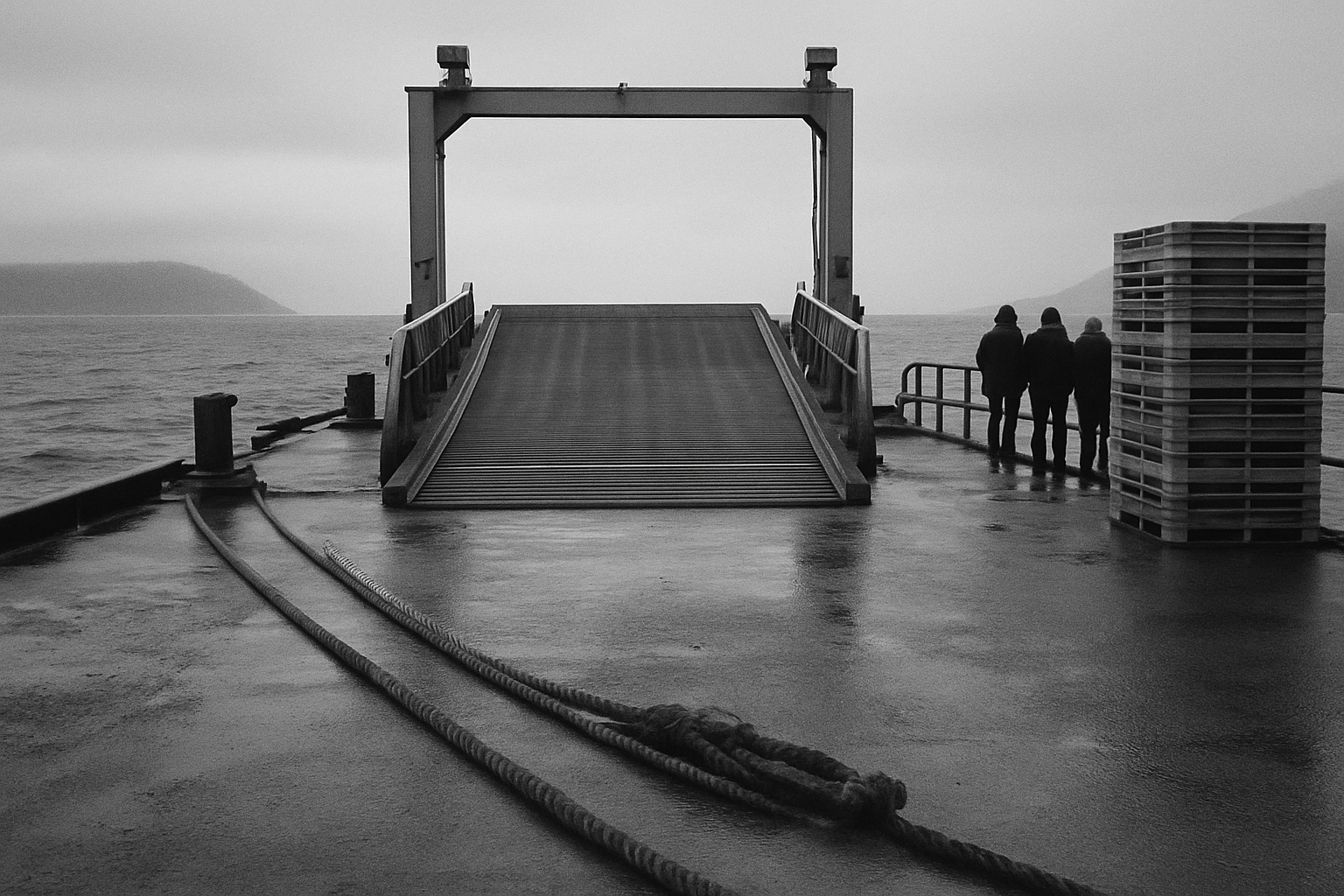
Hasvik demands ferry fixes, Finnmark route disruptions hit work and trade, island transport runs on a single timetable
- Labour Party politicians in Hasvik say repeated cancellations on the Hasvik–Øksfjord route are hurting residents and companies
- The route links Sørøya to the mainland, making the ferry a basic transport service rather than an optional convenience
- Disruptions affect commuting, appointments, freight and business activity in a municipality with few alternatives
- The dispute has become a test of how much instability northern island communities are expected to absorb
Repeated ferry cancellations on the Hasvik-Øksfjord route have led politicians in Hasvik municipality in Finnmark to demand a more reliable service for Sørøya island residents. NRK reports that local Labour Party politicians say the current situation is hitting both households and businesses, and that patience has run out.
The route connects Hasvik on Sørøya, Norway’s fourth-largest island, to Øksfjord on the mainland in Loppa municipality. When departures are cancelled, the effect is larger than a delayed trip. Residents lose access to work shifts, school transport, medical appointments and goods deliveries; companies lose a transport link they cannot replace with a private workaround. In an island municipality, the ferry serves the function a road serves elsewhere, but with a timetable, limited capacity and a weather exposure residents do not control.
According to NRK’s reporting, the local political message is blunt: ferries are the roads in coastal Finnmark, and a road that repeatedly disappears would not be treated as a minor operational issue. That matters beyond Hasvik itself. Much of northern Norway’s settlement pattern depends on public transport links that are too capital-intensive for residents or firms to duplicate on their own. A cancelled bus can sometimes be replaced by a car. A cancelled ferry on an island route leaves freight on the quay and workers on the wrong side of the sound.
The dispute also points to how thin the margin is for local commerce. Fish industry activity, service businesses and ordinary commuting all depend on predictability as much as on nominal departures in a route plan. A ferry that exists on paper but fails often enough changes business decisions, staffing plans and delivery schedules. The cost is dispersed across households and firms, while the service decision sits with county-level transport planning and operators running to contract.
Hasvik’s politicians are now pressing for a better offer, arguing that the present service no longer matches what residents need. In western Finnmark, where distance already raises the price of labour, freight and public services, an unreliable ferry adds another tariff. On the quay in Hasvik, that tariff shows up as cancelled departures on the board and lorries waiting for the next boat.
Källor: NRK