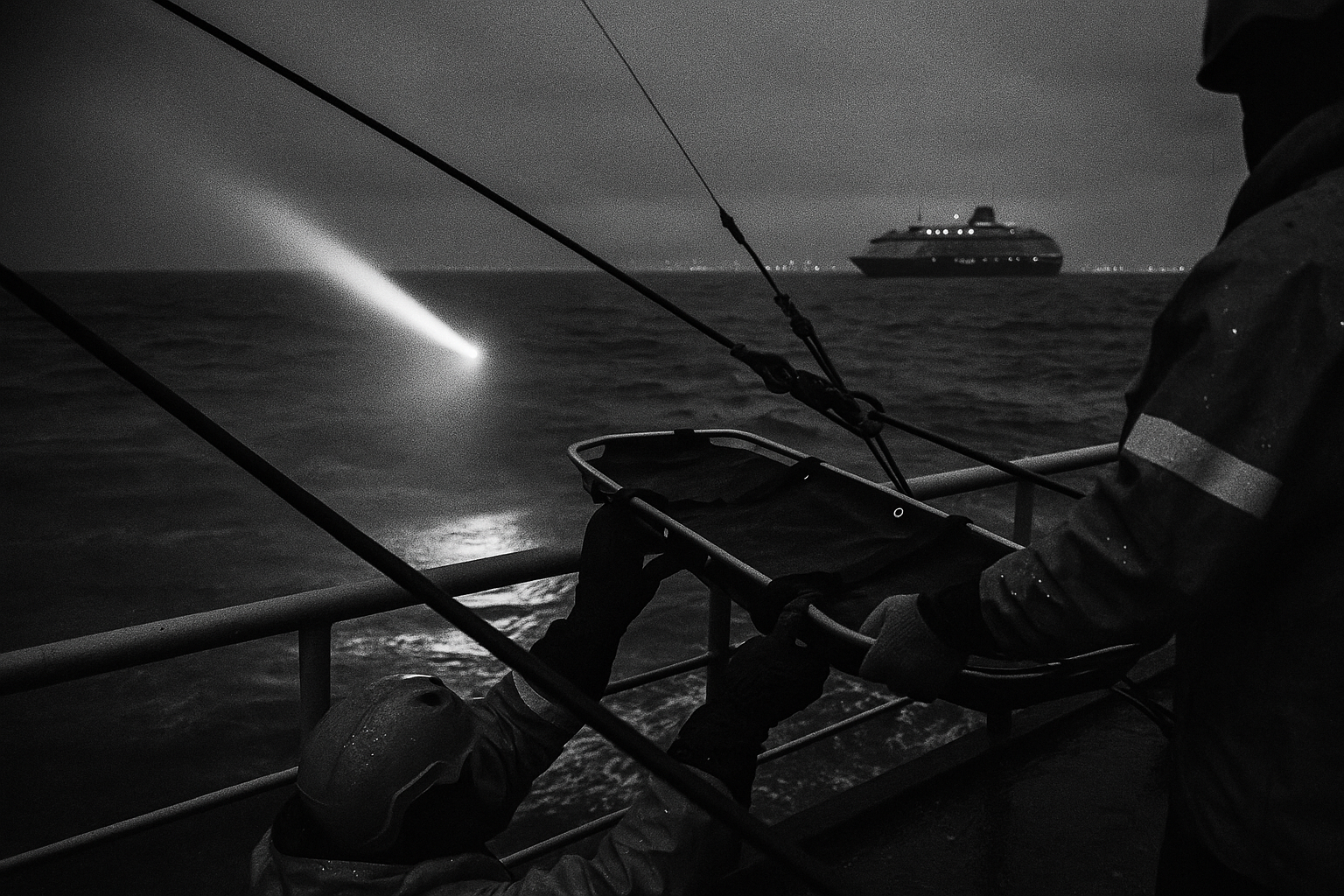
Iceland Coast Guard lifts ill cruise passenger, Greenland route leans on public rescue
- The Icelandic Coast Guard evacuated a sick man from a cruise ship sailing between Iceland and Greenland.
- Morgunblaðið reported that the patient was later admitted to Landspítali in Reykjavík.
- Cruise traffic in the Greenland Sea relies on long-range rescue assets because ports, hospitals and alternative transport options are sparse.
- A medical problem on a tourist route can quickly become a public operation involving aircraft, crews and hospital capacity.
An ill passenger was evacuated from a cruise ship between Iceland and Greenland on Wednesday evening and taken to Landspítali University Hospital in Reykjavík. Morgunblaðið reports that the Icelandic Coast Guard carried out the operation and that the man had arrived at the hospital later that night.
The report identifies the vessel only as a cruise ship sailing in the waters between Iceland and Greenland. The Coast Guard published video from the mission, including its helicopter TF-GRÓ, underscoring the distances involved: there is no chain of nearby ports, roads or regional hospitals to absorb a medical emergency in this part of the North Atlantic. A passenger falling ill on what is sold as routine expedition travel can leave only one practical option — a state aircraft, trained crew and a bed in Reykjavík.
That dependence is built into the geography. Cruise operators market Greenland and Iceland routes on remoteness, ice-edge scenery and long sea passages. The same features thin out the margin for error. When weather closes in or a ship is hundreds of nautical miles from shore, even a single patient transfer becomes an aviation task rather than a harbour call. The bill does not follow the brochure; it lands on public rescue services already tasked with fisheries patrol, search and rescue, and emergency response across one of Europe’s largest maritime areas.
Iceland’s Coast Guard, the Landhelgisgæsla (Icelandic Coast Guard), is regularly called out for medical evacuations at sea, including from fishing vessels, cargo ships and cruise traffic. Summer brings heavier passenger movement in Arctic and sub-Arctic waters just as operators extend routes deeper into sparsely served areas. Each callout is case-specific, but the pattern is plain enough: private tourism revenue moves through remote seas, while the backup system remains a publicly funded helicopter service on standby for the moment a cabin becomes an emergency room.
For the patient, the operation ended at Landspítali. For everyone else on board, the voyage continued between two large islands with little in between except cold water, distance and one helicopter.
Källor: Morgunblaðið