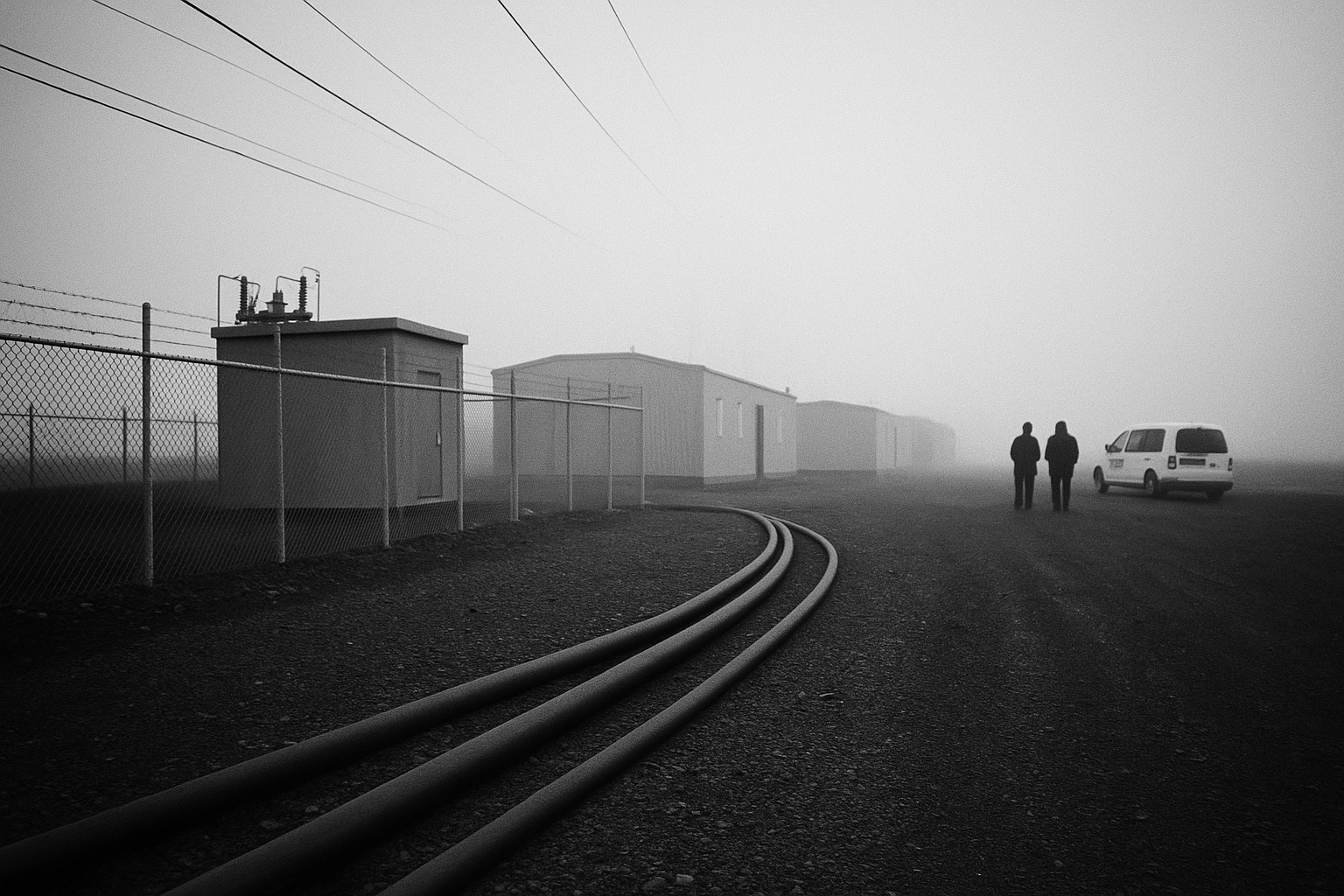
Iceland courts data centres, municipalities weigh power and land, local gains remain uncertain
- A regional municipal association in South Iceland has received ISK 18 million from Interreg NPA for a 2.5-year project on sustainable data-centre planning.
- Developers are attracted by Iceland’s low-cost green power, cool climate and access to water.
- Municipalities are being asked to assess grid capacity, land use and whether data centres crowd out other business activity.
- Waste heat from server halls could be used for greenhouses or district heating, but that depends on local infrastructure and scale.
Iceland’s pitch to data-centre operators is simple: cheap renewable electricity, cold air and water. The harder question begins after the sales brochure. According to RÚV, municipalities are being told to make informed decisions on data-centre construction before power, land and local infrastructure are tied up by projects whose main customers may be elsewhere.
Elísabet Björney Lárusdóttir, an environmental specialist at the Association of Municipalities in South Iceland, told the broadcaster that data centres are now “knocking on the door” in Iceland. Her region’s municipal association has recently secured an ISK 18 million grant from the Interreg NPA programme for a two-and-a-half-year effort to help Arctic-area municipalities prepare for, manage and plan data-centre development on what she described as a sustainable and informed basis. That framing matters because server halls do not arrive as abstract digital infrastructure. They arrive as requests for land, transmission capacity, cooling water, permits and road access.
The attraction for operators is obvious. Iceland offers power that is marketed as clean and relatively cheap, along with a climate that lowers cooling costs. The burden falls on local authorities to decide what that electricity would otherwise have powered. Lárusdóttir said municipalities need to examine how many megawatts a proposed facility would consume and whether allocating that capacity to a data centre would leave less room for other activity in the community. A megawatt committed to racks of servers is a megawatt unavailable to another industrial user, housing expansion or future local business that has not yet applied.
The same applies to the promised side benefits. Data centres are energy-hungry, but they also emit heat. Lárusdóttir pointed to the possibility of using that waste heat in greenhouses or district heating systems, especially in colder parts of South Iceland. That prospect depends on geography, piping, investment and a steady nearby heat demand. Heat that looks valuable in a project presentation can dissipate into the air if the surrounding settlement pattern does not support capture and reuse.
Jobs follow a similar logic. Construction creates a burst of activity, but long-term operating headcount is often modest compared with the power consumed. For a municipality, the calculation is less about the symbolism of hosting digital infrastructure than about what remains after the substation is built: tax revenue, local service demand, land locked into a single use, and whether the project makes later choices easier or narrower.
Iceland can still attract these projects. The question raised in South Iceland is who gets the upside once the cables are laid and the power is reserved. The grant-backed planning work runs for two and a half years; the megawatts, once allocated, can be spoken for much longer.
Källor: RÚV