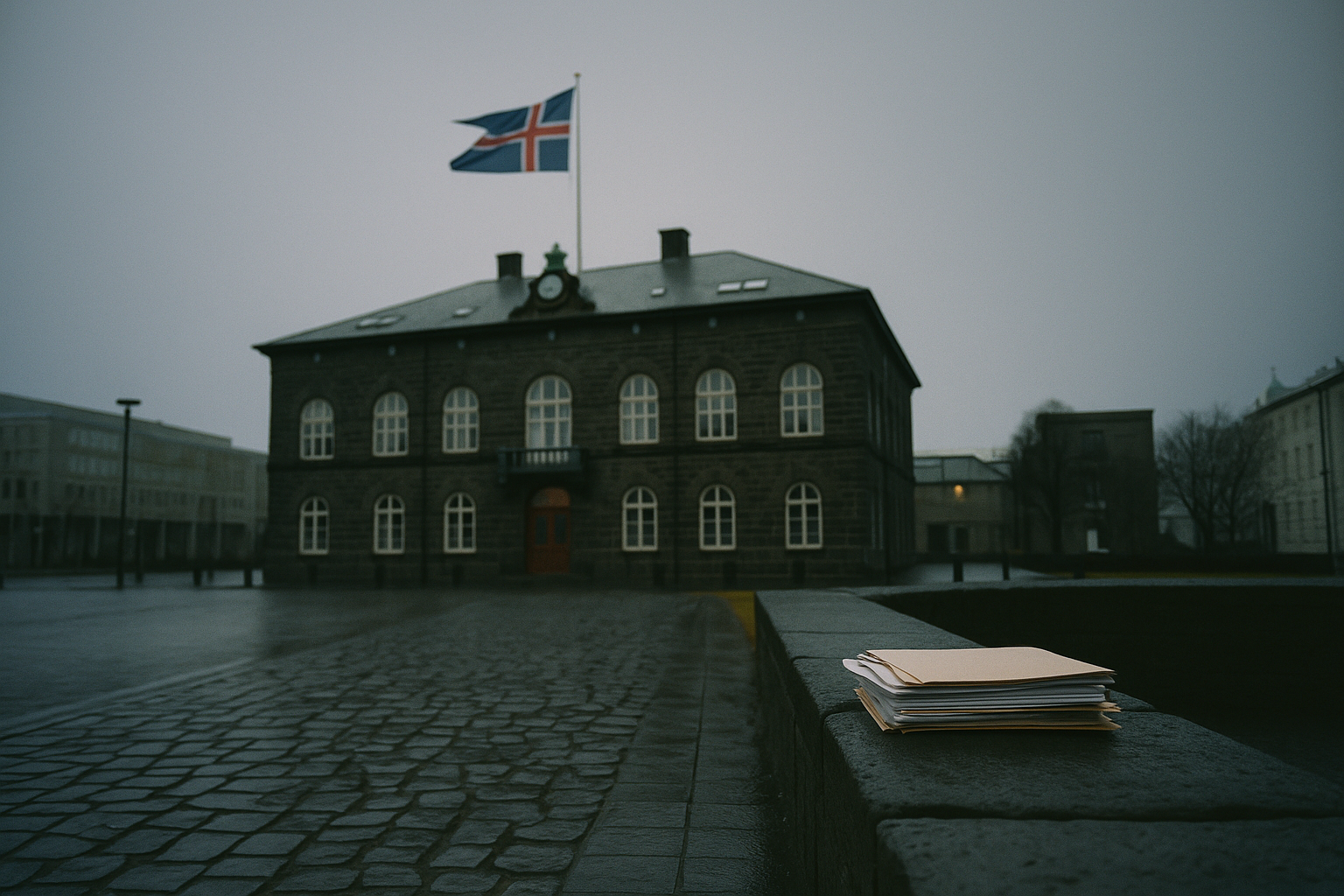
Iceland joins South Africa's genocide case against Israel, first substantive ICJ intervention in country's history
- Iceland filed its declaration of intervention with the ICJ, outlining its legal position on Israel's obligations under the Genocide Convention
- Foreign Minister Þorgerður Katrín Gunnarsdóttir said Iceland is 'using its voice in support of international law and human rights'
- Iceland was the fourth country in the world to ratify the UN Genocide Convention in 1949
- The intervention follows an Althing resolution from November 2023 demanding full compliance with international law in the Gaza conflict
Iceland filed a declaration of intervention with the International Court of Justice in The Hague this week, formally joining South Africa's case alleging that Israel has violated its obligations under the UN Genocide Convention during the war in Gaza. RÚV reports it is the first time Iceland has intervened as a party in a substantive ICJ case — a small country placing itself at the centre of the most politically charged international legal proceeding in a generation.
The Icelandic government's statement condemned both Hamas's October 7 attacks and Israel's military operations, while stressing that determining whether genocide has occurred is the proper role of international courts. Foreign Minister Þorgerður Katrín Gunnarsdóttir framed the decision in characteristically elevated terms: "With Iceland's participation in South Africa's case before the International Court of Justice, we use our voice in support of international law and human rights. And we should be proud of that." She added that regardless of where conflicts rage or who is responsible, the international community has a duty to bring violations of international law before independent courts.
The intervention traces a clear institutional path. In November 2023, the Althing (Iceland's parliament) passed Resolution No. 1/154 demanding full compliance with international law in the Gaza conflict and calling for thorough investigation of all violations. Last year, Iceland submitted an independent legal brief to the ICJ in an advisory opinion case — its first such submission — signalling a deliberate policy of engaging more actively with international legal mechanisms. The current intervention is the next step in that escalation.
Iceland's history with the Genocide Convention adds weight to the gesture. The country was the fourth state in the world to ratify the convention in 1949, just a year after its adoption. Of the 154 states that have since become parties to the treaty, few have made as pointed a use of it. For a country of 380,000 people with no military to speak of, international law is not an abstraction — it is the only security architecture that matters.
The more interesting question is whether other Nordic governments will follow. Norway recognised Palestinian statehood in 2024 and has been vocal on civilian casualties in Gaza, but has not joined the ICJ case. Sweden and Denmark have stayed further back. Finland, preoccupied with its eastern border, has shown little appetite for Middle Eastern legal entanglements. Iceland's move creates a precedent and, more importantly, political pressure: if the smallest Nordic state can intervene at the ICJ, the silence of its larger neighbours becomes harder to explain as mere caution.
Iceland's declaration was filed the day before the court. The country that has no army just deployed the sharpest weapon available to it.
Sources: RÚV