Iceland's capelin season to deliver up to 35 billion krónur, far exceeding early forecasts
- Sigurgeir Brynjar Kristgeirsson of Vinnslustöðin estimates the season's total value at 25–35 billion krónur
- The harvest feeds global fish meal and fish oil markets, both commanding strong prices
- The windfall arrives amid an ongoing political controversy over Iceland's fishing quota system and who profits from the national resource
- Capelin remains one of Iceland's most economically significant annual catches, with revenue rivalling several smaller export sectors
Iceland's 2026 capelin season is shaping up to deliver between 25 and 35 billion krónur to the national economy — substantially more than projections at the start of the season suggested. Sigurgeir Brynjar Kristgeirsson, managing director of Vinnslustöðin in Vestmannaeyjar (the Westman Islands), told Morgunblaðið that the harvest's value has exceeded expectations, driven by catch volumes and strong global prices for fish meal and fish oil.
Capelin — loðna in Icelandic — is a small, short-lived pelagic fish that spawns in enormous schools off Iceland's southern coast each spring. The fishery is one of the country's most volatile: in lean years the stock collapses entirely and the season is cancelled, while in good years it pumps billions into an economy still heavily dependent on what comes out of the ocean. Fisheries and related processing account for roughly 40 percent of Iceland's goods exports, and capelin is among the highest-value single-species harvests. The 30-billion-krónur midpoint of Kristgeirsson's estimate would represent a meaningful boost to GDP in a country of 390,000 people — equivalent to roughly 75,000 krónur per resident, or about €500 at current exchange rates.
The timing is notable. Iceland's fishing quota system — the ITQ (Individual Transferable Quota) regime introduced in the 1980s — has been under sustained political attack. Critics argue that a public resource has been captured by a handful of wealthy quota holders whose families acquired permanent, tradeable rights to the fish stock for free. The controversy flared again this winter, with protests and parliamentary debate over whether the system amounts to a state-sanctioned transfer of national wealth to a small elite. Supporters counter that the ITQ system ended the chaotic overfishing of earlier decades and made Iceland's fisheries among the world's best-managed.
A bumper capelin season sharpens the question rather than resolving it. When the catch is poor, the quota system is an abstraction. When it delivers a 30-billion-krónur windfall, the distribution becomes concrete: how much flows to the crews who haul the nets, how much to the processing towns like Vestmannaeyjar, and how much to the quota holders who control access to the fish? Iceland's resource fee — the veiðigjald — is meant to capture some of the rent for the public, but critics have long argued the fee is set too low relative to the profits quota holders extract.
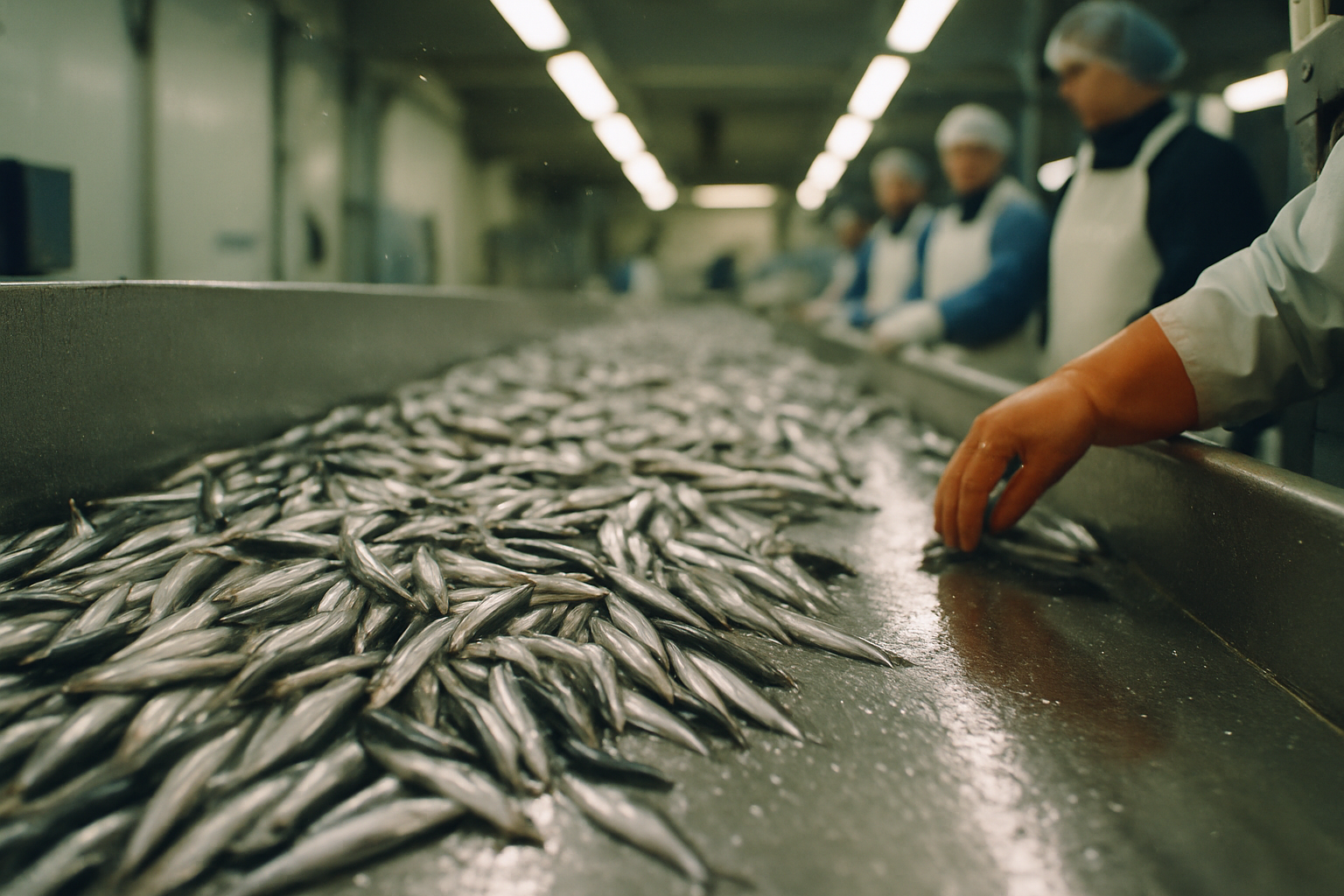
Kristgeirsson's Vinnslustöðin is one of the largest capelin processing operations in Iceland, converting raw catch into fish meal and oil for export to aquaculture and animal feed markets across Europe and Asia. Global fish meal prices have been firm, supported by rising demand from salmon farming in Norway and shrimp aquaculture in Southeast Asia — a price environment that helps explain why this season's revenue is running ahead of forecasts.
The capelin will be gone from Icelandic waters within weeks, their brief spawning run complete. The billions they leave behind will circulate through Vestmannaeyjar's processing plants, through the accounts of vessel owners and quota holders, and — in some fraction — through the national treasury. The fraction is the argument.
Sources: Morgunblaðið