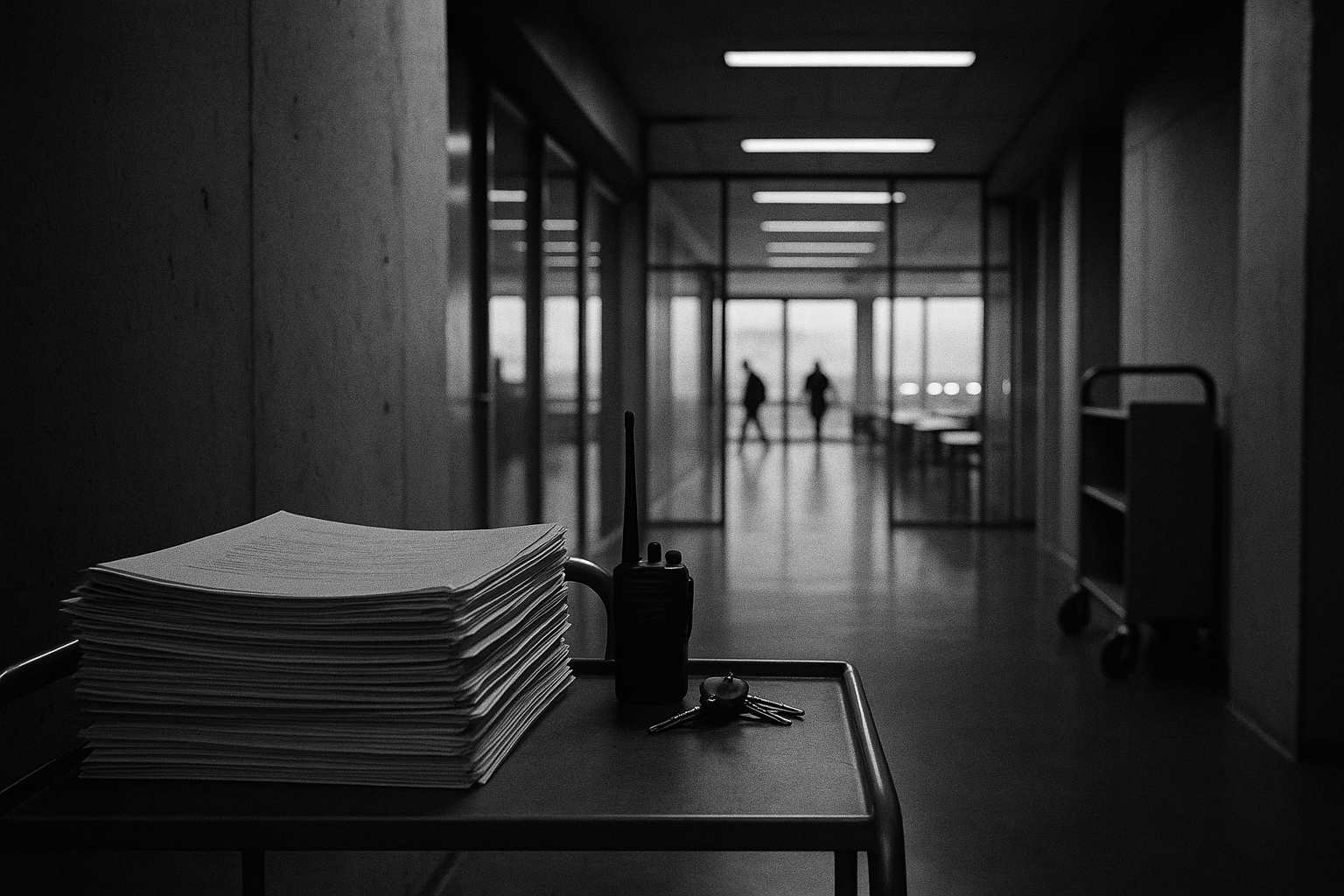
Iceland students attack library decision, university services shrink, security staff replace librarians at exams
- The dispute centres on a university decision affecting library-related student services during exams.
- The chairman of the student council says the move marks a worrying direction toward further cuts in services for students.
- A librarian joined the criticism, and a writer mocked the decision as "almost comically dystopian."
- The row fits a wider Nordic pattern of institutions withdrawing staffed services while leaving users to absorb the loss.
Iceland’s student council has attacked a university decision that shifts exam-related responsibilities away from library staff and toward security personnel, calling it another step in the reduction of services available to students. Morgunblaðið reports that the chairman of the student council said the decision should be read as part of a broader and worrying drift toward weaker support for students, while a writer quoted by the paper called it “almost comically dystopian.”
The report indicates that both the chairman of the student council and a librarian lamented the decision. The criticism is not framed as a dispute over symbolism alone. Library staff perform a specific function inside a university: they are part of the academic service structure, trained to help students navigate study material, facilities and institutional routines. Replacing that layer with guards during a high-pressure period such as exams changes the character of the service as well as the staffing line on a budget sheet.
The writer cited by Morgunblaðið pushed the point with a deliberately absurd comparison, asking whether the next step would be to replace primary-school teachers with police officers in classrooms. The line is theatrical, but it lands because the underlying change is concrete. One category of staff tied to learning and student support is being removed from a visible role and another category tied to control and enforcement is taking its place.
That trade-off has become more common across Nordic institutions under financial pressure. Services are narrowed, opening hours shortened, specialist staff reduced, and the burden moves outward to users who are expected to adapt. Sometimes that means private substitutes for those who can afford them; sometimes it means no substitute at all. Universities save money centrally while students lose time, access and human support individually, one decision at a time.
Morgunblaðið’s report does not, from the material available, set out the full internal approval chain behind the decision or the exact cost calculation used to justify it. Those details matter. If the change was sold as an efficiency measure, the immediate saving will have to be weighed against what disappears when academic support staff are withdrawn from student-facing work during the most sensitive part of the semester.
For now, the visible fact on campus is simple enough: where students previously met library personnel in an exam setting, they now meet security staff instead.
Källor: Morgunblaðið